Showing 457–468 of 5076 resultsSorted by latest
-
£20.00
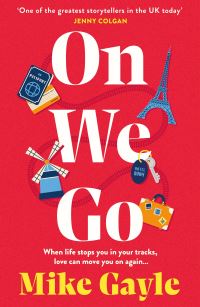
When Cal loses his beloved wife Nikki, and his teenage step-daughter Zoe moves out to live with her father, his whole world falls apart. But life works in mysterious ways. And when a prestigious university wants to pay tribute to Nikki with a posthumous award in Zurich, Cal sees an opportunity to both honour his wife, and mend things with Zoe. The plan is a European inter-railing trip to Zurich – but what Cal hasn’t anticipated is Zoe lying to her father about it, and inviting their other relatives to join too. What starts off as a very awkward family reunion – punctuated with some sightseeing – quickly takes a turn as tempers fray, secrets are revealed, and the pent-up grief they’re all still carrying is unleashed. There’s nothing quite like family. Except family on holiday!
-
£10.99
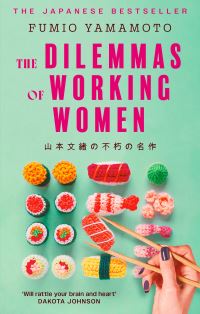
Izumi needs to get a job. Haruka needs to stop talking about how she once had cancer. Kato needs to get through a shift at the convenience store without being harassed. Mito needs to break up with her boyfriend – or marry him. Sumie just needs somewhere to live.
-
£10.99
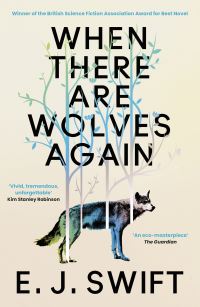
The extraordinary new science fiction novel from the Clarke Award-shortlisted author of THE CORAL BONES
-
£8.99
Alfie Piper has six weeks of summer – and nothing left to lose. Since his mum died, Alfie’s world has unravelled. The silence between him and his stepdad roars louder than ever. So he does the only thing that makes sense: grabs his bike, and rides. In these long summer days, can Alfie rebuild what was broken?
-
£12.99
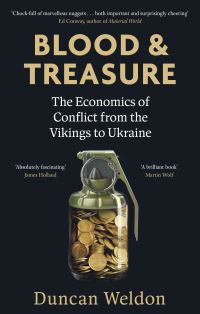
Wars are expensive, both in human terms and monetary ones Since at least the 1640s, in the aftermath of the British Civil Wars, the phrase ‘blood and treasure’ has sought to encapsulate these costs. Two economic notions, in particular, feature in this book: incentives and institutions. A rational look at incentives explains even the most seemingly irrational behaviour – and few things are as irrational as war. This book examines why Genghis Khan should be regarded as the father of globalisation, how New World gold and silver kept Spain poor, why some economists think of witch trials as a form of ‘non-price competition’, how pirate captains were pioneers of effective HR techniques, how handing out medals hurt the Luftwaffe in the Second World War and why economic theories helped to create a tragedy in Vietnam.
-
£12.99
A timeless and rousing collection of wise words from those who dared to speak up throughout the course of history. These are speeches to inspire, whatever the occasion, from 100 of history’s greatest orators.
-
£12.99
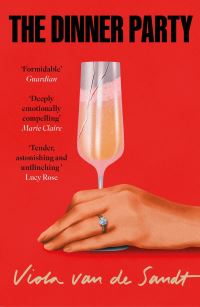
I remember everything that happened in those three minutes at the beginning of the evening, him and me in the kitchen. That, and what happened at the end: the knife, and what I did with it. Franca left the Netherlands behind to start her new life in England with Andrew. Andrew, whose parents lived in South Kensington but had a flat their son could ‘borrow’ nearby. Andrew, an old-fashioned British gentleman, who encourages her not to work but to instead focus on her writing. Andrew who suggests a dinner party with his colleagues to celebrate their big upcoming launch. A dinner party that Franca must plan and shop and cook and clean for. A dinner party during a heatwave, when the fridge breaks, alcohol replaces water and an unexpected guest joins their ranks. A dinner party where everything she once was and everything she now is comes together and she feels like she might implode.
-
£12.99
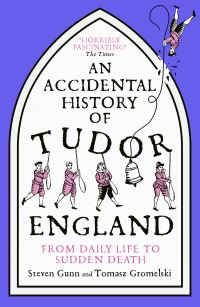
A new history of the Tudor world, told by uncovering ordinary people’s grizzly fatal accidents. There is untold history of Tudor England – the history of the several million subjects of their famous kings and queens. What did ordinary people do all day, in their homes, their work, their leisure and travel? This title explores the history of everyday life, and everyday death. Here we learn that fatal accidents were much more likely to take place during the agricultural peak season, with cart crashes, dangerous harvesting techniques, horse tramplings and windmill manglings all as major causes.
-
£12.99
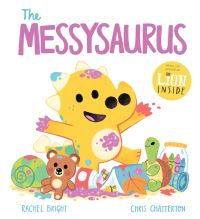
Messysaurus lives in a very messy treehouse! Splattering paint and scattering toys are his favourite things to do. But when Messy’s precious Teddy gets lost in mounds of clutter, Messy starts to feel jumbled up inside. Will a visit from Messy’s favourite travelling Auntysaur help Messy realise that less can – sometimes – be more?
-
£10.99
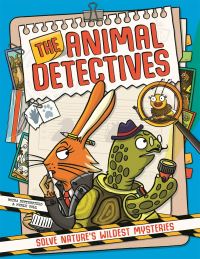
Discover the truth behind some of nature’s mysterious behaviour in this fun and fascinating exploration of the natural world.
-
£25.00
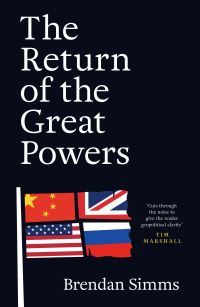
From the dawn of the modern era to the end of the Cold War, global history was defined by rivalries between great powers. In the West, this meant the struggle for supremacy in Europe and the Americas, while in the East, it encompassed those vying for control over the successor states to Genghis Khan’s empire. Between 1989 and the year 2000, great power rivalry temporarily gave way to globalization, with liberal democracy on the march and national chauvinism seemingly in retreat. But events of the past decade have made one thing abundantly clear: the great powers are back. In this work, renowned historian Brendan Simms offers a history of the rise, fall, and return of the great powers in our time. He shows that over the past ten years or so, the major global actors have already resumed making decisions based on geopolitical rather than global economic considerations.
-
£12.99
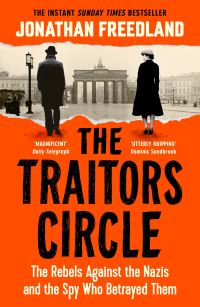
Berlin, 1943. A group of high-society anti-Nazi dissenters meet for a tea party one late summer afternoon. They do not know that, sitting around the table, is someone poised to betray them all to the Gestapo – revealing their secret to the Nazis’ most ruthless detective. They form a circle of unlikely rebels, drawn from the German elite: two countesses, a diplomat, an intelligence officer, an ambassador’s widow and a pioneering headmistress. Meeting in the shadows, rescuing Jews or plotting for a future Germany freed from the Führer’s rule, what unites them is a shared loathing of the Nazis, a refusal to bow to Hitler and the courage to perform perilous acts of resistance. Or so they believe. How did a group of brave, principled rebels, who had successfully defied Adolf Hitler for more than a decade, come to fall into such a lethal trap?