The Great British reboot
£20.00An optimistic exploration of how, through radical economic reform, the United Kingdom can prosper and flourish in the new global economy

Showing 193–204 of 218 resultsSorted by latest

An optimistic exploration of how, through radical economic reform, the United Kingdom can prosper and flourish in the new global economy

This title presents a history of the elaborate and brilliantly sustained World War II intelligence operation by which Hitler’s generals were tricked into giving away vital Nazi secrets.
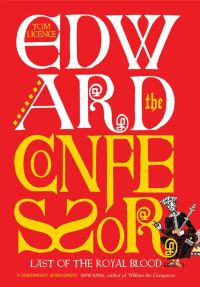
One of the last kings of Anglo-Saxon England, Edward the Confessor regained the throne for the House of Wessex and is the only English monarch to have been canonized. Often cast as a reluctant ruler, easily manipulated by his in-laws, he has been blamed for causing the invasion of 1066, the last successful conquest of England by a foreign power. Tom Licence navigates the contemporary webs of political deceit to present a strikingly different Edward. This compelling biography provides a much-needed reassessment of Edward’s reign-calling into doubt the legitimacy of his successors and rewriting the ending of Anglo-Saxon England.
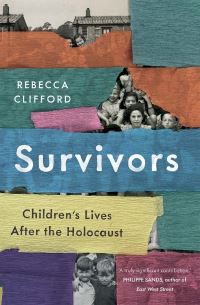
Told for the first time from their perspective, the story of children who survived the chaos and trauma of the Holocaust

A school teacher at the start of the war, Harry Rée renounced his former pacifism with the fall of France in 1940. He was deployed into a secret branch of the British army and parachuted into central France in April 1943. Harry showed a particular talent for winning the confidence of local resisters, and guided them in a series of dramatic sabotage operations, before getting into a hand-to-hand fight with an armed German officer, from which he was lucky to escape. This might seem like a romantic story of heroism and derring-do, but Harry Rée’s own war writings, superbly edited and contextualised by his son, the philosopher Jonathan Rée, are far more nuanced, shot through with doubts, regrets, and grief.
For many, cooking is simply the mechanical act of reproducing standard recipes. To Maryse Condé, however, cooking implies creativity and personal invention, on par with the complexity of writing a story. A cook, she explains, uses spices and flavors the same way an author chooses the music and meaning of words. In ‘Of Morsels and Marvels’, Condé takes us on a literary journey around places she has travelled to in India, Indonesia, and South Africa. She highlights the tastes and culinary traditions that are fascinating examples of a living museum. Such places, Condé explains, provide important insights into lesser-known aspects of contemporary life.

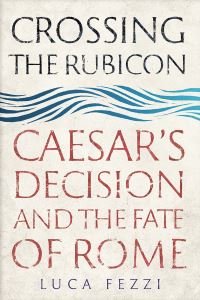
A dramatic account of the fateful year leading to the ultimate crisis of the Roman Republic and the rise of Caesar’s autocracy When the Senate ordered Julius Caesar, conqueror of Gaul, to disband his troops, he instead marched his soldiers across the Rubicon River, in violation of Roman law. The Senate turned to its proconsul, Pompey the Great, for help. But Pompey’s response was unexpected: he commanded magistrates and senators to abandon Rome – a city that, until then, had always been defended. The consequences were the ultimate crisis of the Roman Republic and the rise of Caesar’s autocracy.

The stories of some of the most notable archaeologists and their discoveries are conveyed across forty brief and exciting chapters, emphasising the plunder, surprise, expertise and danger that has caused the occupation to repeatedly capture the public imagination.
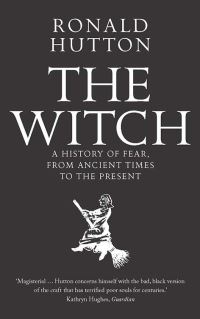
Why have societies all across the world feared witchcraft? This book delves deeply into its context, beliefs and origins in Europe’s history. The witch came to prominence – and often a painful death – in early modern Europe, yet her origins are much more geographically diverse and historically deep. In this landmark book, Ronald Hutton traces witchcraft from the ancient world to the early-modern stake and sets the notorious European witch trials in the widest and deepest possible perspective while tracing the major historiographical developments of witchcraft.

No products in the basket.
Notifications