Showing all 9 resultsSorted by latest
-
£25.00
Video games are the world’s largest entertainment medium: they are played by billions of people, across all age demographics, and they generate hundreds of billions of dollars of revenue every year. But video games are more than an entertainment product – they are an ecosystem that connects billions of people across the globe. Video games create spaces where people talk, share ideas and build identities that bleed into our reality. And whilst democracies have underestimated the potential for influence in this space, others have seized the opportunity. Supported by the insights of dozens of politicians, academics and industry experts, it’s the vital guide to understanding this new frontier for political influence, and what democracies must do to protect play and harness its immense power before this essential battle for digital influence is lost for good.
-
£14.99
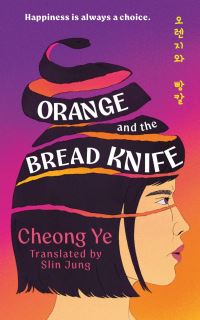
Youngah is a warm-hearted schoolteacher – always smiling, always yielding. She bends her life to everyone else’s rules. But deep inside, this endless restraint is killing her. An unending sense of despair festers. Desperate for relief, she turns to a cutting-edge, four-week emotion regulation programme, which promises to sculpt her into a better version of herself. The procedure works a little too well. Unburdened at last, Youngah embraces her raw, unfiltered self, dismantling the weight of the exhausting expectations and ideals imposed upon her.
-
£25.00
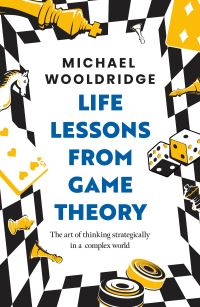
Most of us have some idea about game theory. Concepts like zero-sum games and the prisoner’s dilemma crop up in films, novels and casual conversation, often as shorthand for cut-throat competition or inevitable betrayal. But game theory, the science behind these ideas, is widely misunderstood. All too often it’s seen solely as the science of conflict and greed. In fact, this field has a lot to teach us about how to make a better world. It shows us just what it takes to enable cooperation and mutual benefit. This essential primer presents twenty one ‘life lessons from game theory’, which illustrate the key ideas in the field, and which are packed with real world examples: from overfishing in the Atlantic; to the Cuban Missile Crisis; to security measures at international airports; to advertising wars between major brands.
-
£25.00
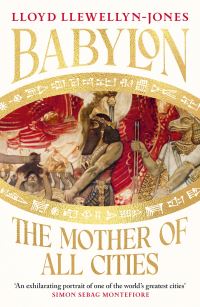
Babylon often appears more myth than history. Purportedly the site of the Hanging Gardens and the Tower of Babel, its infamous presence in the Bible has made it a byword for sinful decadence. But Babylon was a real place teeming with life, a bustling mega-city on the Euphrates where schoolteachers, artisans, priests, slaves, prostitutes and soldiers rubbed shoulders in maze-like streets and busy marketplaces. The city was home to some extraordinary rulers, from Hammurabi the great lawgiver to Nebuchadnezzar II, the conqueror-king, under whose reign the city glistened in gold and lapis lazuli. In this book, Lloyd Llewellyn-Jones brings the city vividly to life, tracing its foundation through to its world domination, and subsequent decline, fall and ruin into dust.
-
£22.00
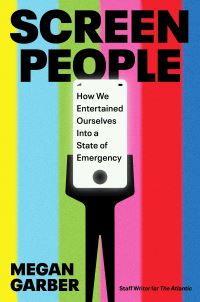
‘Screen People’ is a deep dive into what happens when we cede our reality to spectacle. Megan Garber explains how the internet-inflected culture of the present moment conditions us, every day, to see each other less as people than as characters in an ongoing show, and how some of our most chronic and harmful social conditions – loneliness, depression, mistrust, misinformation, cynicism – stem from our demand for diversion. In ten chapters, each themed around an element of stagecraft, Garber builds toward an argument as urgent as it is ironic: our fun is quickly becoming our emergency. And we can’t understand our politics without first understanding our culture. Part critical investigation, part manifesto, part fan’s diary, this book will be an eye-opening journey into the cultural underbelly of our present malaise.
-
£25.00
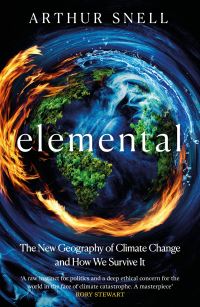
With over 30 years’ experience in conflict zones and fragile states, Arthur Snell travels from the heat of the Sahel to the Arctic Circle to show how climate change is coinciding with a breakdown in geopolitical order, increasing conflict and economic crises.
-
£10.99
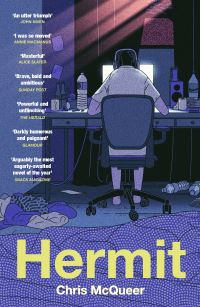
Since dropping out of school three years ago with no qualifications, no pals, and no ambition, Jamie Skelton spends most of his days asleep and most of his nights playing video games with his online friend, Lee. He hasn’t left the house in months, and now he’s not sure he can. Fiona, Jamie’s maw, is trying her best, but since finding the courage to kick out her abusive husband her confidence has never recovered. She knows their lives can’t carry on like this, but she’s at a loss to know how to change things. But Jamie thinks he’s discovered an answer to his problems. A community who understands him. They’re called incels. The more Fiona tries to reach Jamie, the further away he seems to get. And when a chance arises for Jamie to go to London and meet his new friends, Fiona must find a way to reconnect with her son before he is lost for ever.
-
£9.99
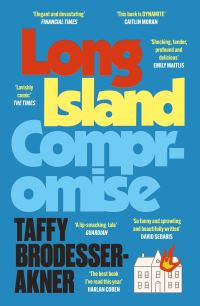
In 1982, wealthy businessman Carl Fletcher is kidnapped from his driveway in the nicest part of the nicest part of Long Island. He is brutalised, held for ransom and then returned to his family. Carl, his wife and his three kids all try to move on with their lives, and resume their prized places in the ongoing saga of the American dream. But nearly 40 years later, when Carl’s mother dies, the trauma that has been bubbling beneath the Fletchers’ lives all this time surfaces at last. Finally, Carl allows himself to acknowledge what happened to him all those years ago, and face the question that’s been idling in his mind for a quarter of a century: where did the ransom go? And if he were ever to find the money, would it finally give him and his family the closure they’ve been yearning for?
-
£10.99
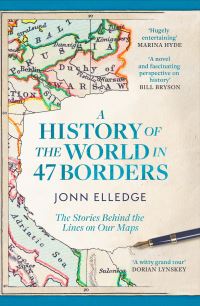
People have been drawing lines on maps for as long as there have been maps to draw on. Sometimes rooted in physical geography, sometimes entirely arbitrary, these lines might often have looked very different if a war or treaty or the decisions of a handful of tired Europeans had gone a different way. By telling the stories of these borders, we can learn a lot about how political identities are shaped, why the world looks the way it does – and about human folly. From the Roman attempts to define the boundaries of civilisation, to the secret British-French agreement to carve up the Ottoman Empire during the First World War, to the reason why landlocked Bolivia still maintains a navy, this is a fascinating, witty and surprising look at the history of the world told through its borders.