Showing 1–12 of 28 resultsSorted by latest
-
£10.99
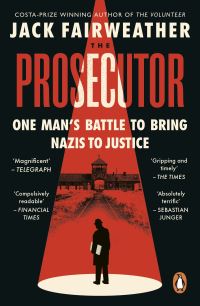
Returning to Germany in the aftermath of the Second World War Fritz Bauer – a gay Jewish lawyer and outspoken critic of Hitler – was determined to reclaim the Germany he had once loved. But he soon saw that the perpetrators of the Holocaust had largely got away with their crimes. Top Nazi officers – mass-murders and cruel sadists – had been given plum jobs at major German companies; held prestigious offices in top universities; were in positions of power as lawyers, judges and political advisors. The war was over and many were keen to forget and move on. Thus began Bauer’s dogged fight for justice and a reckoning with the past. Drawing on recently released CIA files, unpublished family papers and secret diaries, this is the story of one man’s battle to bring down the perpetrators of the greatest crime in human history, and to make sure the world never forgets what happened.
-
£10.99
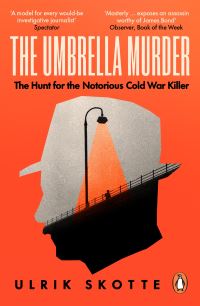
September 1978: exiled Bulgarian dissident Georgi Markov is murdered in broad daylight on Waterloo Bridge, London with a poison-tipped umbrella. It would become the most infamous unsolved killing of the Cold War. Many years later, young journalist Ulrik Skotte is approached with explosive new information about a man alleged to be responsible for Markov’s death – a spy code-named Piccadilly who worked for the Bulgarian secret service. This one meeting would launch Skotte into a hunt for the killer lasting more than a quarter of a century, bringing him face-to-face with eccentric conspiracy theorists, a washed-up former dictator, ageing Danish spooks – and, ultimately, with Agent Piccadilly himself.
-
£10.99
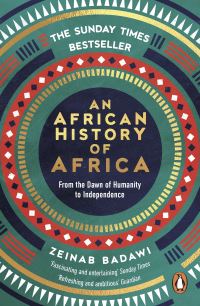
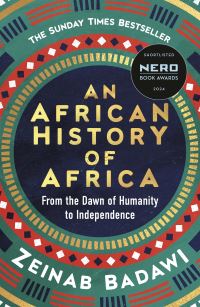
For too long, Africa’s history has been neglected. Dominated by western narratives of slavery and colonialism, its past has been fragmented, overlooked and denied its rightful place in our global story. Now, Zeinab Badawi guides us through Africa’s spectacular history, from the origins of humanity, through ancient civilisations and medieval empires with powerful queens and kings, to the miseries of conquest and the elation of independence. Seeking out occluded histories from across the continent, meeting with countless historians, anthropologists, archaeologists and local storytellers, and travelling through more than thirty countries, Badawi weaves together a fascinating new account of Africa: an epic, sweeping history of the oldest inhabited continent on the planet, told through the voices of Africans themselves.
-
£10.99
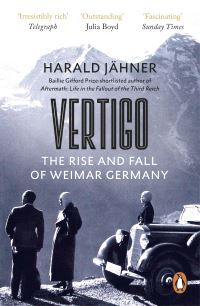
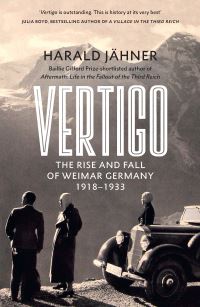
Germany, 1918: a country in flux. The First World War is lost, traditional values are shaken to their core, revolution is afoot and the victory of democracy beckons. Everything must change with the times. The country is abuzz with talk of the ‘new woman’, the ‘new man’, ‘new living’ and ‘new thinking’. What follows is the establishment of the Weimar Republic, an economic crisis and the transformation of Germany. A triumphant procession of liberated lifestyles emerges. Women conquer the racetracks and tennis courts, go out alone in the evenings, cut their hair short and cast the idea of marriage aside. Unisex style comes into fashion, androgynous and experimental. People revel in the discovery of leisure, filling up boxing halls, dance palaces and the hotspots of the New Age, embracing the department stores’ promise of happiness and accepting the streets as a place of fierce battles.
-
£22.00
Returning to Germany in the aftermath of the Second World War, Fritz Bauer – a gay Jewish lawyer and outspoken critic of Hitler – was determined to reclaim the Germany he had once loved. But he soon saw that the perpetrators of the Holocaust had largely got away with their crimes. Top Nazi officers – mass-murders and cruel sadists – had been given plum jobs at major German companies; held prestigious offices in top universities; were in positions of power as lawyers, judges and political advisors. The war was over and many were keen to forget and move on. Thus began Bauer’s dogged fight for justice and a reckoning with the past. Drawing on recently released CIA files, unpublished family papers and secret diaries, this is the story of one man’s battle to bring down the perpetrators of the greatest crime in human history, and to make sure the world never forgets what happened.
-
£10.99
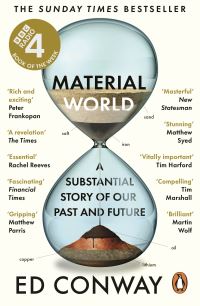
Sand, iron, salt, oil, copper and lithium. The struggle for these tiny, magical materials has razed empires, demolished civilisations, fed our greed and our ingenuity for thousands of years. But the story is not over. We are often told we now live in a weightless world of information but in fact we dug more stuff out of the earth in 2017 than in all of human history before 1950. And it’s getting worse. To make one bar of gold, we now have to dig 5000 tons of earth. For every tonne of fossil fuels, we extract six tonnes of other materials – from sand to stone to wood to metal. Even as we pare back our consumption of fossil fuels we have redoubled our consumption of everything else. Why? Because these ingredients build everything. They power our computers and phones, build our homes and offices, print our books and packaging.
-
£25.00
September 1978: exiled Bulgarian dissident Georgi Markov is murdered in broad daylight on Waterloo Bridge, London with a poison-tipped umbrella. It would become the most infamous unsolved killing of the Cold War. Many years later, young journalist Ulrik Skotte is approached with explosive new information about a man alleged to be responsible for Markov’s death – a spy code-named Piccadilly who worked for the Bulgarian secret service. This one meeting would launch Skotte into a hunt for the killer lasting more than a quarter of a century, bringing him face-to-face with eccentric conspiracy theorists, a washed-up former dictator, ageing Danish spooks – and, ultimately, with Agent Piccadilly himself.
-
£25.00
Germany, 1918: a country in flux. The First World War is lost, traditional values are shaken to their core, revolution is afoot and the victory of democracy beckons. Everything must change with the times. The country is abuzz with talk of the ‘new woman’, the ‘new man’, ‘new living’ and ‘new thinking’. What follows is the establishment of the Weimar Republic, an economic crisis and the transformation of Germany. A triumphant procession of liberated lifestyles emerges. Women conquer the racetracks and tennis courts, go out alone in the evenings, cut their hair short and cast the idea of marriage aside. Unisex style comes into fashion, androgynous and experimental. People revel in the discovery of leisure, filling up boxing halls, dance palaces and the hotspots of the New Age, embracing the department stores’ promise of happiness and accepting the streets as a place of fierce battles.
-
£11.99
Our economy has tanked, our freedoms are shrinking, and social divisions are growing. Our politicians seem most interested in their own careers, and much of the media only make things worse. We are living in a country almost unrecognisable from the one that existed a decade ago. But whose fault is it really? Who broke Britain and how did they do it? Bold and incisive as ever, James O’Brien reveals the shady network of influence that has created a broken Britain of strikes, shortages and scandals. He maps the web connecting dark think tanks to Downing Street, the journalists complicit in selling it to the public and the media bosses pushing their own agendas. Over ten chapters, each focusing on a particular person complicit in the downfall, James O’Brien reveals how a select few have conspired – sometimes by incompetence, sometimes by design – to bring Britain to its knees.
-
£25.00
For too long, Africa’s history has been neglected. Dominated by western narratives of slavery and colonialism, its past has been fragmented, overlooked and denied its rightful place in our global story. Now, Zeinab Badawi guides us through Africa’s spectacular history, from the origins of humanity, through ancient civilisations and medieval empires with powerful queens and kings, to the miseries of conquest and the elation of independence. Seeking out occluded histories from across the continent, meeting with countless historians, anthropologists, archaeologists and local storytellers, and travelling through more than thirty countries, Badawi weaves together a fascinating new account of Africa: an epic, sweeping history of the oldest inhabited continent on the planet, told through the voices of Africans themselves.
-
£12.99
Many of us assume Western civilisation derives from a cultural inheritance that stretches back to classical antiquity, a golden thread that binds us from Plato to NATO. But what if all this is wrong? What if the Western world does not have its ultimate origins in a single cultural bloodline but rather a messy bramble of ancestors and influences? What if ‘the West’ is just an idea that has been invented, co-opted, and mythologised to serve different purposes through history? As battles over privilege, identity and prejudice rock the cultural wars, it’s never been more important to understand how the concept of ‘the West’ came to be. This book tells a bold, empowering new story of how the idea of ‘the West’ was created, how it has been used to justify imperialism and racism, and also why it’s still a powerful ideological tool to understand our world.
-
£22.00
In the new world order, data is the new oil. Big Tech grabs our most basic natural resources – our data – exploiting our labour and connections, and repackaging our information to control our views, track our movements, record our conversations and discriminate against us. Every time we unthinkingly click ‘Accept’ on Terms and Conditions, we allow our most personal information to kept indefinitely, repackaged by Big Tech companies to control and exploit us for their own profit. In this searing, cutting-edge guide, two leading researchers reveal how history can help us both to understand the emerging future and to fight back.