Showing 25–36 of 45 resultsSorted by latest
-
£25.00
‘Out of the Depths’ explores all aspects of shipwrecks across four thousand years, examining their historical context and significance, showing how shipwrecks can be time capsules, and shedding new light on long-departed societies and civilizations. Alan G. Jamieson not only informs readers of the technological developments over the last 60 years that have made the true appreciation of shipwrecks possible, but he also covers shipwrecks in culture and maritime archaeology, their appeal to treasure hunters, and their environmental impacts. Although shipwrecks have become less common in recent decades, their implications have become more wide-ranging: since the 1960s, foundering supertankers have caused massive environmental disasters, and in 2021, the blocking of the Suez Canal by the giant container ship Ever Given had a serious effect on global trade.
-
£15.00
‘There is more history in a bowl of pasta than in the Colosseum,’ writes Andreas Viestad in ‘Dinner in Rome.’ From the table of a classic Roman restaurant, Viestad takes us on a fascinating culinary exploration of the Eternal City and global civilization. Food, he argues, is history’s secret driving force. Viestad finds deeper meanings in his meal: He uses the bread that begins his dinner to trace the origins of wheat and its role in Rome’s rise as well as its downfall. With his fried artichoke antipasto, he explains olive oil’s part in the religious conflict of 16th-century Europe. And, from his sorbet dessert, he recounts how lemons featured in the history of the Mafia in the 19th century and how the hunger for sugar fuelled the slave trade. Viestad’s dinner may be local, but his story is universal.
-
£25.00
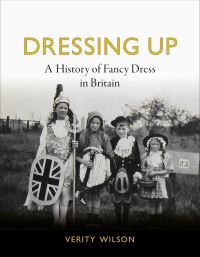
Featuring many exquisite historical photographs, a celebration of the sometimes extravagant, sometimes bizarre pastime: playing dress-up. Pierrot, Little Bo Peep, cowboy: these characters and many more form part of this colourful story of dressing up, from the accession of Queen Victoria to the coronation of Queen Elizabeth II. During this time, fancy dress became a regular part of people’s social lives, and the craze for it spread across Britain and the Empire, reaching every level of society. Spectacular and witty costumes appeared at suburban street carnivals, victory celebrations, fire festivals, missionary bazaars, and the extravagant balls of the wealthy.
-
£14.99
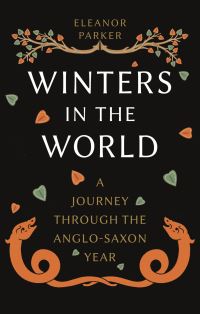
‘Winters in the World’ is a beautifully observed journey through the cycle of the year in Anglo-Saxon England, exploring the festivals, customs, and traditions linked to the different seasons. Drawing on a wide variety of source material, including poetry, histories, and religious literature, Eleanor Parker investigates how Anglo-Saxons felt about the annual passing of the seasons and the profound relationship they saw between human life and the rhythms of nature. Many of the festivals celebrated in the United Kingdom today have their roots in the Anglo-Saxon period, and this book traces their surprising history while unearthing traditions now long forgotten. It celebrates some of the finest treasures of medieval literature and provides an imaginative connection to the Anglo-Saxon world.
-
£11.99
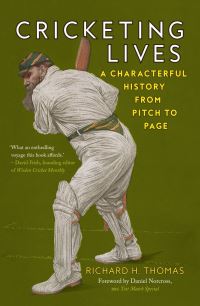
Cricket is defined by the characters who have played it, watched it, reported it, ruled upon it, ruined it and rejoiced in it. Humorous and deeply affectionate, ‘Cricketing Lives’ tells the story of the world’s greatest and most incomprehensible game through those who have shaped it, from the rustic contests of eighteenthcentury England to the spectacle of the Indian Premier League. It’s about W.G. Grace and his eye to his wallet; the invincible Viv Richards; and Sarah Taylor, ‘the best wicketkeeper in the world – male or female’. Paying homage, too, to the game’s great writers, Richard H. Thomas steers a course through the despair of war, tactical controversies and internecine politics, to reveal how cricket has always stormed back to warm our hearts like nothing else can.
-
£12.95
A first-hand account of life and conditions in Ukraine, since Crimea’s annexation by Russia in March 2014.
-
£25.00
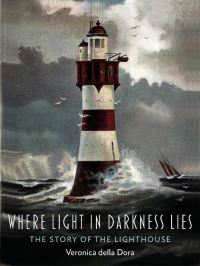
An illuminating history of both real-life lighthouses and the beacons of literature and art alike, shedding light on the multifaceted power of these liminal structures. Suspended between sea and sky, battered by the waves and the wind, lighthouses mark the battle lines between the elements. They guard the boundaries between the solid human world and the primordial chaos of the waters; between stability and instability; between the known and the unknown. As such, they have a strange, universal appeal that few other manmade structures possess.
-
£12.95
From Roman villas to Hollywood films, ancient Egypt has been a source of fascination and inspiration in many other cultures. But why, exactly, has this been the case? In this book, Christina Riggs examines the history, art, and religion of ancient Egypt to illuminate why it has been so influential throughout the centuries.
-
£16.99
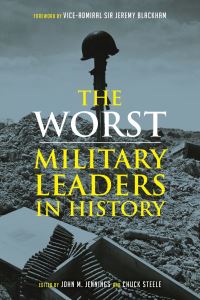
Spanning countries and centuries, a ‘how-not-to’ guide to leadership that reveals the most maladroit military commanders in history. Fifteen distinguished historians were given a deceptively simple task: identify their choice for the worst military leader in history and then explain why theirs is the worst. From the clueless Conrad von Htzendorf and George A. Custer to the criminal Baron Roman F. von Ungern-Sternberg and the bungling Garnet Wolseley, this book presents a rogues’ gallery of military incompetents.
-
£25.00
Selective yet wide-ranging, this anthology re-evaluates the movement, singling out its most distinctive and influential works. Nancy Perloff, curator of an important Concrete Poetry exhibition at the Getty Research Institute, includes examples from the little-known Japanese concretists and the Wiener Gruppe-groups that, together with the Brazilian poet Augusto de Campos and the Scottish poet Ian Hamilton Finlay, have engaged with the most subtle possibilities of language itself-while also incorporating key poems by Eugen Gomringer, Dieter Roth, Henri Chopin, and others and including contemporary contributions by Cia Rinne and Susan Howe.
-
£30.00
Postcards are usually associated with banal holiday pleasantries, but they are made possible by sophisticated industries and institutions, from printers to postal services. When they were invented, postcards established what is now taken for granted in modern times: the ability to send and receive messages around the world easily and inexpensively. Fundamentally they are about creating personal connections – links between people, places, and beliefs. Lydia Pyne examines postcards on a global scale, to understand them as artifacts that are at the intersection of history, science, technology, art, and culture. In doing so, she shows how postcards were the first global social network and also, here in the twenty-first century, how postcards are not yet extinct.
-
£29.00
Blending architecture, design, and technology, a visual tour through futures past via the objects we have replaced, left behind, and forgotten. So-called extinct objects are those that were imagined but were never in use, or that existed but are now unused-superseded, unfashionable, or simply forgotten. Extinct gathers together an exceptional range of artists, curators, architects, critics, and academics. In 85 essays, contributors nominate ‘extinct’ objects and address them in a series of short, vivid, sometimes personal accounts, speaking not only of obsolete technologies, but of other ways of thinking, making, and interacting with the world. ‘Extinct’ is filled with curious, half-remembered objects, each one evoking a future that never came to pass. It is also a visual treat, full of interest and delight.