Showing 85–96 of 160 resultsSorted by latest
-
£16.99
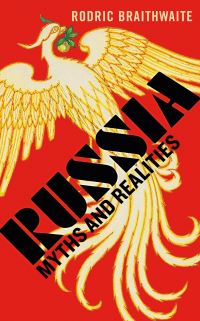
Russia is the largest country in the world, with the largest arsenal of nuclear weapons. Over a thousand years this multifaceted nation of shifting borders has been known as Rus, Muscovy, the Russian Empire, and the Soviet Union. Thirty years ago it was reinvented as the Russian Federation. Russia is not an enigma, but its past is violent, tragic, sometimes glorious, and certainly complicated. Like the rest of us, the Russians constantly rewrite their history. They too omit episodes of national disgrace in favour of patriotic anecdotes, sometimes more rooted in myth than reality. Expert and former ambassador Rodric Braithwaite unpicks fact from fiction to discover what lies at the root of the Russian story.
-
£25.00
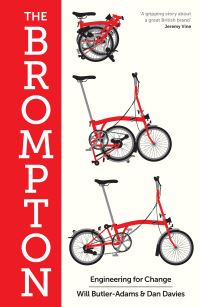
Lightweight, compact, and now, electric: the cityscape has been forever changed by the addition of the Brompton bike, with its distinctive style and clever folding design. For over 40 years, the Brompton’s modular design has remained virtually unchanged. It has stood not only the test of time but every financial crash since 1976, Brexit, and COVID-19, not to mention every other risk which any business faces. Where, then, did this ingenious feat of engineering come from? Who were the minds behind it? And how did a small company grow to become one of the biggest cycling brand names in the world? This is not only the first look behind the scenes at Brompton Bicycle Ltd, but a masterclass in entrepreneurship, manufacturing, and scaling a business.
-
£10.99
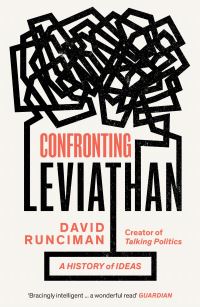
Based on the ‘History Of Ideas’ podcast series by Talking Politics host David Runciman, this book explores some of the most important thinkers and prominent ideas lying behind modern politics – from Hobbes to Gandhi, from democracy to patriarchy, and from revolution to lock down. While explaining the most important and often-cited ideas of thinkers such as Constant, De Tocqueville, Marx and Engels, Hayek, MacKinnon and Fukuyama, David Runciman shows how crises – revolutions, wars, depressions, pandemics – generated these new ways of political thinking. This is a history of ideas to help make sense of what’s happening today.
-
£16.99
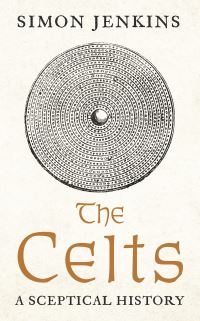
The history of the Celts is the history of a misnomer. There has never been a distinct people, race or tribe claiming the name of Celtic, though remnants of different languages and cultures remain throughout Wales, Ireland, Scotland, and Cornwall. The word keltoi first appears in Greek as applied generally to aliens or ‘barbarians’ – and theories of Celticism continue to fuel many of the prejudices and misconceptions that divide the peoples of the British Isles to this day. Often seen as unimportant or irrelevant adjuncts to English history, in ‘The Celts’ Simon Jenkins offers a compelling counterargument.
-
£9.99
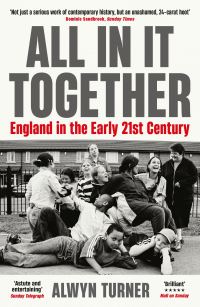
The headlines may be all Covid now, as a few short months ago they were all Brexit, but the breakdown of the UK’s political sphere has been a long time coming, and it is a symptom of a much deeper malaise. We seem to have lost our faith in all our social institutions, from parliament and the press to banking and religion. ‘All in It Together’ tracks the spread of this wider disillusionment over the years 2000 to 2015 in a fast-paced cultural, political and social history that will be required reading for years to come. Drawing on both high politics and low culture, Alwyn Turner takes us from Downing Street to Benefits Street as he tells the defining story of contemporary Britain.
-
£9.99
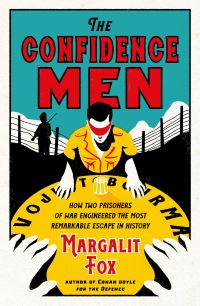
Imprisoned in a remote Turkish POW camp during the First World War, two British officers, Harry Jones and Cedric Hill, cunningly join forces. To stave off boredom, Jones makes a handmade Ouija board and holds fake sances for fellow prisoners. One day, an Ottoman official approaches him with a query: could Jones contact the spirits to find a vast treasure rumoured to be buried nearby? Jones, a lawyer, and Hill, a magician, use the Ouija board – and their keen understanding of the psychology of deception-to build a trap for their captors that will lead them to freedom. The Confidence Men is a nonfiction thriller featuring strategy, mortal danger and even high farce – and chronicles a profound but unlikely friendship.
-
£25.00
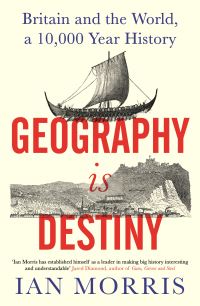
‘Geography is Destiny’ tells the history of Britain and its changing relationships with Europe and the wider world, from its physical separation at the end of the Ice Age to the first flickers of a United Kingdom, struggles for the Atlantic, and rise of the Pacific Rim. Applying the latest archaeological evidence, Ian Morris explores how geography, migration, government and new technologies interacted to produce regional inequalities that still affect us today. He charts Britain’s geopolitical fortunes over thousands of years, revealing its transformation from a European satellite into a state at the centre of global power, commerce, and culture. But as power and wealth shift from West to East, does Britain’s future lie with Europe or the wider world?
-
£8.99
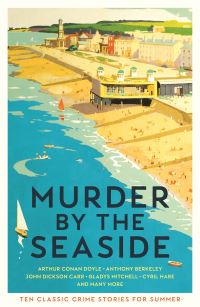
It’s the height of summer. As the heat shimmers on the streets and ice cream melts onto sticky fingers, tempers begin to rise and old grudges surface. From Cornish beaches to the French Riviera, it’s not just a holiday that’s on people’s minds – it’s murder. In these ten classic stories from writers such as Dorothy L. Sayers, Cyril Hare and Margery Allingham, you’ll find mayhem and mysteries aplenty.
-
£10.99
Adam Sedgwick was a priest and scholar. Roderick Murchison was a retired soldier. Charles Lapworth was a schoolteacher. It was their personal and intellectual rivalry, pursued on treks through Wales, Scotland, Cornwall, Devon and parts of western Russia, that revealed the narrative structure of the Paleozoic Era, the 300-million-year period during which life on Earth became recognisably itself. Nick Davidson follows in their footsteps and draws on maps, diaries, letters, field notes and contemporary accounts to bring the ideas and characters alive. But this is more than a history of geology. As we travel through some of the most spectacular scenery in Britain, it’s a celebration of the sheer visceral pleasure generations of geologists have found, and continue to find, in noticing the earth beneath our feet.
-
£8.99
4 March. HMQ pictured in the paper at an investiture wearing gloves, presumably as a precaution against Coronavirus. But not just gloves; these are almost gauntlets. I hope they’re not the thin end of a precautionary wedge lest Her Majesty end up swathed in protective get-up such as is worn at the average crime scene. 20 March. With Rupert now working from home my life is much easier, as I get regular cups of tea and a lovely hot lunch. A year in and out of lockdown as experienced by Alan Bennett. The diary takes us from the filming of Talking Heads to thoughts on Boris Johnson, from his father’s short-lived craze for family fishing trips, to stair lifts, junk shops of old, having a haircut, and encounters on the local park bench.
-
£9.99
Can you interpret the shipping forecast? Do you know your flotsam from your jetsam? Or who owns the foreshore? Can you tie a half-hitch – or would you rather splice the mainbrace? Full of charming illustrations and surprising facts, ‘Sea Fever’ provides the answers to all these questions and more.
-
£16.99
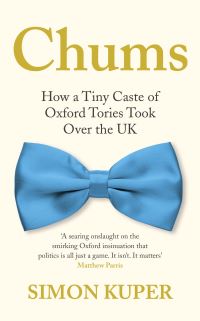
Boris Johnson, Michael Gove, David Cameron, George Osborne, Theresa May, Dominic Cummings, Daniel Hannan, Jacob Rees-Mogg: Whitehall is swarming with old Oxonians. They debated each other in tutorials, ran against each other in student elections, and attended the same balls and black tie dinners. They aren’t just colleagues – they are peers, rivals, friends. And, when they walked out of the world of student debates onto the national stage, they brought their university politics with them. Eleven of the fifteen postwar British prime ministers went to Oxford. In this book, Simon Kuper traces how the rarefied and privileged atmosphere of this narrowest of talent pools – and the friendships and worldviews it created – shaped modern Britain.