Showing 109–120 of 161 resultsSorted by latest
-
£25.00
In 1922, three men – only one of whom had previously heard of ‘broadcasting’ – founded the BBC. In doing so, Arthur Burrows, Cecil Lewis, and John Reith set out to accomplish something utterly bold: using what had been a weapon of war – Marconi’s wireless – to remake culture for the good of humanity. In ‘The BBC: A People’s History,’ professor and historian David Hendy traces the BBC from its maverick beginnings through war, the creation of television, changing public taste, austerity and massive cultural change. The BBC has constantly evolved, developing from one radio station, to television, then multiple channels and now the competition with the Internet and streaming services. This is a history of a now global institution that defines Britain and created modern broadcasting; it is also a reflection of 100 years of British history.
-
£9.99
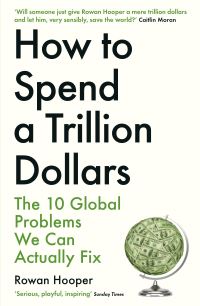
If you were given one trillion dollars, to be spent in a year, on science, what would you do? It’s an unimaginably large sum, yet it’s also the total of the money held by the Norwegian oil investment fund alone, or the current valuations of Apple Computer and of Amazon. So it’s both huge and possible. But what could you achieve? You could eradicate malaria, for one, or end global poverty. You could start to colonise Mars. You could build a massive particle collider to explore the nature of dark matter like never before. You could mine asteroids, build quantum computers, develop artificial consciousness, or increase human lifespan. Or how about transitioning the whole world to renewable energy? Or preserving the rainforests? Or saving all endangered species? You could refreeze the melting Arctic, reverse climate change, cure all diseases, and even launch a new sustainable agricultural revolution.
-
£10.99
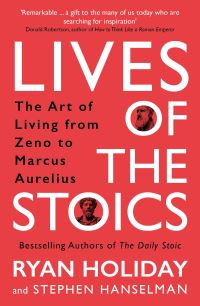
For millennia, Stoicism has been the ancient philosophy that attracts those who seek greatness, from athletes to politicians and everyone in between. And no wonder – its embrace of self-mastery, virtue and indifference to that which we cannot control has much to offer those grappling with today’s chaotic world. But who were the Stoics? In this book, Ryan Holiday and Stephen Hanselman offer a fresh approach to understanding Stoicism through the lives of the people who practiced it – from Cicero to Zeno, Cato to Seneca, Diogenes to Marcus Aurelius. Through short biographies of all the famous, and lesser-known, Stoics, this book will show what it means to live stoically, and reveal the lessons to be learned from their struggles and successes.
-
£10.99
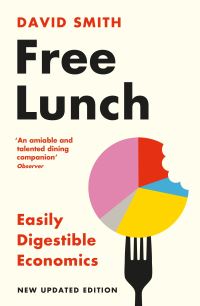
Set out like a good lunchtime conversation, ‘Free Lunch’ will escort you through the mysteries of the economy. Your guides will be some of the greatest names in the field, including Smith, Marx and Keynes. This clever and witty introduction to economics is essential reading in these times of economic uncertainty, and far more satisfying than even the most gourmet banquet.
-
£20.00
China is wiring the world, and, in doing so, rewriting the global order. As things stand, the rest of the world still has a choice. But the battle for tomorrow will require America and its allies to take daring risks in uncertain political terrain. Unchecked, China will reshape global flows of data to reflect its interests. It will develop an unrivalled understanding of market movements, the deliberations of foreign competitors, and the lives of countless individuals enmeshed in its systems. Networks create large winners, and this is one contest that democracies can’t afford to lose. Taking readers on a global tour of these emerging battlefields, Jonathan Hillman reveals what China’s digital footprint looks like on the ground, and explores the dangers of a world in which all routers lead to Beijing.
-
£25.00
Famed across the known world, jealously guarded by private collectors, built up over centuries, destroyed in a single day, ornamented with gold leaf and frescoes or filled with bean bags and children’s drawings – the history of the library is rich, varied and stuffed full of incident. Andrew Pettegree and Arthur der Weduwen explore the contested and dramatic history of the library, from the famous collections of the ancient world to the embattled public resources we cherish today. Along the way, they introduce us to the antiquarians and philanthropists who shaped the world’s great collections, trace the rise and fall of fashions and tastes, and reveal the high crimes and misdemeanours committed in pursuit of rare and valuable manuscripts.
-
£16.99
The natural world is full of mysteries, whether the masses of twigs that look like abandoned nests, fuzzy red balls on roses, stranded ponds on hilltops, or even the shaded ways we walk along. One of Britain’s best-known naturalists, John Wright here introduces us to the natural (and unnatural) mysteries of the countryside, giving us the tools to identify Witch’s Broom, Robin’s Pincushion, Dew ponds and Hollow Ways, and also their histories, how they come to be, and where to find them.
-
£14.99
Introduces 150 of the finest cheeses from across the British Isles. It is a perfect companion for all of us hooked by Ned Palmer’s acclaimed Cheesemonger’s History. Each cheese on Palmer’s cheeseboard is accompanied by a morsel of history or a dash of folklore, a description of its flavours, and an enticing illustration.
-
£20.00
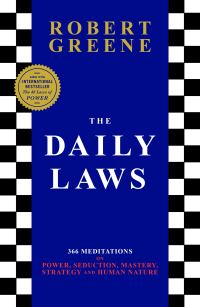
Over the last 22 years, Robert Greene has provided insights into every aspect of being human whether that be getting what you want, understanding others’ motivations, mastering your impulses, and recognizing strengths and weaknesses. ‘The Daily Laws’ distills that wisdom into daily entries. Each entry delivers refined and concise wisdom from one of his books, in an easy to digest lesson that will only take a few minutes to read, as well as a Commandment – a prescription or prompt for the reader to follow.
-
£9.99
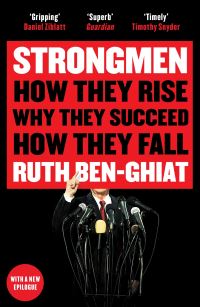
Today, countries from Russia to India, Turkey to America are ruled by men who combine populist appeal with authoritarian policies. These leaders have reshaped their countries around them, creating cults of personality which earn the loyalty of millions. And, as historian Ruth Ben-Ghiat shows, they do so by drawing on a playbook of behaviour established by figures such as Benito Mussolini, Muammar Gaddafi and Adolf Hitler. So why – despite the evidence of history – do strongmen still hold such appeal for us? Ruth Ben-Ghiat reveals how, for a hundred years, charismatic leaders have emerged at moments of uncertainty and transition, manipulating electoral systems, brutally suppressing opposition, gaining control of the media and distorting the imaginations of the people they rule over in pursuit of absolute power.
-
£20.00
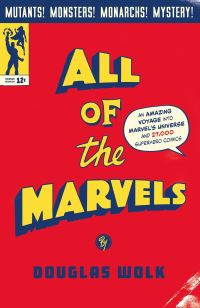
A critic and superfan takes on the superhero epic to end all epics. What he finds is a magic mirror of the past 60 years, from the atomic terrors of the Cold War to the political divides of our present. Wolk teases out Marvel’s mixture of progressive visions and painful stereotypes, its regrettable moments as well as its flights of luminous creativity. The result is an irresistible travel-guide to the magic mountain at the heart of popular culture.
-
£9.99
The time since the Second World War has been seen by some as the longest uninterrupted period of harmony in human history: the ‘long peace’, as Stephen Pinker called it. But despite this, there has been a military conflict ongoing every year since 1945. The same can be said for every century of recorded history. Is war, therefore, an essential part of being human? In ‘War’, Professor Margaret MacMillan explores the deep links between society and war and the questions they raise. We learn when war began – whether among early homo sapiens or later, as we began to organise ourselves into tribes and settle in communities. We see the ways in which war reflects changing societies and how war has brought change – for better and worse. Economies, science, technology, medicine, culture: all are instrumental in war and have been shaped by it.