Showing 13–24 of 38 resultsSorted by latest
-
£10.99
Eszter Encsy is an acclaimed actress, funny and outrageous, quick-witted but callous. Yet even flushed with the success of adulthood, Eszter craves acceptance of herself as she really is and of the person she has been. The only child of an impoverished aristocrat and a harried music teacher failing to make ends meet, Eszter grew up poor and painfully aware of it in a provincial Hungarian town. The feelings of resentment and envy acquired during her fraught childhood have hardened into an obsessional hatred for one person, the beautiful, saintly and pampered Angéla, Eszter’s former classmate and the wife of the man who becomes her lover.
-
£10.99
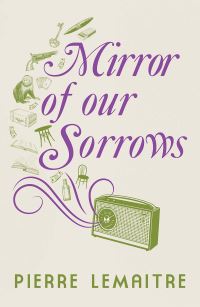
April, 1940. Louise Belmont runs, naked, down the boulevard du Montparnasse. To understand the tragic scene she has just experienced, she will have to plunge into the madness of the ‘Phoney War’, when the whole of France, seized by the panic of a new World War, descends into chaos. Alongside bistro-owner Monsieur Jules, new recruit Gabriel and small-time crook Raoul, Louise navigates this period of enormous upheaval and extraordinary twists of fate, for as the Nazi’s advance, the threat of German occupation will uncover long-buried secrets and make strange bedfellows. With his characteristic wit and verve, Pierre Lemaitre chronicles the greatness and decline of a people crushed by circumstance. In ‘Mirror of Our Sorrows’, the final novel in the Paris between-the-wars trilogy, is an incandescent tale that is both burlesque and tragic.
-
£9.99
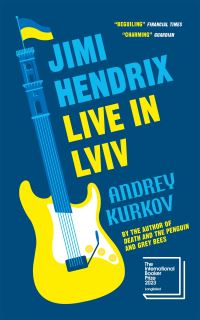
Strange things are happening in the cosmopolitan town of Lviv, western Ukraine. Seagulls are circling and the air smells salty, though Lviv is a long way from the sea. A group of ageing hippies meets at the cemetery in the middle of the night, gathered around a mysterious grave. Among them the ex-KGB officer who means to apologise to all those he spied on; the woman who is allergic to banknotes, and yet works at the money exchange; and Taras, who makes a living driving at top speed over cobblestones in his ancient Opel Vectra, curing paying passengers of their kidney stones. Kurkov’s novels are often populated by lonely people going through difficult times, and by his own brand of black humour combined with magic realism (occasionally vodka-fuelled).
-
£9.99
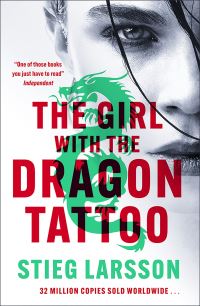
40 years ago, Harriet Vanger disappeared off the secluded island owned and inhabited by the powerful Vanger family. There was no corpse, no witnesses, no evidence. But her uncle, Henrik, is convinced that she was murdered by someone in her own family – the deeply dysfunctional Vanger clan.
-
£9.99
Burnt-out from policework, Detective Sergeant George Manolis flies from Australia to Greece for a holiday. Recently divorced and mourning the death of his father, who emigrated from the turbulent Prespes region which straddles the borders of Greece, Albania and North Macedonia, Manolis hopes to reconnect with his roots and heritage. On arrival, Manolis learns of the disappearance of an ‘invisible’ – a local man who lives without a scrap of paperwork. The police and some locals believe the man’s disappearance was pre-planned, while others suspect foul play. Reluctantly, Manolis agrees to work undercover to find the invisible, and must navigate the complicated relationships of a tiny village where grudges run deep.
-
£9.99
It all starts with an innocuous curiosity: at the Hotel de Verbier, a luxury hotel in the Swiss Alps, there is no Room 622. This anomaly piques the interest of Joël Dicker, Switzerland’s most famous literary star, who flees to the Verbier to recover from a bad breakup, mourn the death of his publisher, and begin his next novel. Before he knows it, he’s coaxed out of his slump by a fellow guest, who quickly uncovers the reason behind Room 622’s erasure – an unsolved murder. The attendant circumstances – a love triangle and a power struggle at the heart of Switzerland’s largest private bank, a mysterious counter-intelligence unit known only as P-30, and a shadowy émigré with more money than God.
-
£12.99
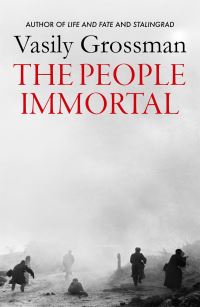
One of Grossman’s three great war novels, ‘The People Immortal’ is both a work of fiction and an important contribution to the Soviet war effort. Set during the catastrophic defeats of the war’s first months, it tracks a Red Army regiment that wins a minor victory in eastern Belorussia but fails to exploit this success. A battalion is then entrusted with the task of slowing the German advance, and eventually encircled, before ultimately breaking out and joining with the rest of the Soviet forces.
-
£9.99
Professor Hans Rekke: born into a wealthy Stockholm family, world authority on interrogation techniques, capable of vertiginous feats of logic and observation. But he might just fall apart when the going gets tough, leading to substance abuse and despair. Micaela Vargas: community police officer, born to Chilean political refugees in a tough suburb, with two brothers on the shady side of the law. Vargas feels she has something to prove. She’s tenacious and uncompromising, but she needs Rekke’s unique mind to help her solve the case. Rekke has it all – wealth, reputation – but also a tendency to throw it all away. He needs Vargas to help him get back on an even keel so he can focus his mind on finding the killer before they’re both silenced for good.
-
£10.99
What happened to the books that were too valuable to burn? The story of a Jewish chef whose bestselling cookbook was expropriated under the Nazi regime. Alice Urbach had her own cooking school in Vienna, but in 1938 she was forced to flee to England, like so many others. Her younger son was imprisoned in Dachau, and her older son, having emigrated to the United States, became an intelligence officer in the struggle against the Nazis. Returning to the ruins of Vienna in the late 1940s, she discovers that her bestselling cookbook has been published under someone else’s name. Now, eighty years later, the historian Karina Urbach – Alice’s granddaughter – sets out to uncover the truth behind the stolen cookbook, and tells the story of a family torn apart by the Nazi regime, of a woman who, with her unwavering passion for cooking, survived the horror and losses of the Holocaust to begin a new life in America.
-
£16.99
Strange things are happening in the cosmopolitan town of Lviv, western Ukraine. Seagulls are circling and the air smells salty, though Lviv is a long way from the sea. A group of ageing hippies meets at the cemetery in the middle of the night, gathered around a mysterious grave. Among them the ex-KGB officer who means to apologise to all those he spied on; the woman who is allergic to banknotes, and yet works at the money exchange; and Taras, who makes a living driving at top speed over cobblestones in his ancient Opel Vectra, curing paying passengers of their kidney stones. Kurkov’s novels are often populated by lonely people going through difficult times, and by his own brand of black humour combined with magic realism (occasionally vodka-fuelled).
-
£20.00
April, 1940. Louise Belmont runs, naked, down the boulevard du Montparnasse. To understand the tragic scene she has just experienced, she will have to plunge into the madness of the ‘Phoney War’, when the whole of France, seized by the panic of a new World War, descends into chaos. Alongside bistro-owner Monsieur Jules, new recruit Gabriel and small-time crook Raoul, Louise navigates this period of enormous upheaval and extraordinary twists of fate, for as the Nazi’s advance, the threat of German occupation will uncover long-buried secrets and make strange bedfellows. With his characteristic wit and verve, Pierre Lemaitre chronicles the greatness and decline of a people crushed by circumstance. In ‘Mirror of Our Sorrows’, the final novel in the Paris between-the-wars trilogy, is an incandescent tale that is both burlesque and tragic.
-
£12.99
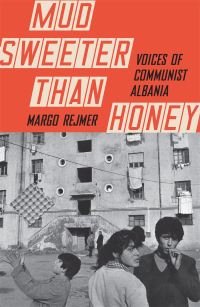
After breaking ties with Yugoslavia, the USSR and then China, Enver Hoxha believed that Albania could become a self-sufficient bastion of communism. Every day, many of its citizens were thrown into prisons and forced labour camps for daring to think independently, for rebelling against the regime or trying to escape – the consequences of their actions were often tragic and irreversible. ‘Mud Sweeter than Honey’ gives voice to those who lived in Albania at that time – from poets and teachers to shoe-makers and peasant farmers, and many others whose aspirations were brutally crushed in acts of unimaginable repression – creating a vivid, dynamic and often painful picture of this totalitarian state during the forty years of Hoxha’s ruthless dictatorship.