Showing 1–16 of 20 resultsSorted by latest
-
£20.00
Miles Krzelewski is a devoted husband, a doting father beloved for his outlandish bedtime stories, and the proud owner of a truffle-hunting dog in a land with no truffles. He is also a bit lost, twelve years late with his PhD on Russian folktales, and increasingly haunted by a sense that he’s become a disappointment to his family. So when his wife Kate accepts a visiting professorship at a prestigious college in the far away forests of Vermont, he decides that this will be his year to finally move forward with his life. But Miles is a man of many enthusiasms, who possesses, in Kate’s words, ‘a great capacity to fall in with anyone, anywhere.’ And no sooner does he arrive than he finds himself entangled with a cast of characters as colourful as any of his folktales, from a ghostly tree surgeon to a scythe-mad biochemist, the world’s delusions in a ‘Inventory of Wrong Ideas’.
-
£25.00
A respected historian of the British Empire closes the chasm between how the British see themselves and how they are actually seen abroad. The United Kingdom is a country that evokes strong opinions but frequently escapes rigorous definition. Seen from the outside, it is a wildly contradictory place. One of the world’s strongest economies, where inequality is rampant. Famous for its pageantry and traditions, but selective about remembering its imperial past. By diving into its many paradoxes, Helene von Bismarck reveals why the political debate in – and, internationally, about – the United Kingdom has for years been driven by people who talk past, rather than with, each other. This title explores and challenges the way the British see themselves, their political and constitutional system and their role in the world – encouraging readers to leave our echo chambers and look through new eyes at this complex and sometimes bewildering countr
-
£12.99
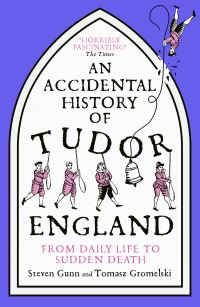
A new history of the Tudor world, told by uncovering ordinary people’s grizzly fatal accidents. There is untold history of Tudor England – the history of the several million subjects of their famous kings and queens. What did ordinary people do all day, in their homes, their work, their leisure and travel? This title explores the history of everyday life, and everyday death. Here we learn that fatal accidents were much more likely to take place during the agricultural peak season, with cart crashes, dangerous harvesting techniques, horse tramplings and windmill manglings all as major causes.
-
£12.99
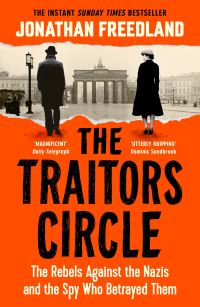
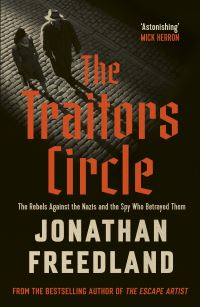
Berlin, 1943. A group of high-society anti-Nazi dissenters meet for a tea party one late summer afternoon. They do not know that, sitting around the table, is someone poised to betray them all to the Gestapo – revealing their secret to the Nazis’ most ruthless detective. They form a circle of unlikely rebels, drawn from the German elite: two countesses, a diplomat, an intelligence officer, an ambassador’s widow and a pioneering headmistress. Meeting in the shadows, rescuing Jews or plotting for a future Germany freed from the Führer’s rule, what unites them is a shared loathing of the Nazis, a refusal to bow to Hitler and the courage to perform perilous acts of resistance. Or so they believe. How did a group of brave, principled rebels, who had successfully defied Adolf Hitler for more than a decade, come to fall into such a lethal trap?
-
£10.99
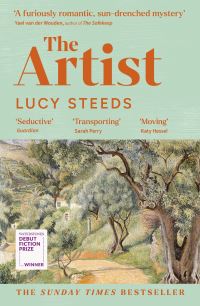
Provence, 1920. Ettie moves through the remote farmhouse, silently creating the conditions that make her uncle’s artistic genius possible. Joseph, an aspiring journalist, has been invited to the house. He believes he’ll make his name by interviewing the reclusive painter, the great Edouard Tartuffe. But everyone has their secrets. And, under the cover of darkness, Ettie has spent years cultivating hers.
-
£25.00
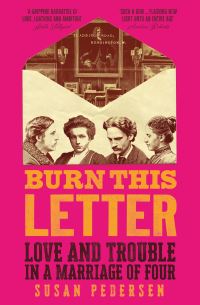
‘Burn this!’ Why did so many letters between Lady Frances and Lady Betty begin this way? What did they have to hide? Alike in so many ways, political, passionate, argumentative and deeply intelligent. It’s no surprise that once Frances and Betty became sisters-in-law, they became close friends. There was just one problem. Frances was in love with Betty’s husband. Their unconventional solution they found was an ‘experiment in living’, a ménage à quatre. Setting up homes on the same street, they shared everything: money, meals, governesses, and husbands. When Susan Pedersen discovered their amazing cache of letters, she was spellbound. Her book follows their extraordinary friendship as both women seized every freedom afforded to them, leaving their drawing rooms for the streets and the soapbox, joining the fight for the women’s vote. This is the untold story of two women who carved a path together through an elite male world.
-
£25.00
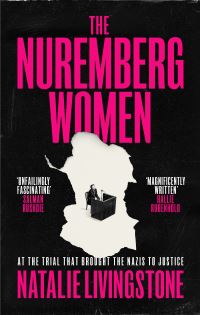
The most famous trial of the twentieth century – told through the eyes of the women history forgot. In November 1945, the world turned its gaze to Nuremberg. Inside a courtroom built by and for men, justice was being sought for crimes almost beyond comprehension. The spotlight fell on Nazi leaders, Allied prosecutors and military judges – but in the shadows, women were recording, interpreting, witnessing, painting, testifying. Yet their names were often missing from the headlines. Eighty years on, this book finally returns them to the centre of the story. The work follows eight extraordinary figures: a young Soviet interpreter balancing political survival with truth-telling; a British painter capturing justice in oils; a French resistance fighter who survived Auschwitz to confront her persecutors; a Hungarian countess hosting both Nazis and survivors in a single house.
-
£22.00
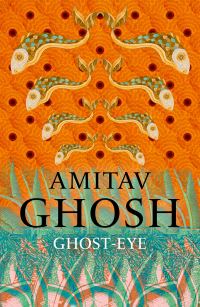
Calcutta, September 1969Varsha Gupta wants fish for her lunch. Her family can’t understand it; the three-year-old has never tasted fish in her life. The Guptas are strict vegetarians and don’t allow it inside their Calcutta mansion. But Varsha claims she can remember another life, a mud house by a river where she caught and cooked fish with a different mother. Perplexed, the Guptas turn to Dr. Shoma Bose, a psychiatrist who has been investigating what are known as ‘cases of the reincarnation type’ for years. But her understanding of the world is changed forever by Varsha’s revelations. Half a century later, Varsha’s therapeutic case file catches the attention of a group of environmental activists, and Shoma’s nephew Dinu is drawn inexorably into their plans. And as Dinu finds himself caught up in the search for Varsha, buried memories of his own past begin to surface.
-
£18.99
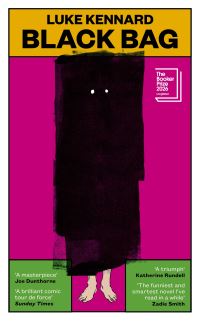
A penniless and out-of-work actor picks up a job working for Dr Blend, a university professor who is conducting a psychological experiment. How will Dr Blend’s students react to someone zipped into on oversized bag, sitting at the back of the lecture hall over a series of autumn term lectures? The role, eagerly accepted, soon has unexpected consequences. A professor of post-humanism develops research questions of her own, in particular can you love someone secreted away inside a black bag? Meanwhile, the actor’s childhood friend and flatmate forms a vision for monetising this new situation.
-
£10.99
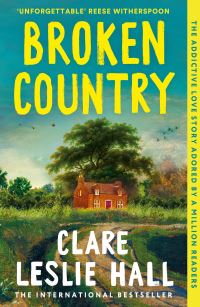
Everyone in the village said nothing good would come of Gabriel’s return. And as Beth looks at the man she loves on trial for murder, she can’t help think they were right. She was 17 when she’d first met Gabriel. Over that heady, intense summer, he made her think and feel and see differently. She thought it was the start of her great love story and that it would last forever. When Gabriel left to become the person his mother expected him to be, she was broken. It was Frank who picked up the pieces. Together they’d built a home very different from the one she’d imagined with Gabriel. And there was a time – even years – when she was happy. Watching her husband and son riding a tractor across their farm, she remembered feeling so sure that, after everything, this was the life she was supposed to be leading. But then Gabriel came back, and all Beth’s certainty about who she was crumbled.
-
£25.00
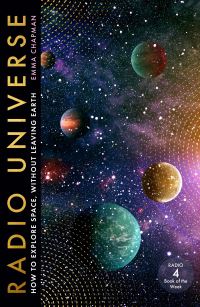
How do you explore distant stars, buried water on Mars or the first moments after the Big Bang – without leaving your back garden? In this book, astrophysicist Emma Chapman takes us on an electrifying voyage through the cosmos using one of the most powerful, yet overlooked, tools in science: the radio wave. With dazzling clarity and humour, Chapman reveals how these invisible messengers glide through space, bounce off planets, tunnel through clouds and slip past galactic dust – carrying secrets of the universe that no other kind of light can uncover.
-
£25.00
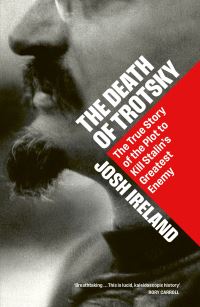
In August 1940, a man walked into Leon Trotsky’s study in Mexico City and drove an ice pick into his skull. The killer? Ramon Mercader – an aristocratic Spaniard turned Soviet assassin. The mastermind? Joseph Stalin. But this was no simple hit. It was the climax of a decade-long global hunt: a story of seduction and betrayal, of fake identities and secret loyalties, of idealists and fanatics, lovers and spies. While Trotsky raged in exile – still clinging to his revolutionary dream – Stalin’s agents closed in. And at the heart of it all was Mercader: a man trained to lie, charm and ultimately to kill.
-
£12.99
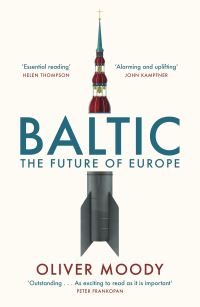
The Baltic’s time has come. It is not only critical to Europe’s security and increasingly a centre of political and military power in its own right; it is a reservoir of ideas and experiences that could shape the continent’s future. The Baltic offers by far the most successful examples of the reintegration of Europe’s old capitalist and communist blocs. It abounds in pioneering environmental initiatives, ranging from the world’s first geological ‘forever’ storage facility for nuclear waste in Finland to its first ‘zero waste’ community, on the Danish island of Bornholm. Brutalised by the twentieth century, the rebounding economies of Poland, Finland and Estonia are case studies in the mobilisation of social resources and the transformative power of technology. This book explores the history, their culture, their peculiarities and national dilemmas of all nine Baltic countries.
-
£26.00
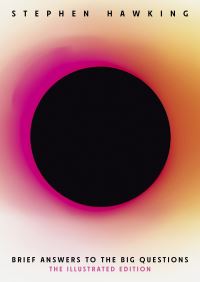
Wide-ranging, intellectually stimulating, passionately argued, and infused with his characteristic humour, ‘Brief Answers to the Big Questions’, the final book from one of the greatest minds in history, is a personal view on the challenges we face as a human race, and where we, as a planet, are heading next.
-
£12.99
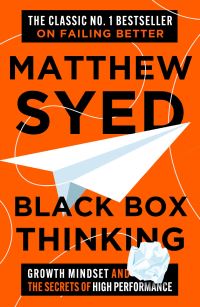
How many of us, hand on heart, can say that we have a healthy relationship with failure? Learning from failure has the status of a cliché, but this book reveals the astonishing story behind the most powerful method of learning known to mankind, and reveals the arsenal of techniques wielded by some of the world’s most innovative organisations. It also reveals the dangers of failing to learn from mistakes.
-
£25.00
Berlin, 1943. A group of high-society anti-Nazi dissenters meet for a tea party one late summer afternoon. They do not know that, sitting around the table, is someone poised to betray them all to the Gestapo – revealing their secret to the Nazis’ most ruthless detective. They form a circle of unlikely rebels, drawn from the German elite: two countesses, a diplomat, an intelligence officer, an ambassador’s widow and a pioneering headmistress. Meeting in the shadows, rescuing Jews or plotting for a future Germany freed from the Führer’s rule, what unites them is a shared loathing of the Nazis, a refusal to bow to Hitler and the courage to perform perilous acts of resistance. Or so they believe. How did a group of brave, principled rebels, who had successfully defied Adolf Hitler for more than a decade, come to fall into such a lethal trap?