Beyond Britannia
£22.00The former head of the UK’s Diplomatic Service considers what the future of Britain’s foreign policy should look like.
We recently launched our new website and are facing a few teething issues. If you see any problems please contact us.
We recently launched our new website and are facing a few teething issues. If you see any problems please contact us.

Showing 13–24 of 30 resultsSorted by latest
The former head of the UK’s Diplomatic Service considers what the future of Britain’s foreign policy should look like.
When a party is riven with division people do not know what it stands for. Though both major parties have been subject to internal conflict over the years, it is the Labour Party which has been more given to damaging splits. The divide exposed by the Corbyn insurgency is only the most recent example in a century of destructive infighting. Indeed, it has often seemed as though Labour has been more adept at fighting itself than in defeating the Tory party. This book examines the history of Labour’s civil wars and the underlying causes of the party’s schisms, from the first split of 1931, engineered by Ramsay MacDonald, to the ongoing battle for the future between the incumbent, Keir Starmer, and those who fundamentally altered the party’s course under his predecessor, Jeremy Corbyn.

The new Cabinet in January 1924 consisted, as governments had for generations, of 20 white, middle-aged men. But that is where the similarities with previous governments ended, for the election of Britain’s first Labour administration witnessed a radical departure from government by the ruling class. Replacing Stanley Baldwin’s Conservatives were Ramsay MacDonald’s Labour, the majority of whom had left school by the age of 15. Five of them had started work by the time they were 12 years old. Three were working down the mines before they entered their teens. Two were illegitimate, one was a foundling, three were of Irish immigrant descent. For the first time in Britain’s history the Cabinet could truly be said to represent all of Britain’s social classes. This unheralded revolution in representation is the subject of Peter Clark’s fascinating new book, ‘The Men of 1924’. Who were these men?
A humorous and sideways look at the lives of some of the great and eccentric economic minds.
Leadership of the United Kingdom is being debated as never before. This book is a clear-sighted and insightful contribution to that debate.
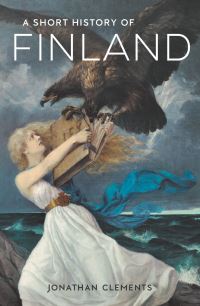
This updated edition includes expanded coverage on the Second World War, as well as new sections on Finns in America and Russia, the centenary of the republic, and Finland’s battle with COVID-19, right up to its historic application to join NATO.
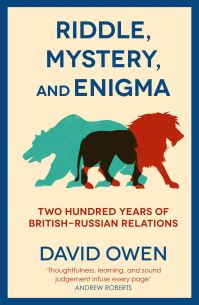
With Owen’s characteristic insight and expertise, Riddle, Mystery, and Enigma depicts a relationship governed by principle as often as by suspicion, expediency, and outright necessity.
The Bonfire of the Decencies offers a range of suggestions about what might be done to repair and restore the British constitution.
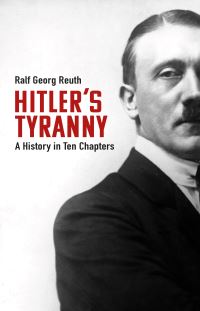
A fresh and stimulating look at Hitler’s dictatorship through the study of ten key historical aspects. The portrait that emerges is one of a murderous fantasist and political opportunist driven by an all-embracing ideology of racial superiority.
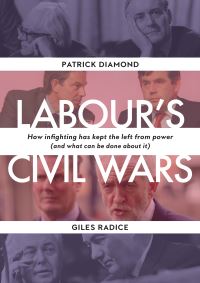
When a party is riven with division people do not know what it stands for. Though both major parties have been subject to internal conflict over the years, it is the Labour Party which has been more given to damaging splits. The divide exposed by the Corbyn insurgency is only the most recent example in a century of destructive infighting. Indeed, it has often seemed as though Labour has been more adept at fighting itself than in defeating the Tory party. This book examines the history of Labour’s civil wars and the underlying causes of the party’s schisms, from the first split of 1931, engineered by Ramsay MacDonald, to the ongoing battle for the future between the incumbent, Keir Starmer, and those who fundamentally altered the party’s course under his predecessor, Jeremy Corbyn.

Henry Marten – soldier, member of parliament, organiser of the trial of Charles I and signatory of the King’s death warrant – is today a neglected figure of the seventeenth-century. Yet at the fulcrum of English history during the turbulent years of the civil war, the protectorate and the restoration, his life is both extraordinary and emblematic. Imprisoned in the Tower of London and tried at the Old Bailey, Marten is found guilty of High Treason only to be held captive for years on the equivalent of death row. It was only many years later that his letters to his mistress Mary Ward were stolen and published in an attempt to destroy his reputation. Witty, clever, loving, sardonic and never despairing, the letters offer a rare and extraordinary insight into the everyday life of a man in the Tower of London awaiting a sentence of death.
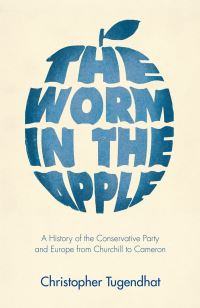
The Conservative Party has been in power for 47 of the 65 years since the end of the Second World War. During that time the division within the party over Europe has been the enduring drama of British politics – from Churchill’s decision not to join the original European Coal and Steel Community in 1951 to Cameron’s decision to hold an In/Out referendum in 2016. ‘The Worm in the Apple’ tells the story of the arguments and divisions within the Conservative Party regarding the issue of Europe.
No products in the basket.
Notifications