Showing 1–12 of 30 resultsSorted by latest
-
£10.99
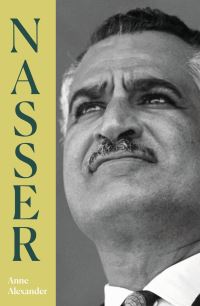
Anne Alexander describes the life of Gamal Abdel-Nasser (1918-1970), father of modern, independent Egypt and an icon of Arab nationalism. In the 1950s he was a key figure in the Free Officers revolutionary organization. He is remembered for standing up to the British in the Suez Crisis and building the Aswan Dam.
-
£7.99
Peter Hennessy and Andrew Blick pose the question of whether the UK’s constitution sufficiently protects our democracy against an authoritarian takeover. Put simply, they explore what would happen if a leader refused to leave office once voted out in a General Election. In the light of the resurgence of the far right across Europe, the rhetoric of the latest General Election, and the legacies of the Boris Johnson years, Hennessy and Blick ask whether there are sufficient contingency plans in place for such an eventuality. Mapping out the processes which would occur after a leader refuses to step down, and the hypothetical actions of several key players – including the King, Speaker of the House, and members of the Cabinet, Judiciary, Treasury, Secret Service and House of Lords – they analyse the legislation that aims to protect parliamentary democracy.
-
£30.00
As one of Britain’s foremost constitutional experts and contemporary historians, Peter Hennessy has spent his professional life unpacking the arcane world of Whitehall and Westminster. In this volume, he brings together selected journalism, unpublished lectures, and new writing alongside personal recollections and reflections on his time observing post-war Britain, how it is governed, and those who do the governing.
-
£25.00
Offers a refreshing approach to the life and work of Austrian writer Stefan Zweig and delves into his considerable contribution to world literature, rooted in the Austro-Jewish tradition. His privileged social background saw him embrace European culture and cosmopolitanism. A world traveller from the outset he liked to uproot himself but whether he stayed in London, New York or, eventually, in Brazil, his literary baggage continued to contain the flair of fin de siècle Vienna. This biography re-examines Zweig’s influential time in England and offers new insights into his final years in the United States and Brazil; it discusses some of his prolific literary output in relation to his life; and takes his political views on Europe, Zionism, and the world order more in greater depth than previous appraisals of Zweig’s life.
-
£25.00
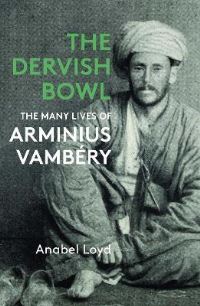
Who was Arminius Vámbéry? A poverty-stricken, Jewish auto-didact; a linguist, traveller, and writer; or a sometime Zionist, inspiration for Dracula’s nemesis, and British secret agent? Vámbéry wrote his own story many times over. And it was these often highly embroidered accounts of journeys through Persia and Central Asia that saw him acclaimed in Victorian England as an intrepid explorer and daring adventurer. Against the backdrop of the ‘Great Game’, in which Russia and Britain jostled for territory, influence, and control of the borders and gateways to India and its wealth, Vámbéry played the roles of hero and double-dealer, of fascinated witness and Imperialist charlatan. ‘The Dervish Bowl’ is the story of these competing narratives, a compelling investigation of the ever-changing persona Vámbéry created for himself.
-
£22.00
‘Making the Weather’ is the story of six post-war politicians, all of whom exerted an outsized influence on the political life of the UK: an influence greater than that of most prime ministers. Vernon Bogdanor’s cast includes three from the political Left – Aneurin ‘Nye’ Bevan, Roy Jenkins, and Tony Benn – and three from the Right – Enoch Powell, Keith Joseph, and Nigel Farage. Each study is a fascinating analysis that examines how these men achieved such prominence and influence and how, though very different figures in many ways, they came to dominate the political landscape, often for a period of years. Each of the six made fundamental contributions to the debate about Britain’s future and to the vibrancy of our democracy.
-
£11.99
A Palestinian activist recalls his adolescence in Gaza during the Second Intifada, and how he made a strong commitment to peace in the face of devastating brutality in this moving, candid, and transformative memoir that reminds us of the importance of looking beyond prejudice, anger, and fear.
-
£9.99
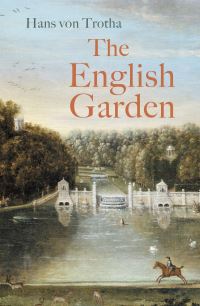
Garden design in England was entirely reinvented during the 18th century. The strictly symmetrical gardens of the French Baroque were replaced by artificial landscapes almost indistinguishable from natural scenery. What continues to govern our notions of a beautiful landscape, even today, is the ideal image of nature conceived by 18th-century English landscape gardeners. Hans von Trotha’s journey through the history of the English garden introduces us to 12 of the most important, original, and beautiful parks in Britain, all of which can be visited today. On the way, we learn how the new landscape garden was born of the spirit of political opposition. We also learn of the significance of imitation Greek temples and Gothic ruins.
-
£7.99
Since the UK’s withdrawal from the EU, the constititional position of Northern Ireland within the Union has endured an unusual level of attention. Lisa Claire Whitten has written a concise history of Northern Ireland through its pivotal moments: the 1920-72 Unionist-led governments, the following 30 years of bitter conflicts, the 1998 Belfast/Good Friday Agreement, and the 2016 referendum on the UK’s membership of the EU. Considering each of the moment in the broader setting of UK constititional norms and narratives, she addresses the exceptional constitutional characteristics of Northern Ireland and ways in which these have often resulted in a ‘blindspot’ analysis of the Union. This short book also considers the implications of Brexit and the constitutional impacts and shifts it has brought to Northern Ireland and discuss the possible constitutional repercussions.
-
£11.99
Charles de Gaulle, saviour of France’s honour in 1940 and founder of the Fifth Republic, was a man and leader of deep contradictions. A conservative and a Catholic from a monarchist family, he restored democracy on his return to France in 1944, bringing the Communists into his government. An imperialist, he oversaw the final stages of France’s withdrawal from its last colonies in the 1960s. As a soldier, he spent much of his career in opposition to France’s military establishment. Yet, as Julian Jackson shows, it was precisely because of these contradictons that De Gaulle was able to reconcile so many of the conflicting strands in French politics. In 1958, and in response to a coup by the French military in Algeria, De Gaulle introduced a new political systemm the Fifth Republic, ushering in a period of stability that has held to the present day.
-
£12.99
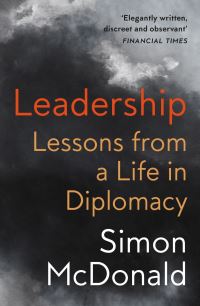
When Abraham Lincoln said, ‘You can be anything you want to be,’ Americans, and eventually everybody everywhere, lifted their sights. Nowadays anybody can aspire to be a leader, and nearly everybody has to lead sometimes. In his first book, Simon McDonald assumes that thinking about leadership before you lead helps you lead better. No matter the circumstances in which we might be called to lead – be it at work, on the sports field, or in the community – the example of top leaders in politics and public service (both their successes and shortcomings) can help you figure out your own approach. Over four decades in HM Diplomatic Service, Simon worked for four permanent under-secretaries and a dozen senior ambassadors before becoming permanent under-secretary himself and leading the Service (which has over 14,000 staff in 270 countries worldwide) for five years.
-
£22.00
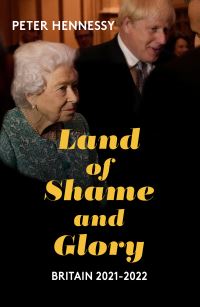
Peter Hennessy brings his deep political and historical understandign to this study of two of the most turbulent and disruptive years experienced by Britain in peacetime. As the protracted withdrawal from the EU and the disruption caused by the COVID-19 pandemic dragged on, a series of unprecedented challenges – some global, some domestic – laid bare the fragility of Britain the Union.