
Showing all 8 resultsSorted by latest
-

-
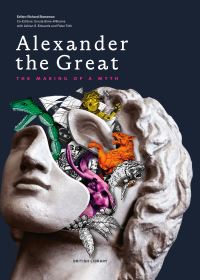
Alexander the Great
£30.00Accompanying the first ever exhibition on the storytelling around Alexander the Great, King of Macedon, this book charts the evolution of a legend that continues to captivate audiences today.
-
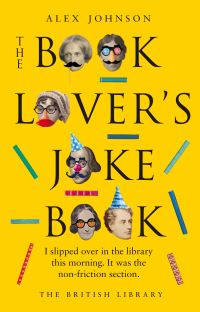
The Book of Book Jokes
£9.99‘The Book of Book Jokes’ includes a huge range of comic material concentrating exclusively on the themes of books, reading, libraries, bookshops, and the literary life. As well as one-liners, puns, knock-knock jokes, and shaggy dog stories, it features sections including gravestones, book titles, jokes in acknowledgements, copyright and index pages, literary hoaxes, literary snark, and authors’ in-jokes in novels, as well as sections such as Charles Dickens’s humorous fake book decorations. It also features the favourite jokes of well-known writers, and a selection of literary cartoons.
-

A History of Britain in 100 Maps
£40.00Jeremy Black takes readers deep into the collections of the British Library Map Room to tell a new story of the British Isles through acknowledged treasures and previously undiscovered and unpublished items.
-
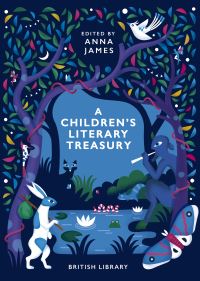
A Children’s Literary Treasury
£20.00Great stories ignite a child’s imagination and can fill a childhood with unforgettable characters, wondrous places and superb illustrations. They also allow young readers to explore, and to understand, their different feelings and experiences. In her second compilation for the British Library, children’s author and commentator Anna James delves deep into the collections to present stories for comfort, inspiration and adventure as well as touching tales to make you laugh or sometimes cry.
-
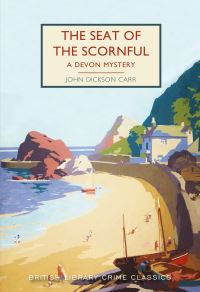
The Seat of the Scornful
£9.99Over a long career in the courts Justice Horace Ireton has a garnered a reputation for merciless rulings and his dedication to meting out strict, impartial justice. Taking a break from his duty after a session of assizes, Ireton retreats to his seaside bungalow in Devon and turns his attention to family, and specifically in attempting to bribe his daughter’s lover Morrell to leave her alone so that she may instead marry the respectable clerk, Fred Barlow. It seems something about the deal with Morrell must have gone amiss, however, when the police are called to the Justice’s residence to find Morrell shot dead and the judge still holding a pistol. But would the lawman be so bold to commit a murder like this? With a number of strange items making up the physical evidence Dr Gideon Fell, himself an old friend of Ireton’s, is summoned to help with the deceptively simple – yet complex – investigation.
-

The Story of Propaganda in 50 Images
£16.99Propaganda is thousands of years old. But it came of age in the 20th century, when the development of mass media (and later multimedia communications) offered a fertile ground for its dissemination, and the century’s global conflicts provided the impetus needed for its growth. Put simply, propaganda is the dissemination of ideas intended to think and act in a particular way and for a particular persuasive purpose. But it takes many forms, is fluid and indeed is constantly developing, most fervently in our own digital era. Terms such as ‘fake news’, ‘post-truth’, ‘gate-keepers’ and ‘asymmetrical warfare’ were unknown a decade ago yet today are now commonplace, and often cynically derided, in daily media communications. David Welch has selected 50 images to highlight the continuities and dis-continuities of mass-communication throughout history.
-
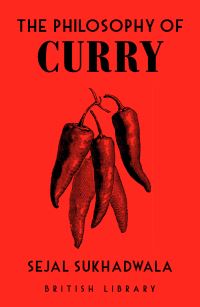
The Philosophy of Curry
£10.00There are curries on almost every continent, with a stunning diversity of flavours and textures across India alone, and many more interpretations the world over, including in Indonesia, Malaysia, Japan, Trinidad and the curry capital of the UK, Bradford. But curry is difficult to define. The word has origins in ancient India, but its adoption by Portuguese and British colonisers saw curry reinterpreted in the west to encompass an entire cuisine, prompting many Indians to reject the term outright. Sejal Sukhadwala probes the complex intersection of tradition and colonialism through the fascinating history of curry, from its association with Ayurveda – one of the world’s oldest holistic healing systems to its enduring popularity in contemporary British culture.