What to do when I’m gone
£12.99A mother’s advice to her daughter–a guide to daily living, both practical and sublime–with full-color illustrations throughout.

Showing 337–348 of 371 resultsSorted by latest
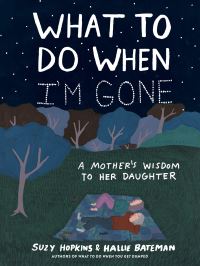
A mother’s advice to her daughter–a guide to daily living, both practical and sublime–with full-color illustrations throughout.
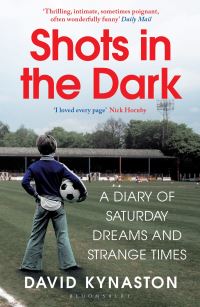
Brimming with wisdom and humour, David Kynaston’s diaries written over one football season offer up his most personal take on social history to date. David Kynaston was seven and a half years old when he attended his first Aldershot match in the early months of 1959. So began a deep attachment to the game and a lifelong loyalty to an obscure, small-town football club. Though as he sits down to write his diaries almost 60 years on, he reflects that life might have been simpler if his father had never taken him to that first match at the Rec. A testament to the ways in which fandom gives solidity and security to our lives, particularly in these bewildering and rapidly changing times, ‘Shots in the Dark’ gets to the heart of what it means to be a devoted follower of a sports team.
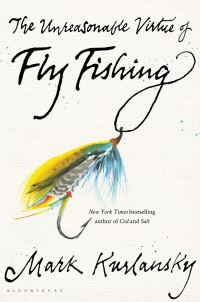
‘The Unreasonable Virtue of Fly Fishing’ marries Kurlansky’s signature wide-ranging reach with a subject that has captivated him for a lifetime, combining history, craft and personal memoir to show readers – devotees of the sport or not – the necessity of experiencing nature’s balm first-hand.
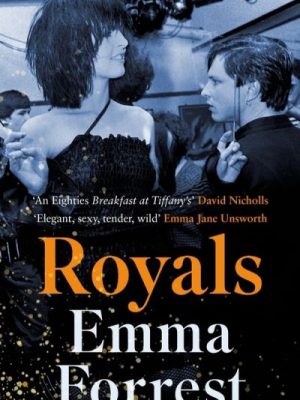
July, 1981. London. Shy, working-class Steven finds solace in beauty. Eighteen years old, he dreams of being a fashion designer. He’s also gay, maybe – he hasn’t decided yet. There’s a lot Steven isn’t sure about, like whether he hates himself or thinks he’s amazing. When he ends up in hospital after being brutally attacked by his father, he meets Jasmine, an heiress. Intoxicating, anarchic, fabulous Jasmine. Fuelled by their shared love of fashion, a friendship blossoms and soon, Steven finds himself swept into her hedonistic world, wholly beguiled. However, underneath the glitter and the frivolity, darkness lies.
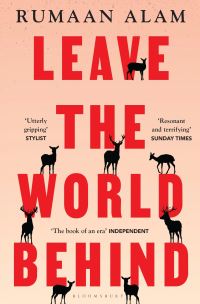
A magnetic novel about two families, strangers to each other, who are forced together on a long weekend gone terribly wrong. Amanda and Clay head to a remote corner of Long Island expecting a holiday: a quiet reprieve from life in New York City, quality time with their teenage son and daughter and a taste of the good life in the luxurious home they’ve rented for the week. But with a late-night knock on the door, the spell is broken. Ruth and G.H., an older couple who claim to own the home, have arrived there in a panic. These strangers say that a sudden power outage has swept the city, and – with nowhere else to turn – they have come to the country in search of shelter. But with the TV and Internet down, and no phone service, the facts are unknowable. Should Amanda and Clay trust this couple – and vice versa?

Natasha Trethewey was born in Mississippi in the 60s to a black mother and a white father. When she was six, Natasha’s parents divorced, and she and her mother moved to Atlanta. There, her mother met the man who would become her second husband, and Natasha’s stepfather. While she was still a child, Natasha decided that she would not tell her mother about what her stepfather did when she was not there: the quiet bullying and control, the games of cat and mouse. Her mother kept her own secrets, secrets that grew harder to hide as Natasha came of age. When Natasha was nineteen and away at college, her stepfather shot her mother dead on the driveway outside their home. With penetrating insight and a searing voice that moves from the wrenching to the elegiac, ‘Memorial Drive’ is a compelling and searching look at a shared human experience of sudden loss and absence.
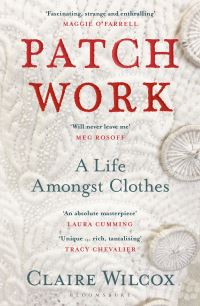
Claire Wilcox has worked as a curator in fashion at the Victoria & Albert Museum for most of her working life. Down cool, dark corridors and in quiet store rooms, she and her colleagues care for, catalogue and conserve clothes centuries old, the inscrutable remnants of lives long lost to history; the commonplace or remarkable things that survive the bodies they once encircled or adorned. In ‘Patch Work’, Wilcox deftly stitches together her dedicated study of fashion with the story of her own life lived in and through clothes. From her mother’s black wedding suit to the swirling patterns of her own silk kimono, her memoir unfolds in luminous prose the spellbinding power of the things we wear.

Gelato has a special place in the hearts of Italians of all ages – it surprises, delights, comforts and nurtures. But perhaps the most wonderful thing about gelato is how easily it can be made at home, needing little more than milk and sugar. ‘Gelupo Gelato’ presents a rainbow spectrum of gelati: from fruity yoghurt & lemongrass, lime sherbet or peach and blood orange to creamy marron glacé, bacio, chocolate & whisky or espresso.
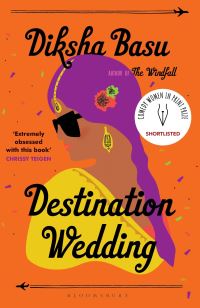
Tina wants to feel Indian. Really Indian. Not Indian in the sense of attending a yoga class in Brooklyn, in the country her parents moved to make a new life for themselves. She wants to know the real India, only whenever she visits people take her to bars and restaraunts and boutiques that could be anywhere in the world. She gets her chance to get to know the country when she heads to Delhi for her glamorous cousin Shefali’s week-long weeding, with her best friend Marianne, her parents and her mother’s all-American boyfriend in tow. Navigating a world of Delhi playboys, models, dating agencies for widows, and wedding guests with personal bodyguards, Tina is determined to have an authentic Indian experience, now if only someone would tell her what that was.
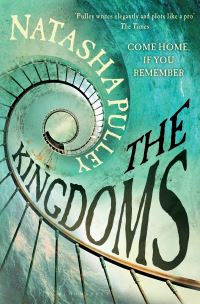
Come home, if you remember. The postcard has been held at the sorting office for ninety-one years, waiting to be delivered to Joe Tournier. On the front is a lighthouse – Eilean Mor, in the Outer Hebrides. Joe has never left England, never even left London. He is a British slave, one of thousands throughout the French Empire. He has a job, a wife, a baby daughter. But he also has flashes of a life he cannot remember and of a world that never existed – a world where English is spoken in England, and not French. And now he has a postcard of a lighthouse built just six months ago, that was first written nearly one hundred years ago, by a stranger who seems to know him very well. Joe’s journey to unravel the truth will take him from French-occupied London to a remote Scottish island, and back through time itself as he battles for his life – and for a very different future.
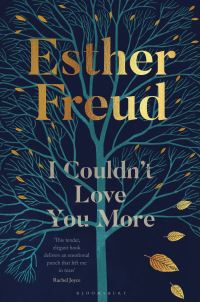
Rosaleen is still a teenager, in the early Sixties, when she meets the famous sculptor Felix Lichtman. Felix is dangerous, bohemian, everything she dreamed of in the cold nights at her Catholic boarding school. And at first their life together is glitteringly romantic – drinking in Soho, journeying to Marseilles. But it’s not long before Rosaleen finds herself fearfully, unexpectedly alone. Desperate, she seeks help from the only source she knows, the local priest, and is directed across the sea to Ireland on a journey that will seal her fate. Kate lives in Nineties London, stumbling through her unhappy marriage. But something has begun to stir in her. Close to breaking point, she sets off on a journey of her own. Aoife sits at her husband’s bedside as he lies dying, and tells him the story of their marriage. But there is a crucial part of the story missing and time is running out.
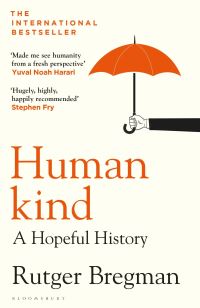
It’s a belief that unites the left and right, psychologists and philosophers, writers and historians. It drives the headlines that surround us and the laws that touch our lives. And its roots sink deep into Western thought: from Machiavelli to Hobbes, Freud to Pinker, the tacit assumption is that humans are bad. Humankind makes the case for a new argument: that it is realistic, as well as revolutionary, to assume that people are good. When we think the worst of others, it brings out the worst in our politics and economics too. In his long-awaited second book, international-bestselling author Rutger Bregman shows how believing in human kindness and altruism can be a new way to think – and act as the foundation for achieving true change in our society. It is time for a new view of human nature.
No products in the basket.
Notifications