Showing 85–96 of 178 resultsSorted by latest
-
£18.99
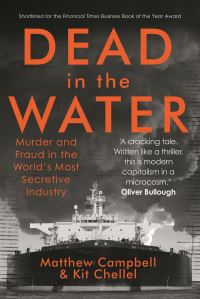
In July 2011, the oil tanker Brillante Virtuoso was drifting through the treacherous Gulf of Aden when a crew of pirates attacked and set her ablaze in a devastating explosion. But when David Mockett, a maritime surveyor working for Lloyd’s of London, inspected the damaged vessel, he was left with more questions than answers. Soon after his inspection, he was murdered. ‘Dead in the Water’ is a shocking expose of the criminal inner-workings of international shipping, an old-world industry at the backbone of our global economy. Through first-hand accounts of those who lived the hijacking – from members of the ship’screw and witnesses to the attacks, to the ex-London detectives turned private investigators seeking to solve Mockett’s murder – reporters Matthew Campbell and Kit Chellel piece together the astounding truth behind one of the most brazen financial frauds in history.
-
£9.99
Through her own experiences as a fifty-something woman, and those of her three sisters, her indomitable mum and rebellious auntie, Charlotte tackles the big questions every woman seeks answers to at this time of our lives – chiefly: How the hell am I going to get over being young in a world obsessed with youth?
-
£9.99
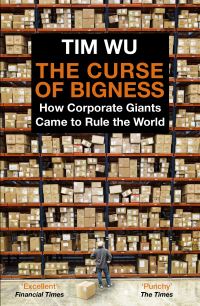
We’re three decades into a global experiment: what happens when the major nations of the world weaken their control on the size and power of corporate giants and allow unrestricted expansion? In this book, Tim Wu exposes the threats monopolies pose to economic stability and social freedom around the world. Aided by the globalisation of commerce and finance, in recent years we have seen takeovers galore that make a mockery of the ideals of competition and economic freedom. Such is the ‘curse of bigness’: stifled entrepreneurship, stalled productivity, dominant tech giants like Facebook and Google, and fewer choices for consumers. Urgent and persuasive, this bold manifesto argues that we need to rediscover the anti-monopoly traditions that brought great peace and prosperity in the past.
-
£20.00
Without a moment’s pause, we share our most intimate thoughts with trillion-dollar tech companies. Their algorithms categorize us and jump to conclusions about who we are. They even shape our everyday thoughts and actions – from who we date to how we vote. But this is just the latest front in an age-old struggle. Part history and part manifesto, ‘Freedom to Think’ charts the history and importance of our most basic human right: freedom of thought. From Galileo to Nudge Theory to Alexa, human rights lawyer Susie Alegre explores how the powerful have always sought to get inside our heads, influence how we think and shape what we buy.
-
£10.99
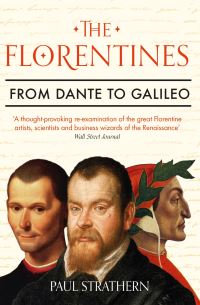
Between the birth of Dante in 1265 and the death of Galileo in 1642 something happened which transformed the entire culture of western civilisation. Painting, sculpture and architecture would all visibly change in such a striking fashion that there could be no going back on what had taken place. Likewise, the thought and self-conception of humanity would take on a completely new aspect. Sciences would be born, or emerge in an entirely new guise. The ideas which broke this mould largely began, and continued to flourish, in the city of Florence in the province of Tuscany in northern central Italy. These ideas, which placed an increasing emphasis on the development of our common humanity – rather than other-worldly spirituality – coalesced in what came to be known as humanism. Paul Strathern shows how Florence, and the Florentines, played a similar role in the Renaissance.
-
£9.99
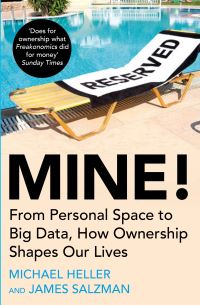
Who controls the space around an aeroplane seat: you or the person behind you trying to work on their laptop? Who owns your favourite football player? And why do Facebook and Google want your private data? In ‘Mine!’ Michael Heller and James Salzman reveal the hidden economic and social rules that guide everyday life, demonstrating that much of what we assume about ownership is wrong. Whether a lost wallet, a playground swing or a London flat, ‘Mine!’ explores what ownership means and why it governs everything we do.
-
£10.99
In 2012, whilst working at the Royal Horticultural Society’s library, Fiona Davison unearthed a book of handwritten notes that dated back to 1822. The notes, each carefully set out in neat copperplate writing, had been written by young gardeners in support of their application to be received into the Society’s Garden. Amongst them was an entry from the young Joseph Paxton, who would go on to become one of Britain’s best-known gardeners and architects. But he was far from alone in shaping the way we garden today and now, for the first time, the stories of the young, working-class men who also played a central role in the history of British horticulture can be told. Using their notes, Fiona Davison traces the stories of a selection of these forgotten gardeners whose lives would take divergent paths to create a unique history of gardening.
-
£20.00
Britain shaped the modern Middle East through the lines that it drew in the sand after the First World War and through the League of Nation mandates over the fledgling states which followed. Since the Second World War, oil interests, Arab nationalism, the Arab-Israeli conflict, militant Islam and the Anglo-American special relationship have all drawn Britain back into the Middle East. Nigel Ashton explores the reasons why British leaders have been unable to resist returning to the mire of the Middle East, while highlighting the misconceptions about the region which have helped shape their interventions, and the legacy of history which has fuelled their pride and arrogance. It shows that their fears and insecurities have made them into false prophets who have conjured existential threats out of the Middle East.
-
£10.99
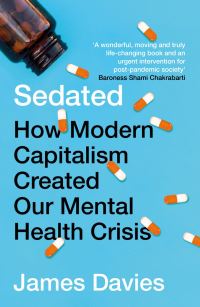
In Britain alone, more than 20% of the adult population take a psychiatric drug in any one year. This is an increase of over 500% since 1980 and the numbers continue to grow. Yet, despite this prescription epidemic, levels of mental illness of all types have actually increased in number and severity. Using a wealth of studies, interviews with experts, and detailed analysis, Dr James Davies argues that this is because we have fundamentally mischaracterised the problem. Rather than viewing most mental distress as an understandable reaction to wider societal problems, we have embraced a medical model which situates the problem solely within the sufferer and their brain. Urgent and persuasive, this book systematically examines why this individualistic view of mental illness has been promoted by successive governments and big business – and why it is so misplaced and dangerous.
-
£9.99
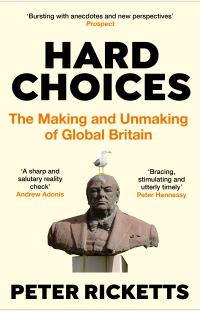
After decades of peace and prosperity, the international order put in place after World War II is rapidly coming to an end. Disastrous foreign wars, global recession, the meteoric rise of China and India and the COVID pandemic have undermined the power of the West’s international institutions and unleashed the forces of nationalism and protectionism. In this lucid and groundbreaking analysis, one of Britain’s most experienced senior diplomats highlights the key dilemmas Britain faces, from trade to security, arguing that international co-operation and solidarity are the surest ways to prosper in a world more dangerous than ever.
-
£9.99
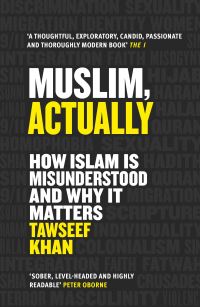
Why are Muslim men portrayed as inherently violent? Does the veil violate women’s rights? Is Islam stopping Muslims from integrating? Across western societies, Muslims are more misunderstood than any other minority. But what does it mean to believe in Islam today, to have forged your beliefs and identity in the shadow of 9/11 and the War on Terror? Dismantling stereotypes from both inside and outside the faith, ‘Muslim, Actually’ shows that while we may think we know all about Islam we are often wrong about even the most basic facts.
-
£9.99
Through economics, our politicians have the power to transform people’s lives for better or worse. Think Deng Xiaoping who lifted millions out of poverty by opening up China; Franklin D. Roosevelt whose ‘New Deal’ helped the USA break free of the Great Depression. Or Peron and his successors in Argentina who brought the country to the brink of ruin. In this magisterial history, economist and politician Vince Cable examines the legacy of 16 world leaders who transformed their countries’ economic fortunes and who also challenged economic convention. From Thatcher to Trump, from Lenin to Bismarck, ‘Money and Power’ provides a whole new perspective on the science of government.