Showing 49–60 of 178 resultsSorted by latest
-
£12.99
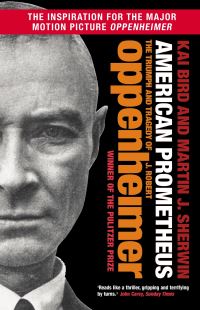
A portrait of scientist J. Robert Oppenheimer, the father of the atomic bomb, which discusses his role in the 20th-century scientific world, as well as his roles as family man and head of Princeton’s Institute for Advanced Studies.
-
£20.00
Marx and Engels were right when they observed in the Communist Manifesto that free markets had in a short time created greater prosperity and more technological innovation than all previous generations combined. A century and a half later, all the evidence shows that capitalism has lifted millions and millions from hunger and poverty. Today’s story about global capitalism, shared by right-wing and left-wing populists, but also by large sections of the political and economic establishment, does not deny that prosperity has been created, but it says it ended up in far too few hands. This in turn has made it popular to talk about the global economy as a geopolitical zero-sum game, where we have to fight to control new innovations, introduce trade barriers and renationalise value chains. In this book, Johan Norberg instead states the case for capitalism and the vital role played by the free market in today’s uncertain world.
-
£22.00
While for generations Polly Toynbee’s ancestors have been committed left-wing rabble-rousers railing against injustice, they could never claim to be working class, settling instead for the prosperous life of academia or journalism enjoyed by their own forebears. So where does that leave their ideals of class equality? Through a colourful, entertaining examination of her own family – which in addition to her writer father Philip and her historian grandfather Arnold contains everyone from the Glenconners to Jessica Mitford to Bertrand Russell, and features ancestral home Castle Howard as a backdrop – Toynbee explores the myth of mobility, the guilt of privilege, and asks for a truly honest conversation about class in Britain.
-
£10.99
Robin Ince has a good life. As a successful comedian, presenter, and writer, he’s got a job that you are probably jealous of. So, why did he find himself stuck on a train platform in rural Northumberland, swearing maniacally, punching his own leg, vowing never to do stand-up again? Was he having an existential crisis? He didn’t know. But he wanted to find out. Insightful, witty, and often just plain weird, this book charts his journey to discover why he’s made the choices he did in life, and what makes us who we are. Why did Robin become a comedian? Why did you become an accountant (sorry)? Why are we like we are? Informed by interviews with a bevy of comedians such as Jo Brand, Ricky Gervais and Tim Minchin, as well as with neuroscientists, psychologists and doctors, Robin looks back on his life and turns his comedic observational skills on himself – exploring the key psychological questions we all ask ourselves.
-
£22.00
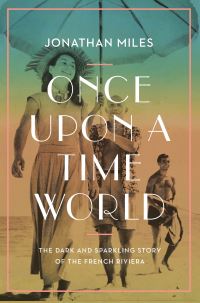
In 1835, Lord Brougham founded Cannes, introducing bathing and the manicured lawn to the wilds of the Mediterranean coast. Today, much of that shore has become a concrete mass from which escape is an exclusive dream. In the 185 years between, the stretch of seaboard from the red mountains of the Esterel to the Italian border hosted a cultural phenomenon well in excess of its tiny size. A mere handful of towns and resorts created by foreign visitors – notably English, Russian and American – attracted the talented, rich and famous as well as those who wanted to be. For nearly two centuries of creativity, luxury, excess, scandal, war and corruption, the dark and sparkling world of the Riviera was a temptation for everybody who was anybody. Jonathan Miles presents the remarkable story of the small strip of French coast that lured the world to its shores.
-
£20.00
We live in an age of fury and confusion. A new crisis erupts before the last one has finished: financial crisis, Brexit, pandemic, war in Ukraine, energy shortages. Prime Ministers come and go but politics stays divided and toxic. It is tempting to switch off the news, tune out and hope things will get back to normal. Except, this is the new normal, and our democracy can only work if enough people stay engaged without getting enraged. But how? To answer that question, journalist Rafael Behr takes the reader on a personal journey from despair at the state of politics to hope that there is a better way of doing things, with insights drawn from three decades as a political commentator and foreign correspondent.
-
£25.00
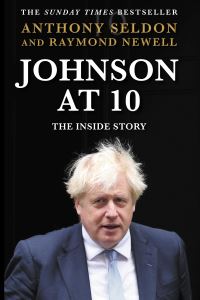
In this gripping work of contemporary history, one of Britain’s leading political and social commentators maps Boris Johnson’s time in power across ten decisive moments and sheds light on the most divisive and inscrutable prime minister since Margaret Thatcher. Based on major interviews with key aides and allies, Anthony Seldon and Raymond Newell give the first account of Johnson’s explosive time in office.
-
£16.99
Former cinema camera director Julius Sewell journeys across Europe with his family to his sister’s wedding in Rome. But this will be an unusual road trip. For one thing, Julius has been in an institution and has only just been released from mental hospital to travel. And then there is his family. This is Easter 1934 and Julius’ stepfather and mother are keen members of Oswald Mosley’s new party, the British Union of Fascists. One of Julius’ half-sisters is in studying in Munich, where she dreams of meeting meet her idol, Adolf Hitler. Another half-sister is a member of the British Communist Party, and is determined to wreck the approaching wedding, because the groom is a rising figure in Italy’s Fascist regime.
-
£10.99
‘Tomorrow Someone Will Arrest You’ cements Meena Kandasamy as one of the most exciting, radical thinkers at work today. These poems chronicle wanting, art-making, and the practising of resistance and solidarity in the face of a hostile state. Here, the personal is political, and Kandasamy moves between sex, desire, family and wider societal issues of caste, the refugee crisis, and freedom of expression with grace and defiance.
-
£10.99
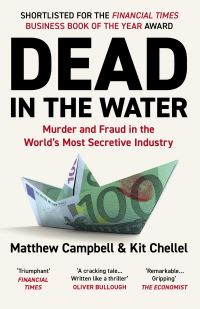
In July 2011, the oil tanker Brillante Virtuoso was drifting through the treacherous Gulf of Aden when a crew of pirates attacked and set her ablaze in a devastating explosion. But when David Mockett, a maritime surveyor working for Lloyd’s of London, inspected the damaged vessel, he was left with more questions than answers. Soon after his inspection, he was murdered. ‘Dead in the Water’ is a shocking expose of the criminal inner-workings of international shipping, an old-world industry at the backbone of our global economy. Through first-hand accounts of those who lived the hijacking – from members of the ship’screw and witnesses to the attacks, to the ex-London detectives turned private investigators seeking to solve Mockett’s murder – reporters Matthew Campbell and Kit Chellel piece together the astounding truth behind one of the most brazen financial frauds in history.
-
£10.99
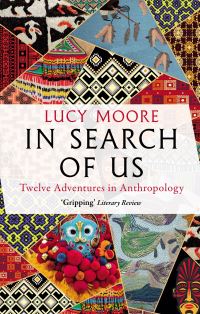
In the late 19th century when non-European societies were seen merely as ‘living fossils’ offering an insight into how civilisation had evolved, anthropology was a thriving area of study. But, by the middle of the 20th century, it was difficult to think about ideas of ‘savages’ and otherness when ‘civilised’ man had wreaked such devastation across two world wars, and field work was to be displaced by sociology and the study of all human society. By focusing on thirteen key European and American figures in this field, Lucy Moore tells the story of the brief flowering of anthropology as a quasi-scientific area of study, and about the men and women whose observations of the ‘other’ were unwittingly to come to bear on attitudes about race, gender equality, sexual liberation, parenting and tolerance in ways they had never anticipated.
-
£20.00
On the face of it, Felix Kersten, Kawashima Yoshiko, Friedrich Weinreb, seem to have little in common – aside from the fact that each committed wartime acts that led some to see them as national heroes, and others as villains. All three were mythmakers, larger-than-life storytellers, for whom the truth was beside the point. All three figures have been vilified and mythologised, out of a never-ending need, Ian Buruma argues, to see history, and particularly war, and above all World War II, as a neat tale of angels and devils. In telling their often-self-invented stories, ‘The Collaborators’ offers a fascinating reconstruction of what in fact we can know about these fantasists and what will always remain out of reach. It is also an examination of the power and credibility of history, truth is always a relative concept but perhaps especially so in times of political turmoil, not unlike our own.