Autotheory As Feminist Practice in Art, Writing, and Criticism
£26.00Autotheory–the commingling of theory and philosophy with autobiography–as a mode of critical artistic practice indebted to feminist writing and activism.
We recently launched our new website and are facing a few teething issues. If you see any problems please contact us.
We recently launched our new website and are facing a few teething issues. If you see any problems please contact us.
Showing 13–23 of 23 resultsSorted by latest
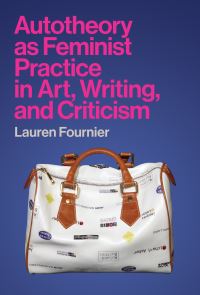
Autotheory–the commingling of theory and philosophy with autobiography–as a mode of critical artistic practice indebted to feminist writing and activism.
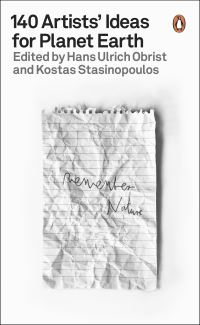
Artists are uniquely situated to present new ideas about how we are living, the materials that make up our lives and how we can begin to work together to tackle the most urgent crisis of our time. Featuring Ed Ruscha’s memorial plaques to trees that didn’t make it, Judy Chicago’s urge to make a mark and express a feeling, Jacob V. Joyce and Rudy Loewe’s activism flowchart, James Bridle’s instructions to help plants along with their global velocity, Vivienne Westwood’s plea for lockdown not to be lost, Olafur Eliasson’s poetic wisdom to ‘look up, look down’, Marina Abramovic’s performance art for the climate, and Rose Wylie’s recipe for cooking for the environment, alongside many more.
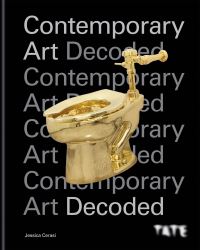
How can you tell if that fire extinguisher on the wall is an installation piece, or a safety requirement? How can a Banksy increase in value even as it gets put through a shredder? And couldn’t a five-year-old have done all of this, anyway? ‘Contemporary Art Decoded’ takes ten key questions about contemporary art and uses them to dissect and explain the contemporary art world.
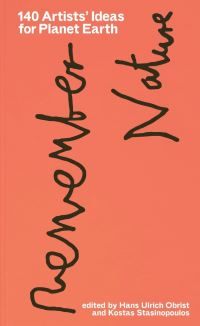
Artists are uniquely situated to present new ideas about how we are living, the materials that make up our lives and how we can begin to work together to tackle the most urgent crisis of our time. Featuring Ed Ruscha’s memorial plaques to trees that didn’t make it, Judy Chicago’s urge to make a mark and express a feeling, Jacob V. Joyce and Rudy Loewe’s activism flowchart, James Bridle’s instructions to help plants along with their global velocity, Vivienne Westwood’s plea for lockdown not to be lost, Olafur Eliasson’s poetic wisdom to ‘look up, look down’, Marina Abramovic’s performance art for the climate, and Rose Wylie’s recipe for cooking for the environment, alongside many more.
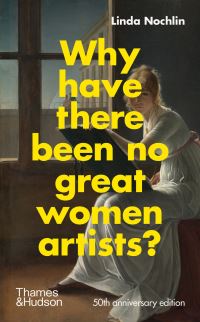
The 50th anniversary edition of the first major work of feminist art history, published together with the author’s reflections three decades on.
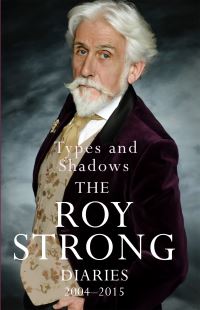
The third volume of Roy Strong’s diaries cover the years 2004 to 2015. In January 2004 Strong was in a state of deep grief following the death of his wife, Julia Trevelyan Oman, three months earlier. Yet the diaries written in this first year following Julia’s death offer a picture of determination and resourcefulness as he begins the task of ordering Julia’s huge collections of papers, antiques and jewellery, carefully considering where each should be placed. There followed a reconfiguring of The Laskett and the wonderful garden that he and Julia had created together. The following years see an extraordinary energy and creativity, new ideas for books brought to fruition and the book tours, literary festivals, public appearances and stage performances that surround each new publication.
‘The Artist’s Way’ provides a twelve-week course that guides you through the process of recovering your creative self. It aims to dispel the ‘I’m not talented enough’ conditioning that holds many people back and helps you to unleash your own inner artist. Its step-by-step approach enables you to transform your life, overcome any artistic blocks you may suffer from, including limiting beliefs, fear, sabotage, jealousy and guilt, and replace them with self confidence and productivity.
In the autumn of 1929, a small child was kidnapped from a Lincolnshire beach. Five agonising days went by before she was found in a nearby village. The child remembered nothing of these events and nobody ever spoke of them. It was another 50 years before she even learned of the kidnap. The girl became an artist and had a daughter, art writer Laura Cumming. Cumming grew up enthralled by her mother’s strange tales of life in a seaside hamlet of the 1930s, and of the secrets and lies perpetuated by a whole community. Cumming began investigating with a few criss-crossing lives in this fraction of English coast – the postman, the grocer, the elusive baker – but soon her search spread right out across the globe as she discovered just how many lives were affected by what happened that day on the beach – including her own. ‘On Chapel Sands’ is a book of mystery and memoir.
In the autumn of 1929, a small child was kidnapped from a Lincolnshire beach. Five agonising days went by before she was found in a nearby village. The child remembered nothing of these events and nobody ever spoke of them. It was another 50 years before she even learned of the kidnap. The girl became an artist and had a daughter, art writer Laura Cumming. Cumming grew up enthralled by her mother’s strange tales of life in a seaside hamlet of the 1930s, and of the secrets and lies perpetuated by a whole community. Cumming began investigating with a few criss-crossing lives in this fraction of English coast – the postman, the grocer, the elusive baker – but soon her search spread right out across the globe as she discovered just how many lives were affected by what happened that day on the beach – including her own. ‘On Chapel Sands’ is a book of mystery and memoir.
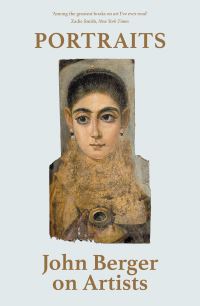
John Berger’s ‘Ways of Seeing’ changed the way people thought about art and art criticism.
Notifications