The City Without Jews
£30.00An extraordinary chronicle of the Nazi destruction of Jewish Vienna, from the bestselling author of Former People.

Showing all 13 resultsSorted by latest

An extraordinary chronicle of the Nazi destruction of Jewish Vienna, from the bestselling author of Former People.
A heart-stopping epic of grief and hope, and one family blown apart – across the globe, across time, across parallel possibilities – by war.
The most famous trial of the twentieth century – told through the eyes of the women history forgot. In November 1945, the world turned its gaze to Nuremberg. Inside a courtroom built by and for men, justice was being sought for crimes almost beyond comprehension. The spotlight fell on Nazi leaders, Allied prosecutors and military judges – but in the shadows, women were recording, interpreting, witnessing, painting, testifying. Yet their names were often missing from the headlines. Eighty years on, this book finally returns them to the centre of the story. The work follows eight extraordinary figures: a young Soviet interpreter balancing political survival with truth-telling; a British painter capturing justice in oils; a French resistance fighter who survived Auschwitz to confront her persecutors; a Hungarian countess hosting both Nazis and survivors in a single house.
The compelling story of the only German-Jewish translator to work with the psychiatrists in Nuremberg prison
Thought-provoking and powerfully ambivalent, this book offers an extraordinary meditation on the many complex afterlives of the Holocaust. It is a novel about individual and collective inheritance, individual and collective violence; about memory, trauma, connection and estrangement. It asks what it means to be a Jew in the long wake of the 20th century, and how the past lives on in the present.
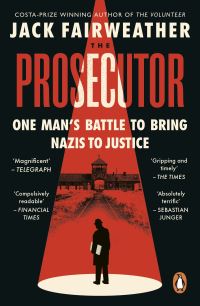
Returning to Germany in the aftermath of the Second World War Fritz Bauer – a gay Jewish lawyer and outspoken critic of Hitler – was determined to reclaim the Germany he had once loved. But he soon saw that the perpetrators of the Holocaust had largely got away with their crimes. Top Nazi officers – mass-murders and cruel sadists – had been given plum jobs at major German companies; held prestigious offices in top universities; were in positions of power as lawyers, judges and political advisors. The war was over and many were keen to forget and move on. Thus began Bauer’s dogged fight for justice and a reckoning with the past. Drawing on recently released CIA files, unpublished family papers and secret diaries, this is the story of one man’s battle to bring down the perpetrators of the greatest crime in human history, and to make sure the world never forgets what happened.
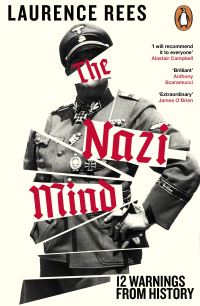
How could the Nazis have committed the crimes they did? Why did commandants of concentration and death camps willingly – often enthusiastically – oversee mass murder? How could ordinary Germans have tolerated the removal of the Jews? In this book, Laurence Rees combines history and the latest research in psychology to help answer some of the most perplexing questions surrounding the Second World War and the Holocaust. Ultimately, he delves into the darkness to explain how and why these people were capable of committing the worst crime in the history of the world. Rees traces the rise and eventual fall of the Nazis through the lens of ‘twelve warnings’ – whilst also highlighting signs to look out for in present day leaders who, for example, take control of the media, propound conspiracy theories, and talk about ‘them’ against ‘us’.
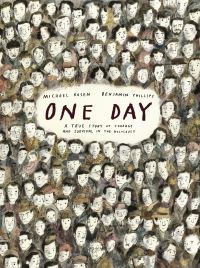
Eugène Handschuh was a Jewish member of the Resistance in occupied Paris. After he was captured by the Nazis, he was placed on a convoy to Auschwitz. Against all the odds, with the help of strangers and fellow members of the Resistance, Eugène and his father escaped the convoy and survived – when so many others did not. Former Poet Laureate Michael Rosen was inspired to tell this story after discovering his father’s uncle and aunt were on the same convoy as Eugène, but never returned.
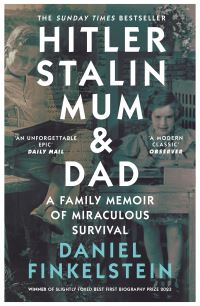
THE INSTANT SUNDAY TIMES BESTSELLER
‘Epic, moving and important’ ROBERT HARRIS
‘I’m not sure I’ve ever come across quite such a revelatory account of the Holocaust and yet despite the horror and the sadness it’s also a ‘memoir of miraculous survival’. I can’t recommend it enough’ ANTHONY HOROWITZ
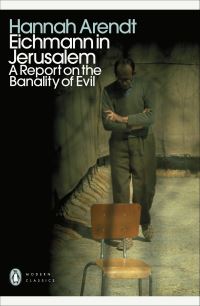
This report on the trial of German Nazi leader Adolf Eichmann first appeared as a series of articles in ‘The New Yorker’ in 1963. This edition contains further factual material that came to light after the trial, as well as Arendt’s postscript commenting on the controversy that arose over her book.
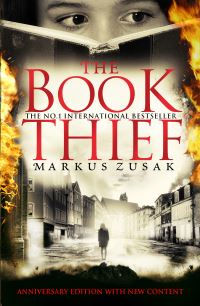
Narrated in the all-knowing matter-of-fact voice of Death, witnessing the story of the citizens of Molching. By 1943, the Allied bombs are falling, and the sirens begin to wail. Liesel shares out her books in the air-raid shelters. But one day, the wail of the sirens comes too late.

A timeless story rediscovered by each new generation, The Diary of a Young Girl continues to bring to life the experiences of Anne Frank, who for a time survived the worst horror the modern world had seen.
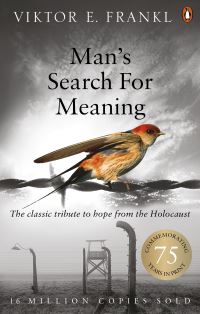
In ‘Man’s Search for Meaning’, Dr. Frankl offers an account of his life amid the horrors of the Nazi death camps, chronicling the harrowing experience that led to the discovery of his theory of logotherapy.
No products in the basket.