Showing 1–12 of 14 resultsSorted by latest
-
£12.99
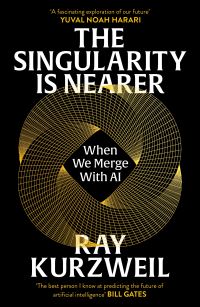
Within our lifetimes, we will be able to connect our brains directly with AI, enhancing our intelligence a millionfold and expanding our consciousness in ways we can barely imagine. This is the Singularity. Ray Kurzweil is one of the greatest inventors of our time with over 60 years’ experience in the field of Artificial Intelligence. Dozens of his long-range predictions about the rise of the internet, AI and bioengineering have been borne out. Here Kurzweil explains how the Singularity will occur and what it will mean to live free from the limits of biology: What will we choose if our bodies need no longer define us? What new realms of beauty, connection and wonder might we inhabit? Who will we become if our minds can be stored and duplicated? Drawing on a lifetime’s expertise, Kurzweil presents deeply reasoned answers to these questions.
-
£25.00
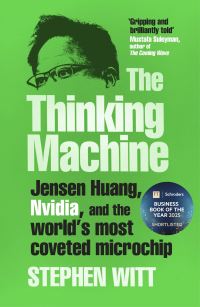
This is a riveting investigative account of Nvidia, the tech company that has exploded in value for its artificial intelligence computing hardware, and Jensen Huang, Nvidia’s charismatic, uncompromising CEO.
-
£10.99
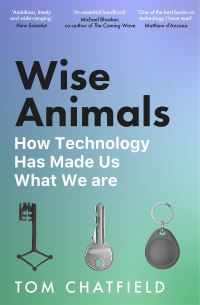
A brilliantly original exploration of humanity’s intimate relationship with technology, from the emergence of our species to the emergence of AI and beyond.
-
£10.99
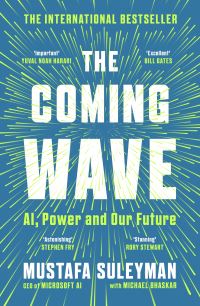
We are about to cross a critical threshold in the history of our species. Everything is about to change. Soon we will live surrounded by AIs. They will carry out complex tasks – operating businesses, producing unlimited digital content, running core government services and maintaining infrastructure. This will be a world of DNA printers and quantum computers, engineered pathogens and autonomous weapons, robot assistants and abundant energy. It represents nothing less than a step change in human capability. We are not prepared. As cofounder of the pioneering AI company DeepMind, Mustafa Suleyman has been at the centre of this revolution, one poised to become the single greatest accelerant of progress in history. The coming decade, he argues, will be defined by this wave of powerful, fast-proliferating new technologies.
-
£12.99
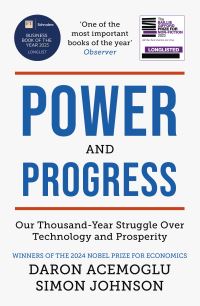
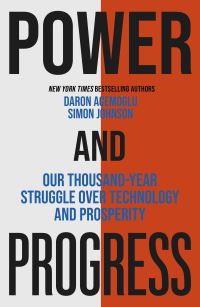
The first hundred years of industrialisation in England delivered stagnant incomes for workers, while making a few people very rich. And throughout the world today, digital technologies and artificial intelligence increase inequality and undermine democracy through excessive automation, massive data collection and intrusive surveillance. It doesn’t have to be this way. ‘Power and Progress’ demonstrates that the path of technology was once – and can again be – brought under control.
-
£10.99
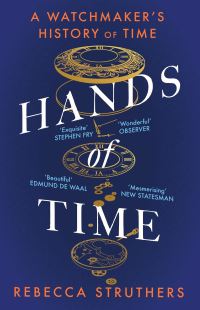
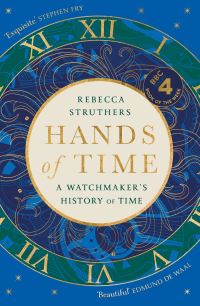
An intricate and personal history of watches and time, told by an extraordinary watchmaker and historian.
-
£10.99
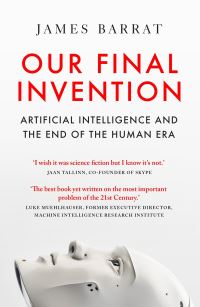
Corporations and government agencies around the world have for years been pouring billions into achieving AI’s Holy Grail – human-level intelligence. But once AI has attained it, scientists argue, it will have survival drives much like our own. We may be forced to compete with a rival more cunning, more powerful, and more alien than we can imagine. First published ten years ago, ‘Our Final Invention’ predicted much of the artificial ‘intelligence explosion’ that is now ripping through our culture, and was named by Elon Musk as one of five books everyone should read about the future. Now with an urgent new preface, James Barrat’s landmark work explores the ethics, history and future perils of the heedless pursuit of advanced AI. Until now, human intelligence has had no rival. Can we coexist with beings whose intelligence dwarfs our own? And will they allow us to?
-
£25.00
No further information has been provided for this title.
-
£25.00
The first hundred years of industrialization in England delivered stagnant incomes for workers, while making a few people very rich. And throughout the world today, digital technologies and artificial intelligence increase inequality and undermine democracy through excessive automation, massive data collection and intrusive surveillance. It doesn’t have to be this way. ‘Power and Progress’ demonstrates that the path of technology was once – and can again be – brought under control.
-
£22.00
Timepieces are one of humanity’s most ingenious innovations. Their invention was more significant for human culture than the printing press, or even the wheel. They have travelled the world with us, from the depths of the oceans to the summit of Everest, and even to the Moon. They regulate our daily lives and have sculpted the social and economic development of society in surprising and dramatic ways. In ‘Hands of Time’ watchmaker and historian Rebecca Struthers welcomes us into the hidden world of watchmaking, offering a personal history of watches that spans centuries and continents. From her workshop bench, Rebecca explores the ways in which timekeeping has indelibly shaped our attitudes to work, leisure, trade, politics, exploration and mortality, and introduces us to some extraordinary and treasured devices, each with their own story to tell.
-
£25.00
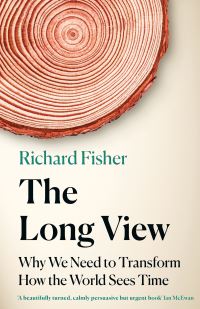
Here is a wide-ranging and thought-provoking exploration of the importance of long-term thinking. Humans are unique in our ability to understand time, able to comprehend the past and future like no other species. Yet modern-day technology and capitalism have supercharged our short-termist tendencies and trapped us in the present, at the mercy of reactive politics, quarterly business targets and 24-hour news cycles. It wasn’t always so. In medieval times, craftsmen worked on cathedrals that would be unfinished in their lifetime. Indigenous leaders fostered intergenerational reciprocity. And in the early twentieth century, writers dreamed of worlds thousands of years hence. Richard Fisher takes us from the boardrooms of Japan to an Australian laboratory where an experiment started a century ago is still going strong.
-
£9.99
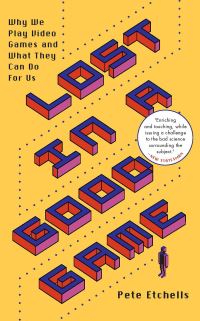
When Pete Etchells was 14, his father died from motor neurone disease. In order to cope, he immersed himself in a virtual world – first as an escape, but later to try to understand what had happened. Etchells is now a researcher into the psychological effects of video games. In this, his first book, he journeys through the history and development of video games – from Turing’s chess machine to mass multiplayer online games like World of Warcraft – via scientific study, to investigate the highs and lows of playing and get to the bottom of our relationship with games – why we do it, and what they really mean to us. At the same time, ‘Lost in a Good Game’ is a very unusual memoir of a writer coming to terms with his grief via virtual worlds, as he tries to work out what area of popular culture we should classify games (a relatively new technology) under.