Strangers and intimates
£20.00A brilliantly original history of privacy with a simple and urgent argument: private life is a precious and sustaining resource that must be defended.

Showing 1–12 of 24 resultsSorted by latest
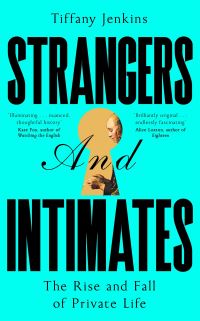
A brilliantly original history of privacy with a simple and urgent argument: private life is a precious and sustaining resource that must be defended.
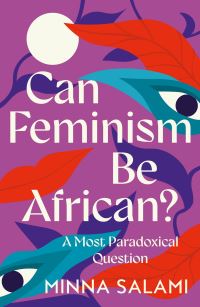
What happens when we consider Africa through a feminist lens and feminism through an African one? And what does it mean to centre selfhood in this journey?
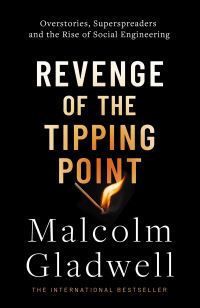
Twenty-five years after the publication of his groundbreaking first book, Malcolm Gladwell returns with a brand new volume that reframes the lessons of ‘The Tipping Point’ in a startling and revealing light. Why in the late 1980s and early ’90s did Los Angeles become the bank robbery capital of the world? What is the Magic Third and what does it have to do with racial equity? What do big cats and clusters of teen suicides have in common? These are just some of the questions Malcolm Gladwell addresses in this work, which revisits the phenomenon of epidemics and examines the ways in which we have learned to tinker with and shape the spread of ideas, viruses, and trends – sometimes with great success, sometimes with disastrous consequences.
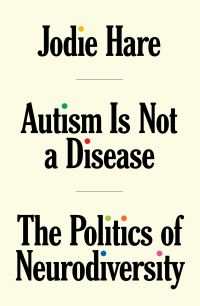
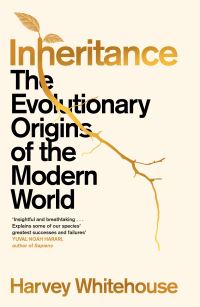
The ancient inheritance that made us who we are. The ancient inheritance that is now driving us to ruin. Every human being is endowed with an inheritance: a set of ancient biases – forged by natural selection and transformed by cultural evolution – that shape every facet of our behaviour. For countless generations, this inheritance has been taking us to ever greater heights: driving the rise of more sophisticated technologies, more organised religions, more expansive empires. But now, for the first time, it is failing us. Suddenly, we find ourselves on a path to destruction. Here, a leading anthropologist offers a sweeping account of how our inheritance has shaped humanity’s past and future.
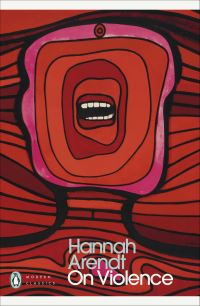
Written in 1970, with the Holocaust and Hiroshima still fresh in recent memory, the war in Vietnam raging and the streets of Europe and America seething with student protest, Hannah Arendt’s now classic work offered a startling dissection of violence in the 20th century: its nature and causes, its place in politics and war, its role in the modern age. Combining theory and lucid historical analysis, Arendt argues that violence and power are ultimately incompatible, and that one fills the vacuum created by the other – an insight which continues to offer a valuable framework for understanding the chaos of our own times.
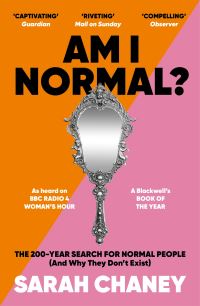
Sarah Chaney takes us on an eye-opening and surprising journey into the history of science, revisiting the studies, landmark experiments and tests that proliferated from the early 19th century to find answers to the question: what’s normal? These include a census of hallucinations – and even a UK beauty map (which claimed the women in Aberdeen were ‘the most repellent’). On the way she exposes many of the hangovers that are still with us from these dubious endeavours, from IQ tests to the BMI. Interrogating how the notion and science of standardisation has shaped us all, as individuals and as a society, this book challenges why we ever thought that normal might be a desirable thing to be.
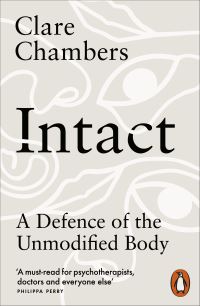
Clare Chambers argues that the unmodified body is a key principle of equality. While defending the right of anyone to change their bodies, she argues that the social pressure to modify sends a powerful message: you are not good enough. The body becomes a site of political importance: a place where inequalities of sex, gender, race, disability, age, and class are reinforced. Through a clear-sighted analysis of the power dynamics that structure our society, and with examples ranging widely from body-building to breast implants, makeup to male circumcision, ‘Intact’ stresses that we must break away from the oppressive forces that demand we alter our bodies. Instead, it offers a vision of the human body that is equal without expectation: an unmodified body that is not an image of perfection or a goal to be attained, but a valued end in itself.
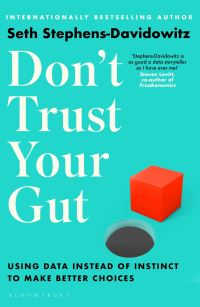
Seth Stephens-Davidowitz shows how big data can help us find answers to some of the most important questions we face – and how these answers can radically improve our lives. From happiness to dating, money to sex, health to spirituality, this is self-help as we’ve never seen it before.
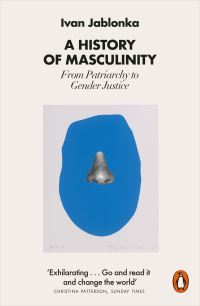
What does it mean to be a good man? To be a good father, or a good partner? A good brother, or a good friend? In this insightful analysis, social historian Ivan Jablonka offers a re-examination of the patriarchy and its impact on men. Ranging widely across cultures, from Mesopotamia to Confucianism to Christianity to the revolutions of the 18th century, Jablonka uncovers the origins of our patriarchal societies. He then offers an updated model of masculinity based on a theory of gender justice which aims for a redistribution of gender, just as social justice demands the redistribution of wealth.
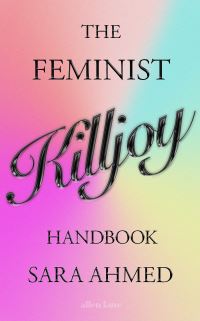
Do colleagues roll their eyes in a meeting when you use words like sexism or racism? Do you refuse to laugh at jokes that aren’t funny? Have you been called divisive for pointing out a division? Then you are a feminist killjoy, and this handbook is for you. The term killjoy has been used to dismiss feminism by claiming that it causes misery. But by naming ourselves feminist killjoys, we recover a feminist history, turning it into a source of strength as well as an inspiration. Drawing on her own stories and those of others, especially Black and brown feminists and queer thinkers, Sara Ahmed combines depth of thought with honesty and intimacy. ‘The Feminist Killjoy Handbook’ unpicks the lies our culture tells us and provides a form of solidarity and companionship that can be returned to over a lifetime.
No products in the basket.
Notifications