Showing 1–12 of 18 resultsSorted by latest
-
£11.99
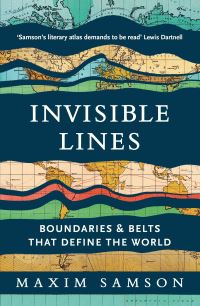
Our world has innumerable boundaries, ranging from the obvious – like oceans and mountain ranges – to the intangible – like subtle differences in language or climate. Most of us cross invisible lines all the time, but rarely do we stop to consider them. ‘Invisible Lines’ presents 30 such unseen boundaries, intriguing and unexpected examples of the myriad ways in which we collectively engage with and experience the world. From football fans in Buenos Aires to air quality in China, Paris’ banlieues to sub-Saharan Africa’s Malaria Belt, the invisible boundaries that shape our experiences and existence provide a compelling guide to seeing and understanding our world anew.
-
£16.99
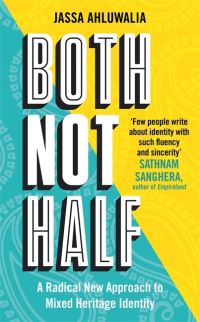
In 2019, Jassa Ahluwalia went viral with a comedy video of himself speaking Punjabi, a language he has spoken since childhood by virtue of his mixed British-Indian heritage. In an attempt to articulate his sense of self to viewers confused by his white appearance, he originated the hashtag `BothNotHalf – a rewording and a reimagining of mixed identity. This story became the focus of his 2020 TEDx talk and his BBC One documentary – Am I English? – in 2022. ‘Both Not Half’ has since evolved into a rallying cry for a new and inclusive future, a campaign for belonging in a divided world.
-
£10.99
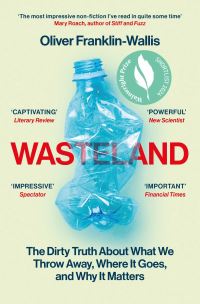
A deep dive into the global waste industry by award-winning journalist Oliver Franklin-Wallis.Â
-
£10.99
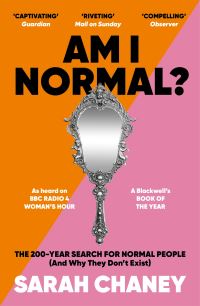
Sarah Chaney takes us on an eye-opening and surprising journey into the history of science, revisiting the studies, landmark experiments and tests that proliferated from the early 19th century to find answers to the question: what’s normal? These include a census of hallucinations – and even a UK beauty map (which claimed the women in Aberdeen were ‘the most repellent’). On the way she exposes many of the hangovers that are still with us from these dubious endeavours, from IQ tests to the BMI. Interrogating how the notion and science of standardisation has shaped us all, as individuals and as a society, this book challenges why we ever thought that normal might be a desirable thing to be.
-
£20.00
A deep dive into the global waste industry by award-winning journalist Oliver Franklin-Wallis.Â
-
£10.99
Almost everything we’ve ever achieved has been done by groups of people working together, sometimes across time and space. Like a hive of bees, or a flock of birds, our naturally social, interconnected brains are designed to function best collectively. New technology is helping us share our wisdom and knowledge much more diversely across race, class, gender and borders. And AI is sparking a revolution in our approach to intelligent thinking – linking us into fast-working brainnets for problem solving. Hannah Critchlow brings us an enlightening guide to our future through the evolving new science of collective intelligence. She reveals what it says about us as human beings, shares compelling examples and stories, and shows us how best we can work collectively at work, in families, in any team situation to improve our outcomes, our wellbeing, and our prospects.
-
£10.99
The Suez Crisis of 1956 was Britain’s twentieth-century nadir, the moment when the once superpower was bullied into retreat. In the immortal words of former US Secretary of State Dean Acheson, ‘Britain has lost an empire and not yet found a role.’ But the funny thing was, Britain had already found a role. It even had the costume. The leaders of the world just hadn’t noticed it yet. Butler to the World reveals how the UK took up its position at the elbow of the worst people on Earth: the oligarchs, kleptocrats and gangsters. We pride ourselves on values of fair play and the rule of law, but few countries do more to frustrate global anti-corruption efforts. We are now a nation of Jeeveses, snobbish enablers for rich halfwits of considerably less charm than Bertie Wooster. It doesn’t have to be that way.
-
£9.99
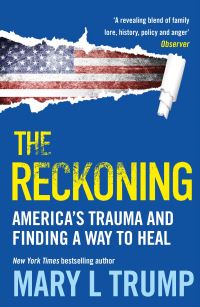
‘The Reckoning’ examines America’s national trauma, rooted in its long history of slavery and civil rights abuses, but dramatically exacerbated by the impact of recent events and the Trump administration’s corrupt and immoral policies. America’s failure to acknowledge this trauma, let alone root it out, has allowed it to metastasise. Whether it manifests itself in rising levels of rage and hatred, or hopelessness and apathy, the stress of living in a country many no longer recognise has affected everyone. America is suffering from PTSD – a new leader alone cannot fix it. An enormous amount of healing must be done to rebuild faith in America’s leadership and hope for the nation.
-
£25.00
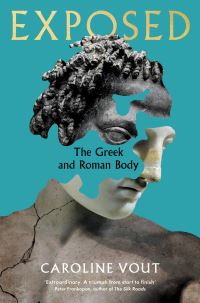
The Greek and Roman body is often seen as flawless – cast from life in buff bronze and white marble, to sit upon a pedestal. But this, of course, is a lie. Here, classicist Caroline Vout reaches beyond texts and galleries to expose Greek and Roman bodies for what they truly were: anxious, ailing, imperfect, diverse, and responsible for a legacy as lasting as their statues. Taking us on a gruesome, thrilling journey, she taps into the questions that those in the Greek and Roman worlds asked about their bodies – where do we come from? What makes us different from gods and animals? What happens to our bodies, and the forces that govern them, when we die? Vout also reveals the surprising actions people often took to transform their bodies – from sophisticated surgery and contraception to body oils, cosmetics and early gym memberships.
-
£18.99
How do British pavements remain free of dog mess? Why are paths not littered with cigarette butts or roads not lined with abandoned cars? What does the decline of the public lavatory say about us and is the national reputation for queuing still deserved today? ‘Orderly Britain’ takes a topical look at modern society, examining how it is governed and how it organises itself. It considers the rules of daily life, where they come from and why they exist. It asks whether citizens are generally compliant and uncomplaining or rebellious and defiant. This quirky social history takes a close look at shifting customs and practices, people’s expectations of each other and how rule-makers seek to shape everyone’s lives – even when ignoring some of those rules themselves.
-
£20.00
By committing to a profession where the consequences of a mistake can be life or death, people in healthcare are braver than most of us. The problem is that the system that ‘goes after’ someone when something goes wrong, and the result is a blame game that stops learning and allows the same mistake to be repeated, often countless times. ‘Zero’ is a book about how the NHS can reduce the number of avoidable deaths to zero, and in the process save money, reduce backlogs and improve working conditions. Delivering the safest, highest quality care in the NHS post-pandemic is our very own 1948 moment.
-
£20.00
The Suez Crisis of 1956 was Britain’s twentieth-century nadir, the moment when the once superpower was bullied into retreat. In the immortal words of former US Secretary of State Dean Acheson, ‘Britain has lost an empire and not yet found a role.’ But the funny thing was, Britain had already found a role. It even had the costume. The leaders of the world just hadn’t noticed it yet. Butler to the World reveals how the UK took up its position at the elbow of the worst people on Earth: the oligarchs, kleptocrats and gangsters. We pride ourselves on values of fair play and the rule of law, but few countries do more to frustrate global anti-corruption efforts. We are now a nation of Jeeveses, snobbish enablers for rich halfwits of considerably less charm than Bertie Wooster. It doesn’t have to be that way.