How the world made the West
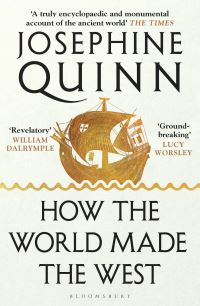
£12.99‘One of the most fascinating and important works of global history to appear for many years’ (William Dalrymple), this epic debut from Josephine Quinn rewrites the story of the Western world.
We recently launched our new website and are facing a few teething issues. If you see any problems please contact us.

 A place in Scotland
Available on backorder (5-7 days)
Richard Scarry's ABC word book
Available on backorder (5-7 days)
 First Sticker Book Ballet
Available on backorder (5-7 days)
 Weapons Of Math Destruction
Available on backorder (5-7 days)
Subtotal: £60.97
We recently launched our new website and are facing a few teething issues. If you see any problems please contact us.
Showing 13–24 of 69 resultsSorted by latest
‘One of the most fascinating and important works of global history to appear for many years’ (William Dalrymple), this epic debut from Josephine Quinn rewrites the story of the Western world.

The violent unease of today’s world would have been familiar to Hannah Arendt. Tyranny, occupation, disenchantment, post-truth politics, conspiracy theories, racism, mass migration: She lived through them all. Born in the first decade of the last century, she escaped fascist Europe to make a new life for herself in America, where she became one of its most influential – and controversial – public intellectuals. She wrote about power and terror, exile and love, and above all, about freedom. Questioning – thinking – was her first defense against tyranny. She advocated a politics of action and plurality, courage and, when necessary, disobedience. This book is about the Arendt we need for the 21st century. It tells us how and why Arendt came to think the way she did, and how to think when our own politics goes off the rails.
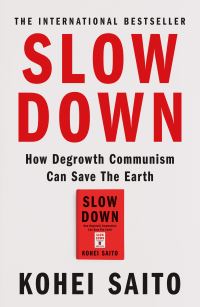
Can green capitalism save the planet? Is it even trying? Not when the very logic of the capitalist system pits it against Earth’s life support systems, as the Japanese philosopher Kohei Saito demonstrates in one of the most astonishing bestsellers of recent times. Drawing on cutting-edge research across multiple disciplines, Saito shows how nothing but a transformation of our economic life can save us from climate collapse. Karl Marx himself reached this breakthrough at the end of his life, long before climate change had even begun. What few people realise is that it radically altered his vision of proletarian revolution. Now that we are entering our own end-game, we must grasp Marx’s final lesson before it is too late.
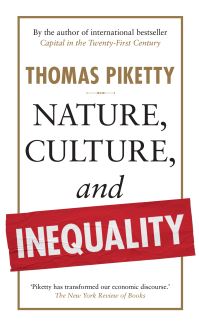
Thomas Piketty explores how social inequality manifests itself very differently depending on the society and epoch in which it arises. History and culture play a central role, inequality being strongly linked to various socio-economic, political, civilisational, and religious developments. So it is culture in the broadest sense that makes it possible to explain the diversity, extent, and structure of the social inequality that we observe every day. Piketty briefly and concisely presents a lively synthesis of his work, taking up such diverse topics as education, inheritance, taxes, and the climate crisis, and provides exciting food for thought for a highly topical debate: Does natural inequality exist?
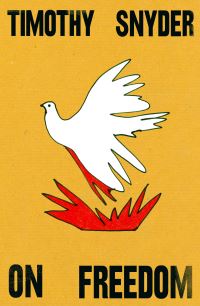
Timothy Snyder has been called ‘the leading interpreter of our dark times’. As a historian, he has given us startling reinterpretations of political collapse and mass killing. As a public intellectual, he has turned that knowledge toward counsel and prediction, working against authoritarians. His book ‘On Tyranny’ has inspired millions around the world to fight for freedom. Freedom is the great American commitment, but as Snyder argues, we have lost sight of what it means – and this is leading us into crisis. Too many of us look at freedom as the absence of state power: We think we’re free if we can do and say as we please, and protect ourselves from government overreach. But true freedom isn’t so much freedom from, as freedom to – the freedom to thrive, to take risks for futures we choose by working together. Freedom is the value that makes all other values possible.
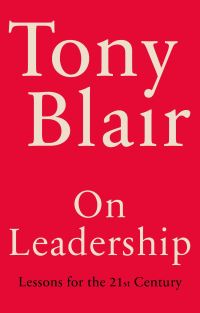
Tony Blair learnt the precepts of governing the hard way: by leading a country for over ten years. In that time he came to understand that there were certain key characteristics of successful government that he wished he had known when he started. Since then, he has seen how, though circumstances and contexts differ enormously, the challenges of governing are basically the same in any nation, whatever its stage of development. Unfortunately, while practical guides to other professions abound, governing is treated as a dimension of politics, not as an art and science in its own right, and practical, non-partisan advice is consequently hard to find. Now Tony Blair has written the manual on political leadership that he would have wanted back in 1997, sharing the insights he has gained from his personal experience and from observing other world leaders at first hand.
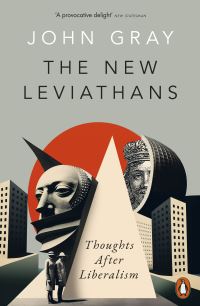
Ever since its publication in 1651, Thomas Hobbes’ Leviathan has unsettled and challenged how we understand the world. Condemned and vilified by each new generation, Hobbes’ cold political vision continues to see through any number of political and ethical vanities. In his stimulating book ‘The New Leviathans’, John Gray allows us to understand the world of the 2020s with all its contradictions, moral horrors and disappointments through a new reading of Hobbes’ classic work.
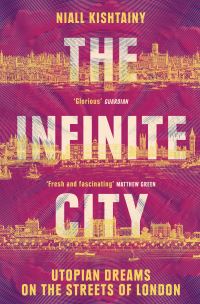

Vladimir Lenin, an occasional resident of North London who went on to other things, has been credited with once saying that there are decades where nothing happens but weeks when decades happen. The first two and a half decades of this century in Britain have had plenty of those weeks. Indeed, our recent history has at times resembled an episode of Casualty, the long-running BBC hospital drama in which every hedge trimmer slips, every gas pipe leaks, every piece of scaffolding collapses and everyone ends up in intensive care. In ‘Haywire’, Andrew Hindmoor makes sense of the deluge of events which have rained down on Britain since 2000, from the Iraq War to financial collapse, austerity to Brexit, as well as more easily forgotten moments such as the MP’s expenses scandal.

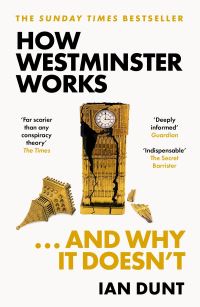
British politics is broken. Anyone sitting down to watch the news will get a firm sense that something has gone terribly wrong. Prime ministers are misleading and inadequate. Cabinet secretaries are uninformed and deluded. Many MPs are of the lowest imaginable quality. The legislation is sloppy, ineffective and broadly worded. Expertise is denigrated. Lies are rewarded. And deep-seated, long-lasting national problems go permanently unresolved. Most of us have a sense that the system doesn’t work – but do we know how to articulate exactly why? The reality is that despite all the coverage, hardly anyone understands how Westminster actually works. Our political and financial system is cloaked in secrecy, archaic terminology, ancient custom, impenetrable technical jargon and deliberate obfuscation.
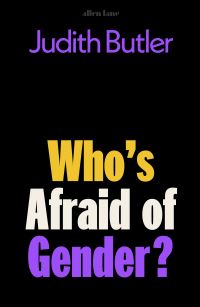
Judith Butler, the ground-breaking philosopher whose work has redefined how we think about gender and sexuality, confronts the attacks on gender that have become central to right-wing movements today. Global networks have formed ‘anti-gender ideology movements’ dedicated to circulating a fantasy that gender is a dangerous threat to families, local cultures, civilization – and even ‘man’ himself. Inflamed by the rhetoric of public figures, this movement has sought to abolish reproductive justice, undermine protections against violence, and strip trans and queer people of their rights. But what, exactly, is so disturbing about gender? In this vital, courageous book, Butler carefully examines how ‘gender’ has become a phantasm for emerging authoritarian regimes, fascist formations and transexclusionary feminists, and the concrete ways in which this phantasm works.
A place in Scotland
Available on backorder (5-7 days)
Richard Scarry's ABC word book
Available on backorder (5-7 days)
First Sticker Book Ballet
Available on backorder (5-7 days)
Weapons Of Math Destruction
Available on backorder (5-7 days)
Subtotal: £60.97
Notifications