Showing 13–21 of 21 resultsSorted by latest
-
£20.00
The tech elite have a plan to survive the apocalypse: they want to leave us all behind. Five mysterious billionaires summoned Douglas Rushkoff to a desert resort for a private talk. The topic? How to survive ‘The Event’: the societal catastrophe they know is coming. Rushkoff came to understand that these men were under the influence of ‘The Mindset’, a Silicon Valley-style certainty that they can break the laws of physics, economics, and morality to escape a disaster of their own making – as long as they have enough money and the right technology. In this book, Rushkoff traces the origins of The Mindset in science and technology through its current expression in missions to Mars, island bunkers, and the Metaverse.
-
£25.00
In 2011, a 43-foot-high tsunami crashed into a nuclear power plant in Fukushima, Japan. In the following days, explosions would rip buildings apart, three reactors would go into nuclear meltdown, and the surrounding area would be swamped in radioactive water. It is now considered one of the costliest nuclear disasters ever. But Fukushima was not the first, and it was not the worst. In ‘Atoms and Ashes’, acclaimed historian Serhii Plokhy tells the tale of the six nuclear disasters that shook the world – Bikini Atoll, Kyshtym, Windscale, Three Mile Island, Chernobyl, and Fukushima.
-
£16.99
In ‘Bold Ventures’, Belgian poet Charlotte Van den Broeck goes in search of buildings that were fatal for their architects – architects who either killed themselves or are rumoured to have done so. The buildings range across time and space – from a church with a twisted spire built in 17th-century France to a theatre that collapsed mid-performance in 1920s Washington, DC., and an eerily sinking swimming pool in her hometown of Turnhout. Drawing on a vast range of material, from Hegel and Charles Darwin to art history, stories from her own life and popular culture, patterns gradually come into focus, as Van den Broeck asks: what is that strange life-or-death connection between a creation and its creator?
-
£20.00
The ‘duty of care’ which the state owes to its citizens is a phrase much used, but what has it actually meant in Britain historically? And what should it mean in the future, once the immediate Covid crisis has passed? In ‘A Duty of Care’, Peter Hennessy divides post-war British history into BC (before Corona) and AC (after Corona). He looks back to beginnings when, during wartime, Sir William Beveridge identified the ‘five giants’ on the road to recovery: want, disease, ignorance, squalor and idleness and laid the foundations for the modern welfare state. Hennessy examines the attack on the giants after the war and asks what the giants are now, and calls for ‘a new Beveridge’ to build a consensus for post-corona Britain with the ambition and on the scale that was achieved in the decades after the Second World War.
-
£14.99
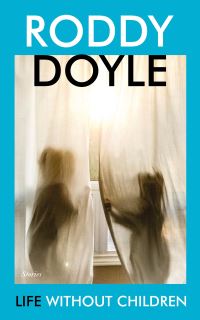
Love and marriage. Children and family. Death and grief. Life touches everyone the same. But living under lockdown, it changes us alone. In these ten, beautifully moving short stories mostly written over the last year, Booker Prize winner Roddy Doyle paints a collective portrait of our strange times.
-
£20.00
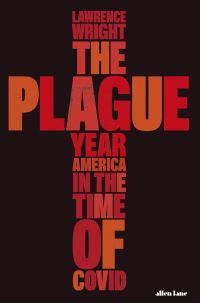
The story starts with the initial moments of Covid’s appearance in Wuhan and ends with Joseph Biden’s inauguration in an America ravaged by well over 400,000 deaths – a mortality already some ten times worse than US combat deaths in the entire Vietnam War. This is an anguished, furious memorial to a year in which all of America’s great strengths – its scientific knowledge, its great civic and intellectual institutions, its spirit of voluntarism and community – were brought low not by a terrifying new illness alone, but by political incompetence and cynicism on a scale for which there has been no precedent. With insight, sympathy, clarity and rage, ‘The Plague Year’ follows the unfolding of this great tragedy, talking with individuals on the frontline, bringing together many moving and surprising stories and painting a devastating picture of a country literally and fatally misled.
-
£25.00
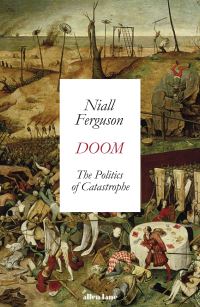
Disasters are by their very nature hard to predict. Pandemics, like earthquakes, wildfires, financial crises and wars, are not normally distributed; there is no cycle of history to help us anticipate the next catastrophe. But when disaster strikes, we ought to be better prepared than the Romans were when Vesuvius erupted or medieval Italians when the Black Death struck. We have science on our side, after all. Yet the responses of a number of developed countries to a new pathogen from China were badly bungled. Why? The facile answer is to blame poor leadership. While populist rulers have performed poorly in the face of the pandemic, more profund problems have been exposed by COVID-19. Only when we understand the central challenge posed by disaster in history can we see that this was also a failure of an administrative state and of economic elites that had grown myopic over much longer than just a few years.
-
£16.99
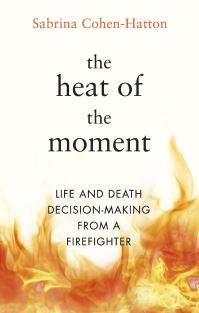
Dr Sabrina Cohen-Hatton has been a firefighter for eighteen years. She decides which of her colleagues rush into a burning building and how they confront the blaze. She makes the call to evacuate if she believes the options have been exhausted or that the situation has escalated beyond hope, even if it means leaving the injured behind. She has managed emergencies that have shocked us and moved us, and made decisions that seem impossible. Taking us to the very heart of firefighting, she reveals the skills and qualities that are essential to surviving – and even thriving – in such a fast-paced and emotionally-charged environment. And she immerses us in this extraordinary world; from scenes of devastation and crisis, through triumphs of bravery, to the quieter moments when these assumed heroes question themselves, their choices, and decisions made in the most unforgiving circumstances.
-
£9.99
On the 26th of April 1986, at 1:23am, a reactor at the Chernobyl Nuclear Power Plant in Soviet Ukraine exploded. While the authorities scrambled to understand what was occurring, workers, engineers, firefighters and those living in the area were abandoned to their fate. The blast put the world on the brink of nuclear annihilation, contaminating over half of Europe with radioactive fallout. In ‘Chernobyl’, award-winning historian Serhii Plokhy draws on recently opened archives to recreate these events in all their drama, telling the stories of the scientists, workers, soldiers and policemen who found themselves caught in a nuclear nightmare.

 The Year of Magical Thinking
  Remarkable Cricket Grounds
  Freakonomics
  Jane Austen for Every Day of the Year
  The Outsider
  Art Of War



 Jane Austen for Every Day of the Year