Showing all 4 resultsSorted by latest
-
£20.00
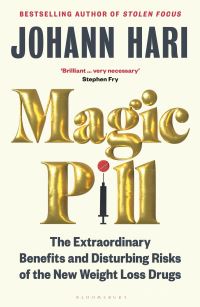
In January 2023, Johann Hari started to inject himself once a week with Ozempic, one of the new drugs that produces significant weight loss. He wasn’t alone – some predictions suggest that in a few years, one in four of the British population will be taking these drugs. While around 80 per cent of diets fail, someone taking one of the new drugs is likely to lose up to a quarter of their body weight in six months. To the drugs’ defenders, this is a moment of liberation from a condition that massively increases your chances of diabetes, cancer and an early death. Still, Hari was wildly conflicted. Can these drugs really be as good as they sound? Are they a magic solution – or a magical illusion? Finding the answer to this high-stakes question led him on a journey from Iceland to Minneapolis to Tokyo, and to interview the leading experts in the world on these issues.
-
£18.99
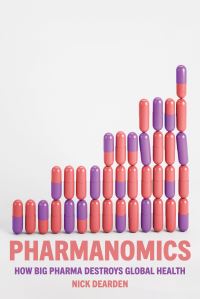
How Big Pharma failed to end a pandemic, and what it tells us about the global economy
-
£16.99
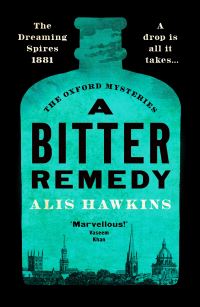
Jesus College, Oxford, 1881. An undergraduate is found dead at his lodgings and the medical examination reveals some shocking findings. When the young man’s guardian blames the college for his death and threatens a scandal, Basil Rice, a Jesus college fellow with a secret to hide, is forced to act and finds himself drawn into Sidney Parker’s sad life. The mystery soon attracts the attention of Rhiannon ‘Non’ Vaughan, a young Welsh polymath and one of the young women newly admitted to university lectures. But when neither the college principal nor the powerful ladies behind Oxford’s new female halls will allow her to become involved, Non’s fierce intelligence and determination to prove herself drive her on. Both misfits at the university, Non and Basil form an unlikely partnership, and it soon falls to them to investigate the mysterious circumstances of Parker’s death.
-
£12.99
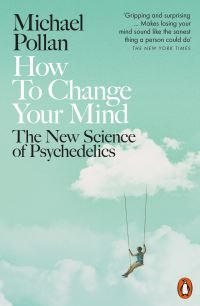
When LSD was first discovered in the 1940s, it seemed to researchers, scientists and doctors as if the world might be on the cusp of psychological revolution. It promised to shed light on the deep mysteries of consciousness, as well as offer relief to addicts and the mentally ill. But in the 1960s, with the vicious backlash against the counter-culture, all further research was banned. In recent years, however, work has quietly begun again on the amazing potential of LSD, psilocybin and DMT. Could these drugs in fact improve the lives of many people? Diving deep into this extraordinary world and putting himself forward as a guinea-pig, Michael Pollan has written a remarkable history of psychedelics and a compelling portrait of the new generation of scientists fascinated by the implications of these drugs.