Showing all 7 resultsSorted by latest
-
£20.00
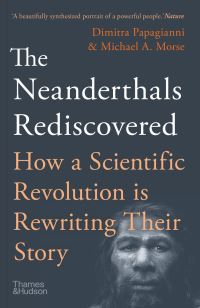
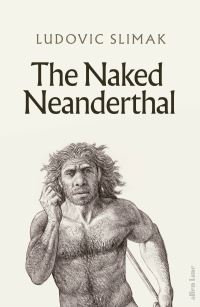
What do we really know about our cousins, the Neanderthals? For over a century we saw Neanderthals as inferior to Homo Sapiens. More recently, the pendulum swung the other way and they are generally seen as our relatives – not quite human, but similar enough, and still not equal. Now, thanks to an ongoing revolution in palaeoanthropology in which he has played a key part, Ludovic Slimak shows us that they are something altogether different – and they should be understood on their own terms rather than by comparing them to ourselves. As he reveals in this book, the Neanderthals had their own history, their own rituals, their own customs. Their own intelligence, very different from ours. Slimak has travelled around the world for the past thirty years to uncover who the Neanderthals really were.
-
£30.00
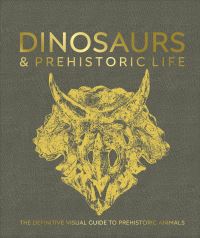
From the origin of life, through the age of dinosaurs stalked by the terrifying tyrannosaurus rex, to the earliest humans, this book tells the story of life on Earth. Dinosaurs may be the stars of the show, but the book is truly comprehensive, with fossil plants, invertebrates, amphibians, fish, birds, reptiles, mammals, and even early bacteria conjuring up an entire past world. To put all of these extinct species in context, the book explores geological time and the way life-forms are classified. It also looks at how fossils preserve the story of evolution, and how it can be deciphered.
-
£10.99
A journey through the evolution of Britain’s prehistoric landscape, and an insight into the lives of its inhabitants, in fifteen scenes.
-
£12.99
The award-winning guide to everything we know about the Neanderthals, from their emergence to their extinction, now updated and expanded to feature the latest discoveries in the field of Neanderthal DNA.
-
£30.00
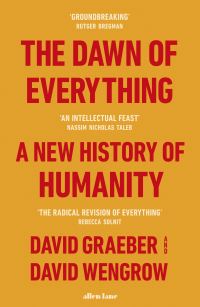
For generations, our remote ancestors have been cast as primitive and childlike – either free and equal innocents, or thuggish and warlike. Civilization, we are told, could be achieved only by sacrificing those original freedoms or, alternatively, by taming our baser instincts. David Graeber and David Wengrow show how such theories first emerged in the eighteenth century as a conservative reaction to powerful critiques of European society posed by indigenous observers and intellectuals. Revisiting this encounter has startling implications for how we make sense of human history today, including the origins of farming, property, cities, democracy, slavery and civilization itself. Drawing on path-breaking research in archaeology and anthropology, the authors show how history becomes a far more interesting place once we learn to throw off our shackles and perceive what’s really there.
-
£10.99
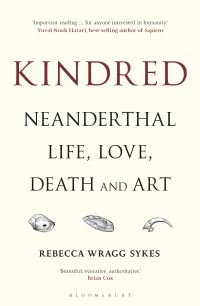
Our perception of the Neanderthals has undergone a metamorphosis since their discovery 150 years ago, from the losers of the human family tree to A-list hominins. Spanning scientific curiosity and popular cultural fascination means that there is a wealth of coverage in the media and beyond – but do we get the whole story? The reality of 21st century Neanderthals is complex and fascinating, yet remains virtually unknown and inaccessible outside the scientific literature. In ‘Kindred’, Neanderthal expert Becky Wragg Sykes shoves aside the cliché of the rag-clad brute in an icy wasteland, and reveals the Neanderthal you don’t know, who lived across vast and diverse tracts of Eurasia and survived through hundreds of thousands of years of massive climate change.
-
£25.00
A journey through the evolution of Britain’s prehistoric landscape, and an insight into the lives of its inhabitants, in fifteen scenes.
 Lonely Planet Best of India
  Things I Dont Want To Know
  Lonely Planet Cape Town & the Garden Route
  Why We Sleep
  The Year of Magical Thinking
  L'Histoire De France En BD: De LA Prehistoire a L'an MIL