Showing 25–36 of 64 resultsSorted by latest
-
£25.00
Kissinger’s six leaders are Konrad Adenauer, Charles de Gaulle, Richard Nixon, Anwar Sadat, Lee Kuan Yew, and Margaret Thatcher. All of them were formed in a period when established institutions collapsed all over Europe, colonial structures gave way to independent states in Asia and Africa, and a new international order had to be created from the vestiges of the old. Kissinger penetratingly analyses each of these leaders’ careers through the highly individual strategies of statecraft which he presents them as embodying, to show how it is the combination of character and circumstance which creates history. Kissinger’s public experience, personal knowledge and historical perceptions enrich the book with insights and judgements such as only he could make.
-
£30.00
This title is an authoritative and enthralling history of the rise and fall of the state-owned British Rail. Drawing on extensive research and in-depth access, Christian Wolmar provides a new perspective on a story long simplified.
-
£10.99
Spring 1958. A mysterious individual believed to be high up in the Polish secret service began passing Soviet secrets to the West. His name was Michal Goleniewski and he remains one of the most important, yet least known and most misunderstood spies of the Cold War. Even his death is shrouded in mystery and he has been written out of the history of Cold War espionage – until now. Tim Tate draws on a wealth of previously-unpublished primary source documents to tell the dramatic true story of the best spy the west ever lost – of how Goleniewski exposed hundreds of KGB agents operating undercover in the West; from George Blake and the ‘Portland Spy Ring’, to a senior Swedish Air Force and NATO officer and a traitor inside the Israeli government. The information he produced devastated intelligence services on both sides of the Iron Curtain.
-
£9.99
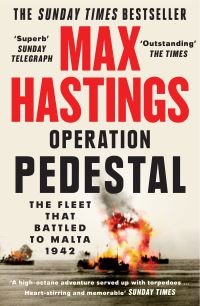
The Sunday Times bestseller
‘One of the most dramatic forgotten chapters of the war, as told in a new book by the incomparable Max Hastings’ DAILY MAIL
-
£10.99
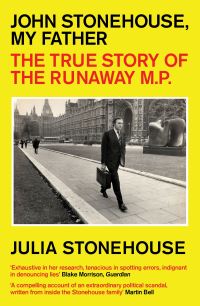
On 20 November 1974, British Labour MP and Privy Counsellor John Stonehouse faked his death in Miami and, using a forged identity, entered Australia hoping to escape his old life and start anew. One month later his identity was uncovered and he was cautioned; the start of years of legal proceedings. In a tale that involves spies from the communist Czechoslovak secret service, a three-way love affair and the Old Bailey, John’s daughter examines previously unseen evidence, telling the dramatic true story, disputing allegations and upturning common misconceptions which are still in circulation.
-
£10.99
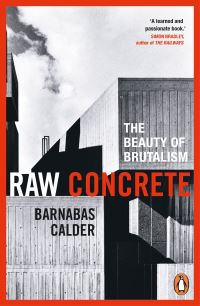
Béton brut or ‘raw concrete’ was a term coined by Le Corbusier and appropriated by two young British architects in the 1950s to describe a new kind of building: austere, unadorned, monolithic, confrontational and constructed almost entirely in concrete. This book provides a history of the heavy-concrete architecture of post-war Britain, as well as a personal and illuminating guide to eight pivotal Brutalist buildings.
-
£30.00
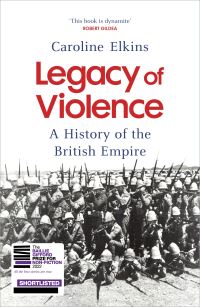
Sprawling across a quarter of the world’s land mass and claiming nearly 500 colonial subjects, Britain’s empire was the largest empire in human history. For many, it epitomised our nation’s cultural superiority, but what legacy have we delivered to the world? Spanning more than 200 years of history, Caroline Elkins reveals evolutionary and racialised doctrines that espoused an unrelenting deployment of violence to secure and preserve British imperial interests. She outlines how ideological foundations of violence were rooted in Victorian calls for punishing indigenous peoples who resisted subjugation, and how over time, this treatment became increasingly institutionalised.
-
£20.00
The ‘duty of care’ which the state owes to its citizens is a phrase much used, but what has it actually meant in Britain historically? And what should it mean in the future, once the immediate Covid crisis has passed? In ‘A Duty of Care’, Peter Hennessy divides post-war British history into BC (before Corona) and AC (after Corona). He looks back to beginnings when, during wartime, Sir William Beveridge identified the ‘five giants’ on the road to recovery: want, disease, ignorance, squalor and idleness and laid the foundations for the modern welfare state. Hennessy examines the attack on the giants after the war and asks what the giants are now, and calls for ‘a new Beveridge’ to build a consensus for post-corona Britain with the ambition and on the scale that was achieved in the decades after the Second World War.
-
£9.99
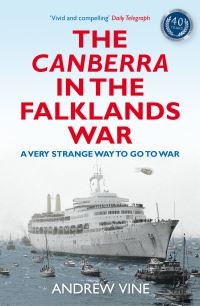
This is the extraordinary story untold until now, of how unlikely combatants like waiters, cooks, nurses and cleaners who never in their dreams imagined they could be caught up in a war, found themselves on the front line at the very end of the world.
-
£8.99
Chicago, 1950. Rosalind Porter has always defied expectations – in her work as a physicist on the Manhattan Project to design the atomic bomb, and in her passionate love affair with coworker Thomas Weaver. Five years after the end of both, her guilt over the results of her work and her heartbreak over Weaver are intertwined. She has almost succeeded in resigning herself to a more conventional life. Then Weaver gets back in touch – but so does the FBI. Agent Charlie Szydlo wants Rosalind to spy on Weaver, whom the FBI suspects of selling nuclear secrets to Russia. Rosalind’s final assignment launches her on a mission to find the truth – no matter where it leads.
-
£10.99
Award-winning journalist Philip Stephens paints a fascinating portrait of a nation struggling to reconcile its waning power with past glory. Drawing on decades of personal contact and interviews with senior politicians and diplomats in Britain, the United States and across the capitals of Europe, Britain Alone is a vivid account of a proud nation struggling to admit it is no longer a great power. It is an indispensable guide to how we arrived at the state we are in.
-
£9.99
On Boxing Day 1962, when Juliet Nicolson was eight years old, the snow began to fall. It did not stop for ten weeks. It was one of the coldest and harshest winters for 300 years. The drifts in East Sussex reached twenty-three feet. In London, milkmen made deliveries on skis. On Dartmoor 2,000 ponies were buried in the snow, and foxes ate sheep alive. It wasn’t just the weather that was bad. The threat of nuclear war had reached its terrifying height with the recent Cuban Missile Crisis. Unemployment was on the rise, de Gaulle was blocking Britain from joining the European Economic Community, Winston Churchill, still the symbol of Great Britishness, was fading. These shadows hung over a country paralysed by frozen heating oil, burst pipes and power cuts which are explored here.

 Trees in winter
  Rainy Day Pad
  Circle
  Ottolenghi The Cookbook
  What To Cook & How To Cook It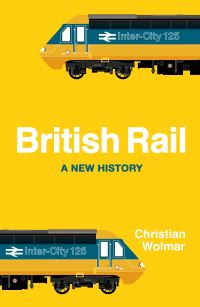





 Trees in winter