Showing 181–192 of 222 resultsSorted by latest
-
£10.99
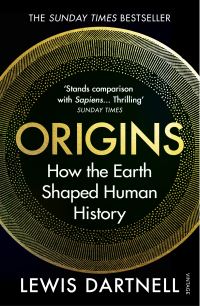
Why is the world the way it is? What forces have forged our planet and how have they in turn governed our evolution, influenced the rise and fall of civilisations through history, and ultimately shaped the story of humanity? Lying imperceptibly beneath everything we encounter in the modern world is a vast architecture of causal links, chains of consequences that explain why things are the way they are. ‘Origins’ is the story of this connectivity; it’s not about what we’ve done to our environment, but about what our environment has done to us. We range from the deep roots behind everyday realities, like why do most of us eat cereal for breakfast, to the profound factors that enabled life to make transitions in evolution.
-
£20.00
Love drugs and anti-love drugs exist and more powerful versions will be available in the near future: What are the ethics of using them, how will they affect society, and will they take the magic out of love? A cutting-edge book by two prominent ethicists on ‘love drugs’, and the implications they may have for us all.
-
£12.99
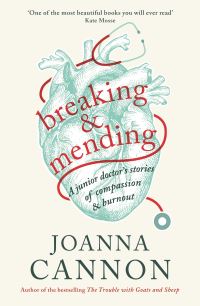
An intimate and urgent account of doctor burnout, ‘Breaking and Mending’ is a frank assessement of mental health from both sides of the doctor/patient divide.
-
£14.99
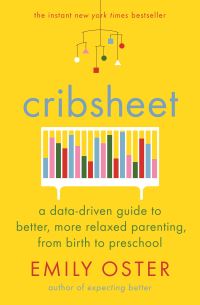
Parenting is full of decisions, nearly all of which can be agonized over. There is an abundance of often-conflicting advice hurled at you from doctors, family, friends, and strangers on the internet. But the benefits of these choices can be overstated, and the trade-offs can be profound. How do you make your own best decision? Armed with the data, Oster finds that the conventional wisdom doesn’t always hold up. She debunks myths and offers non-judgemental ways to consider our options in light of the facts. ‘Cribsheet’ is a thinking parent’s guide that empowers us to make better, less fraught decisions – and stay sane in the years before preschool.
-
£10.99
Dr Richard Shepherd is the UK’s foremost forensic pathologist, his job to understand the deaths which may have no natural cause. From crime scene to court room, his findings are crucial to the pursuit of justice. His work has seen killers put behind bars, exonerated the innocent, and turned open and shut cases on their heads. Shepherd’s obsession with revealing the secrets of the dead is personal. At medical school, while performing his first autopsy, he held the heart of the patient in his hand and thought of his late mother, taken too early by heart disease. He became driven by the challenge of finding the truth, of seeing justice, and by compassion: sometimes for the dead, but always for those they have left behind.
-
£10.99
Time is a mystery that does not cease to puzzle us. Philosophers, artists and poets have long explored its meaning while scientists have found that its structure is different from the simple intuition we have of it. From Boltzmann to quantum theory, from Einstein to loop quantum gravity, our understanding of time has been undergoing radical transformations. Time flows at a different speed in different places, the past and the future differ far less than we might think, and the very notion of the present evaporates in the vast universe. With his extraordinary charm and sense of wonder, bringing together science, philosophy and art, Carlo Rovelli unravels this mystery, inviting us to imagine a world where time is in us and we are not in time.
-
£10.99
The internationally bestselling story of a young woman whose death in 1951 changed medical science for ever . . .
-
£9.99
An engaging and witty puzzle book for science fans all over the world.
-
£9.99
‘Inferior is more than just a book. It’s a battle cry – and right now, it’s having a galvanising effect on its core fanbase’ Observer
-
£12.99
A Sunday Times bestseller ? now with revised and expanded content on the exciting new science about the gut-brain link. Our gut is as important as our brain or heart, yet we know very little about how it works and many of us are too embarrassed to ask questions. In Gut, Giulia Enders breaks this taboo, revealing the latest science on how much our digestive system has to offer. From our miraculous gut bacteria ? which can play a part in obesity, allergies, depression and even Alzheimer’s ? to the best position to poo, this entertaining and informative health handbook shows that we can all benefit from getting to know the wondrous world of our inner workings.
-
£10.99
Do space and time truly exist? What is reality made of? Can we understand its deep texture? Scientist Carlo Rovelli has spent his whole life exploring these questions and pushing the boundaries of what we know. In this book, he shows how our understanding of reality has changed throughout centuries, from Democritus to loop quantum gravity. Taking us on a wondrous journey, he invites us to imagine a whole new world where black holes are waiting to explode, spacetime is made up of grains, and infinity does not exist – a vast universe still largely undiscovered.
-
£10.99
Widely considered the greatest genius of all time, Albert Einstein revolutionised our understanding of the cosmos with his general theory of relativity and helped to lead us into the atomic age. Yet in the final decades of his life he was also ignored by most working scientists, his ideas opposed by even his closest friends. This stunning downfall can be traced to Einstein’s earliest successes and to personal qualities that were at first his best assets. Einstein’s imagination and self-confidence served him well as he sought to reveal the universe’s structure, but when it came to newer revelations in the field of quantum mechanics, these same traits undermined his quest for the ultimate truth.