Showing all 10 resultsSorted by latest
-
£20.00
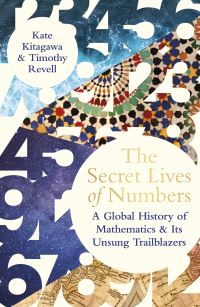
From building rockets to the handheld technology that governs our day-to-day lives, we are all in debt to the mathematical geniuses of the past. But the history of mathematics is warped; it looks like a sixteenth-century map that enlarges Europe at the expense of Africa, Asia and the Americas. This book introduces readers to a new group of mathematical boundary-smashers, those who have been erased by history because of their race, gender or nationality. Kitagawa and Revell bring to vivid life the stories and struggles of mathematicians from every continent: from the brilliant Arabic scholars of the ninth century ‘House of Wisdom’; to the pioneering African-American mathematicians of the twentieth century; the first female mathematics professor (from Russia); and the ‘lady computers’ around the world who revolutionised our knowledge of the night sky.
-
£22.00
In our hyper-modern world, we are bombarded with more facts, stats and information than ever before. So, what can we grasp hold of to make sense of it all? Oliver Johnson reveals how mathematical thinking can help us understand the myriad data all around us.
-
£9.99
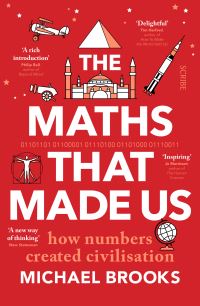
Quadratic equations, Pythagoras’ theorem, imaginary numbers, and pi – you may remember studying these at school, but did anyone ever explain why? Never fear – bestselling science writer, and your new favourite maths teacher, Michael Brooks, is here to help. In ‘The Maths That Made Us’, Brooks reminds us of the wonders of numbers: how they enabled explorers to travel far across the seas and astronomers to map the heavens; how they won wars and halted the HIV epidemic; how they are responsible for the design of your home and almost everything in it, down to the smartphone in your pocket. His clear explanations of the maths that built our world, along with stories about where it came from and how it shaped human history, will engage and delight.
-
£10.99
Even if you stick to the whole numbers, there are a lot to choose from – an infinite number in fact. Throw in decimal fractions and infinity suddenly gets an awful lot bigger (is that even possible?) And then there are the negative numbers, the imaginary numbers, the irrational numbers like pi which never end. It literally never ends. The world of numbers is indeed strange and beautiful. Among its inhabitants are some really notable characters – pi, e, the ‘imaginary’ number i and the famous golden ratio to name just a few. Prime numbers occupy a special status. Zero is very odd indeed: is it a number, or isn’t it? This book takes a tour of this mind-blowing but beautiful realm of numbers and the mathematical rules that connect them.
-
£9.99
‘Math Without Numbers’ is a vivid and wholly original guide to the three main branches of abstract math – topology, analysis, and algebra – which turn out to be surprisingly easy to grasp. Milo Beckerman upends the conventional approach to mathematics, inviting you to think creatively about shape and dimension, the infinite and infinitesimal, symmetries, proofs, and how these concepts all fit together. How many shapes are there? Is anything bigger than infinity? And can mathematics even be described as ‘true’?
-
£9.99
Is there a secret formula for getting rich? For making something a viral hit? For deciding how long to stick with your current job, Netflix series, or even relationship? This book is all about the equations that make our world go round. Ten of them, in fact. They are integral to everything from investment banking to betting companies and social media giants. And they can help you to increase your chance of success, guard against financial loss, live more healthily and see through scaremongering. They are known only by mathematicians – until now. With wit and clarity, mathematician David Sumpter shows that it isn’t the technical details which make these formulas so successful. It is the way they allow mathematicians to view problems from a different angle – a way of seeing the world that anyone can learn.
-
£18.99
Bestselling science writer Michael Brooks takes us on a fascinating journey through the history of civilisation, as he explains why maths is fundamental to our understanding of the world. The untrained brain isn’t wired for maths; beyond the number 3, it just sees ‘more’. So why bother learning it at all? You might remember studying geometry, calculus, and algebra at school, but you probably didn’t realise – or weren’t taught – that these are the roots of art, architecture, government, and almost every other aspect of our civilisation. The mathematics of triangles enabled explorers to travel far across the seas and astronomers to map the heavens. Calculus won the Allies the Second World War and halted the HIV epidemic. And imaginary numbers, it turns out, are essential to the realities of 21st-century life.
-
£9.99
Everything is at stake in this compendium of more than 150 ingenious puzzles, selected to reveal the wonderful diversity of brainteasers that have confounded and intrigued solvers for the last thousand years. You’ll need to pit your wits against probability problems, wrestle with wordplay, grapple with geometry, and scrabble for survival. Along the way you will discover stories of whip-smart thinkers, eccentric novelists, and a poodle with allegedly supernatural powers.
-
£10.99
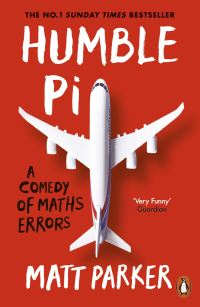
Matt Parker, the brilliant stand-up mathematician, shows us what happens when maths goes wrong in the real world. We would all be better off if everyone saw mathematics as a practical ally. Sadly, most of us fear maths and seek to avoid it. This is because mathematics doesn’t have good ‘people skills’ – it never hesitates to bluntly point out when we are wrong. But it is only trying to help! Mathematics is a friend which can fill the gaps in what our brains can do naturally. Luckily, even though we don’t like sharing our own mistakes, we love to read about what happens when maths errors make the everyday go horribly wrong. Matt Parker explores and explains near misses and mishaps with planes, bridges, the Internet and big data as a way of showing us not only how important maths is, but how we can use it to our advantage.
-
£8.99
A good puzzle is ingenious, frustrating and a-ha!-inducing. In this entertaining and utterly addictive book, Bellos will challenge you to pit your wits against pangrams, hidatos, chessboard puzzles and a Singaporean schoolchild’s maths paper. Piece of cake, right? Only if you know the scientific method for cutting cake correctly. Organised from easy-peasy to ninja level – with stories of puzzle mysteries, histories and scandals along the way this book will make your hippocampus happy.