The geek way
£10.99The Geek Way explains the radical new mindset that is revolutionizing business culture, leadership, personal successes – and how to use it in your own career.

Showing 13–24 of 60 resultsSorted by latest
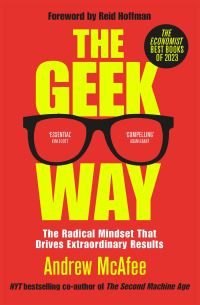
The Geek Way explains the radical new mindset that is revolutionizing business culture, leadership, personal successes – and how to use it in your own career.
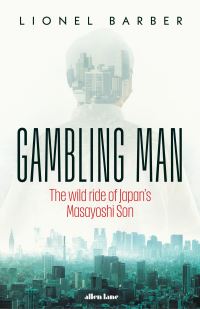
Japan’s Masayoshi Son has made and lost several fortunes, investing or controlling assets worth $1trn in the past two decades through his media-tech giant, SoftBank. He bankrolled Alibaba, China’s internet colossus, before the world had heard about it; plotted with Steve Jobs to turn the iPhone into a wonder product; and financed hundreds of tech start-ups, fuelling the biggest boom Silicon Valley has ever seen. This book takes you on Masa’s wild ride, from his birthplace in a Korean slum in post-war Japan to the modern-day temples of power.
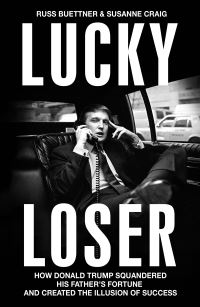
Soon after announcing his first campaign for the US presidency, Donald J. Trump told a national television audience that life ‘has not been easy for me. It has not been easy for me.’ Building on a narrative he had been telling for decades, he spun a hardscrabble fable of how he parlayed a small loan from his father into a multi-billion-dollar business and real estate empire. This feat, he argued, made him singularly qualified to lead the country. Except: None of it was true. Born to a rich father who made him the beneficiary of his own highly lucrative investments, Trump received the equivalent of more than $500 million today via means that required no business expertise whatsoever. Drawing on over twenty years’ worth of Trump’s confidential tax information, investigative reporters Russ Buettner and Susanne Craig track Trump’s financial rise and fall.
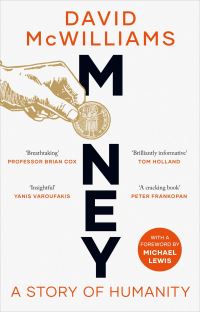
Money. The object of our desires. The engine of our genius. Humanity’s greatest invention. Whether we like it or not, our world revolves around money, but we rarely stop to think about it. What is money, where does it come from, and can it run out? What is this substance that drives trade, revolutions and discoveries; inspires art, philosophy and science? In this illuminating, sometimes irreverent, and often surprising journey, economist David McWilliams charts the relationship between humans and money – from a tally stick in ancient Africa to coins in Republican Greece, from mathematics in the medieval Arab world to the French Revolution, and from the emergence of the US dollar right up to today’s cryptocurrency and beyond.
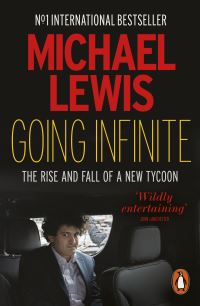
Sam Bankman-Fried wasn’t just rich. Before he turned thirty he’d become the world’s youngest billionaire, making a record fortune in the crypto frenzy. CEOs, celebrities and world leaders vied for his time. At one point he considered paying off the entire national debt of the Bahamas so he could take his business there. Then it all fell apart. Who was this Gatsby of the crypto world, a rumpled guy in cargo shorts, whose eyes twitched across TV interviews as he played video games on the side, who even his million-dollar investors still found a mystery? What gave him such an extraordinary ability to make money – and how did his empire collapse so spectacularly?
The inside story of the world’s most successful hedge fund – and its enigmatic founder, Ray Dalio.
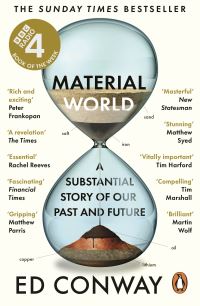
Sand, iron, salt, oil, copper and lithium. The struggle for these tiny, magical materials has razed empires, demolished civilisations, fed our greed and our ingenuity for thousands of years. But the story is not over. We are often told we now live in a weightless world of information but in fact we dug more stuff out of the earth in 2017 than in all of human history before 1950. And it’s getting worse. To make one bar of gold, we now have to dig 5000 tons of earth. For every tonne of fossil fuels, we extract six tonnes of other materials – from sand to stone to wood to metal. Even as we pare back our consumption of fossil fuels we have redoubled our consumption of everything else. Why? Because these ingredients build everything. They power our computers and phones, build our homes and offices, print our books and packaging.
Drawing on stories from Greek Myth and pop culture, from Homer to Mad Men, world-famous economist Yanis Varoufakis explains this game-changing transformation and how it holds the key to understanding our times.
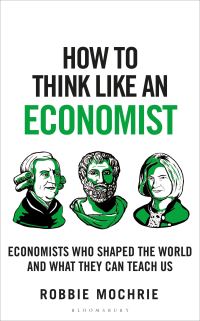
Capturing the essence of history’s most influential economists in enjoyable and illuminating biographical sketches, this book shows how the great economic thinkers are still relevant today. We live in the economy – and we are part of it. Living through a pandemic, governments had to work out how to put economies into a deep freeze without destroying them. In explaining how economic thinking is indispensable to tackling these huge problems, this book is a sure-footed guide, spanning Aristotle’s ideas about restraining consumption, Adam Smith’s thinking about the importance of moral character for sustained economic development, and Esther Duflo’s ongoing work to help the world’s poorest communities lift themselves out of poverty. It shows how great economic thinkers have enabled us to see the world differently, and how we can make it better.
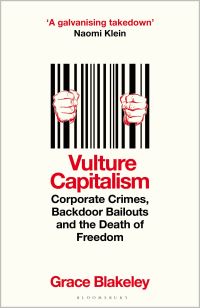
Everything you know about capitalism is wrong. Free markets aren’t really free. Record corporate pro-fits don’t trickle down to everyone else. And we aren’t empowered to make our own choices – they’re made for us every day. In ‘Vulture Capitalism’, journalist Grace Blakeley takes on the world’s most powerful corporations by showing how the causes of our modern crisis are the intended result of our capitalist system. It’s not broken, it’s working exactly as planned. From Amazon to Boeing, Henry Ford to Richard Nixon, Blakeley shows us exactly where late-stage capitalism has gone wrong.
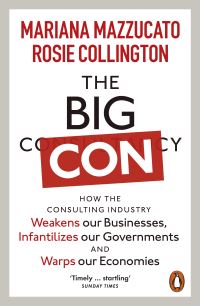
‘The Big Con’ describes the confidence trick the consulting industry performs in contracts with hollowed-out and risk-averse governments and shareholder value-maximizing firms. To make matters worse, our best and brightest graduates are often redirected away from public service into consulting. In all these ways, the Big Con weakens our businesses, infantilises our governments and warps our economies. Mazzucato and Collington expertly debunk the myth that consultancies always add value to the economy. With a wealth of original research, they argue brilliantly for investment and collective intelligence within all organisations and communities, and for a new system in which public and private sectors work innovatively for the common good. We must recalibrate the role of consultants and rebuild economies and governments that are fit for purpose.
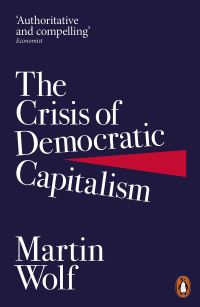
Liberal democracy is in recession and authoritarianism is on the rise. The ties that ought to bind open markets to free and fair elections are being strained and spurned, even in democracy’s notional heartlands. Around the world, powerful voices argue that capitalism is better without democracy; others that democracy is better without capitalism. This book is a forceful rejoinder to both views, offering a deep and lucid assessment of why the marriage between capitalism and democracy has grown so strained and making clear why a divorce would be an almost unthinkable calamity. Wolf argues that for all its recent failings – slowing growth and productivity, increasing inequality, widespread popular disillusion – democratic capitalism remains the best system and that citizenship is not just a slogan or a romantic idea; it’s the only concept that can save us.
No products in the basket.
Notifications