Showing 37–48 of 63 resultsSorted by latest
-
£10.99
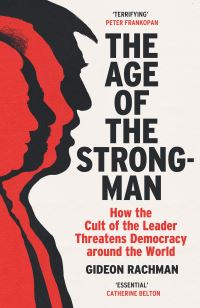
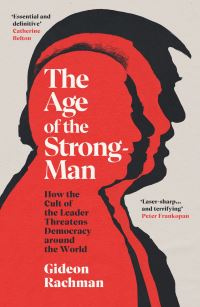
In ‘The Age of the Strongman,’ Gideon Rachman finds global coherence in the chaos of the new nationalism, leadership cults and hostility to liberal democracy. We are in a new era: authoritarian leaders have become a central feature of global politics. Since 2000, self-styled strongmen have risen to power in capitals as diverse as Moscow, Beijing, Delhi, Brasilia, Budapest, Ankara, Riyadh and Washington. These leaders are nationalists and social conservatives, with little tolerance for minorities, dissent or the interests of foreigners. At home, they claim to be standing up for ordinary people against globalist elites; abroad, they posture as the embodiments of their nations. And everywhere they go, they encourage a cult of personality. What’s more, these leaders are not just operating in authoritarian political systems but have begun to emerge in the heartlands of liberal democracy.
-
£22.00
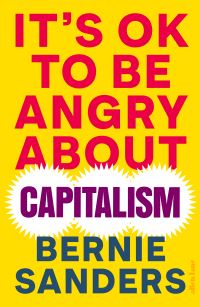
‘It’s OK To Be Angry About Capitalism’ presents a vision of what would be possible if the political revolution took place. If we would finally recognise that economic rights are human rights, and work to create a society that provides them. This isn’t some utopian fantasy; this is democracy as we should know it. Is it really too much to ask?
-
£30.00
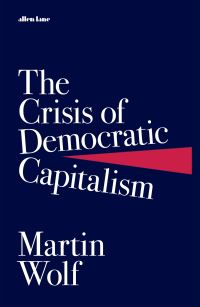
Liberal democracy is in recession and authoritarianism is on the rise. The ties that ought to bind open markets to free and fair elections are being strained and spurned, even in democracy’s notional heartlands. Around the world, powerful voices argue that capitalism is better without democracy; others that democracy is better without capitalism. This book is a forceful rejoinder to both views, offering a deep and lucid assessment of why the marriage between capitalism and democracy has grown so strained and making clear why a divorce would be an almost unthinkable calamity. Wolf argues that for all its recent failings – slowing growth and productivity, increasing inequality, widespread popular disillusion – democratic capitalism remains the best system and that citizenship is not just a slogan or a romantic idea; it’s the only concept that can save us.
-
£11.99
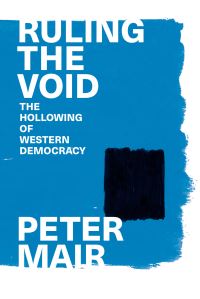
‘Ruling the Void’ analyses democratic trends over the last few decades, in Europe and America, and argues that political disengagement and other forces are contributing to the death of political parties. Without political parties, we lose the characteristic form of Western democracy.
-
£7.99
There is no such thing as the perfect society. There are no hard and fast rules on how to make it work for everyone. If we don’t want to have things imposed upon us, then government by the people and for the people is the best system on offer. We call it democracy. In this book, author Gisela Stuart reflects on the implications and nature of democratic rule.
-
£8.99
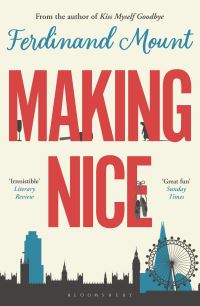
‘Making Nice’ takes place in the murky world of London PR firms, the back rooms of Westminster and on the campaign trail in America and Africa. We follow the hapless Dickie Pentecost, lately the diplomatic correspondent for a London financial newspaper, together with his wife Jane and daughters Flo, an aspiring ballet dancer, and Lucy, a teenager of fourteen. The family find themselves bound up in an ever more alarming series of unfortunate events revolving around the shady character of Ethel (full name Ethelbert), founder of the dubious public relations agency Making Nice.
-
£10.99
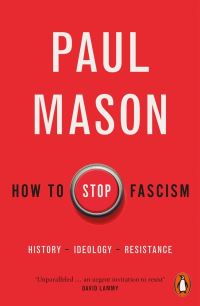
The far right is on the rise across the world. From Modi’s India to Bolsonaro’s Brazil and Erdogan’s Turkey, fascism is not a horror that we have left in the past; it is a recurring nightmare that is happening again – and we need to find a better way to fight it. Paul Mason offers a radical, hopeful blueprint for resisting and defeating the new far right. The book is both a chilling portrait of contemporary fascism, and a compelling history of the fascist phenomenon: its psychological roots, political theories and genocidal logic.
-
£10.99
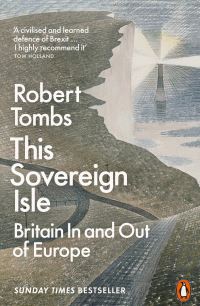
Geography comes before history. Islands cannot have the same history as continental plains. The United Kingdom is a European country, but not the same kind of European country as Germany, Poland or Hungary. For most of the 150 centuries during which Britain has been inhabited it has been on the edge, culturally and literally, of mainland Europe. In this succinct book, Tombs shows that the decision to leave the EU is historically explicable – though not made historically inevitable – by Britain’s very different historical experience, especially in the twentieth century, and because of our more extensive and deeper ties outside Europe.
-
£16.99
A vigorous and timely defense of the state as a force for good
-
£12.99
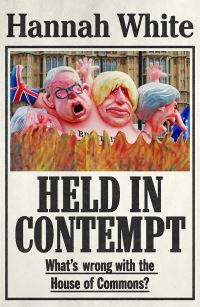
The House of Commons is the United Kingdom’s key democratic institution. But it faces serious challenges which it is ill-equipped to meet. This book examines what is wrong with the House of Commons, how we got here and what can be done about it.
-
£20.00
In ‘The Age of the Strongman,’ Gideon Rachman finds global coherence in the chaos of the new nationalism, leadership cults and hostility to liberal democracy. We are in a new era: authoritarian leaders have become a central feature of global politics. Since 2000, self-styled strongmen have risen to power in capitals as diverse as Moscow, Beijing, Delhi, Brasilia, Budapest, Ankara, Riyadh and Washington. These leaders are nationalists and social conservatives, with little tolerance for minorities, dissent or the interests of foreigners. At home, they claim to be standing up for ordinary people against globalist elites; abroad, they posture as the embodiments of their nations. And everywhere they go, they encourage a cult of personality. What’s more, these leaders are not just operating in authoritarian political systems but have begun to emerge in the heartlands of liberal democracy.
-
£16.99
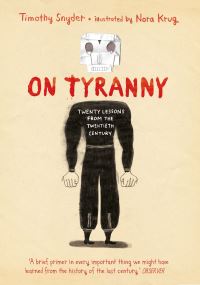
History does not repeat, but it does instruct. In the 20th century, European democracies collapsed into fascism, Nazism and communism. These were movements in which a leader or a party claimed to give voice to the people, promised to protect them from global existential threats, and established rule by an elite with a monopoly on truth. European history shows us that societies can break, democracies can fall, ethics can collapse, and ordinary people can find themselves in unimaginable circumstances. History can familiarise, and it can warn. Today, we are no wiser than the Europeans who saw democracy yield to totalitarianism in the 20th century. But when the political order seems imperilled, our advantage is that we can learn from their experience to resist the advance of tyranny. Now is a good time to do so.