Showing 25–36 of 63 resultsSorted by latest
-
£8.99
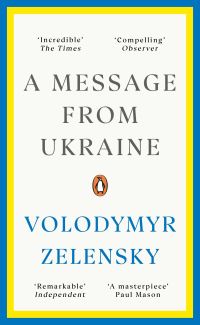
Bringing together a new introduction by Volodymyr Zelensky with his most powerful war speeches, this book recounts Ukraine’s story through the words of its president. It is the story of a nation valiantly defending itself from Russian aggression. And it is the story of a people leading the world in the struggle for democracy. Above all, it is a battle cry for us all to stand up and fight for liberty. If not now, when? This edition includes a new preface plus three additional speeches.
-
£12.99
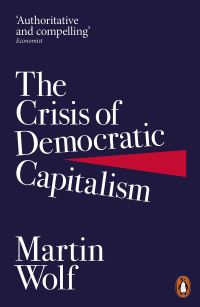
Liberal democracy is in recession and authoritarianism is on the rise. The ties that ought to bind open markets to free and fair elections are being strained and spurned, even in democracy’s notional heartlands. Around the world, powerful voices argue that capitalism is better without democracy; others that democracy is better without capitalism. This book is a forceful rejoinder to both views, offering a deep and lucid assessment of why the marriage between capitalism and democracy has grown so strained and making clear why a divorce would be an almost unthinkable calamity. Wolf argues that for all its recent failings – slowing growth and productivity, increasing inequality, widespread popular disillusion – democratic capitalism remains the best system and that citizenship is not just a slogan or a romantic idea; it’s the only concept that can save us.
-
£10.99
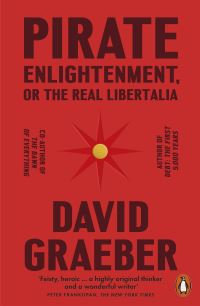
The Enlightenment did not begin in Europe. Its true origins lie thousands of miles away on the island of Madagascar, in the late 17th century, when it was home to several thousand pirates. This was the Golden Age of Piracy, a period of violent buccaneering and rollicking legends – but it was also, argues anthropologist David Graeber, a brief window of radical democracy, as the pirate settlers attempted to apply the egalitarian principles of their ships to a new society on land. For Graeber, Madagascar’s lost pirate utopia represents some of the first stirrings of Enlightenment political thought. In this jewel of a book, he offers a way to ‘decolonise the Enlightenment’, demonstrating how this mixed community experimented with an alternative vision of human freedom, far from that being formulated in the salons and coffee houses of Europe.
-
£20.00
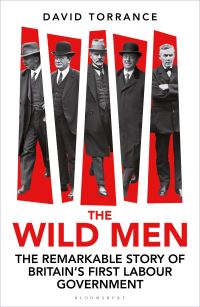
In 1923, four short years since the end of the First World War, and after the passing of the Act which gave all men the vote, an inconclusive election result and the prospect of a constitutional crisis opened the door for a radically different sort of government: men from working-class backgrounds who had never before occupied the corridors of power at Westminster. ‘The Wild Men’ tells the story of that first Labour administration – its unexpected birth, fraught existence, and controversial downfall – through the eyes of those who found themselves in the House of Commons, running the country for the people. Blending biography and history into a compelling narrative, David Torrance reassesses the UK’s first Labour government a century after it shook up a British establishment still reeling from the War – and how the establishment eventually fought back.
-
£10.99
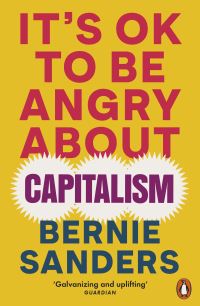
‘It’s OK To Be Angry About Capitalism’ presents a vision of what would be possible if the political revolution took place. If we would finally recognise that economic rights are human rights, and work to create a society that provides them. This isn’t some utopian fantasy; this is democracy as we should know it. Is it really too much to ask?
-
£25.00
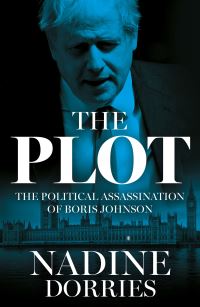
The explosive behind-the-scenes account of the plot to bring down Boris Johnson
-
£10.99
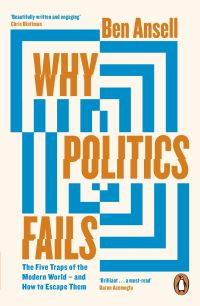
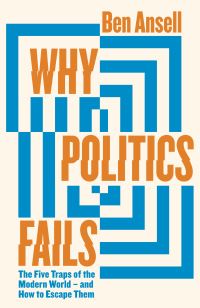
Drawing on examples from Ancient Greece through Brexit and using his own award-winning research – on how democracy is more likely to thrive under high inequality, for instance – Oxford professor Ben Ansell explains the cul-de-sac of modern politics – and how we can make it better. Understanding these traps helps us escape or avoid them altogether, in ways small to large, ultimately showing how we can all thrive in an imperfect world.
-
£20.00
In this analysis of one of the most important issues facing us today, leading Harvard professors Steven Levitsky and Daniel Ziblatt offer a dire warning about right-wing efforts to undermine multiracial democracy. Exploring the 2024 American election and the Capitol riots, as well as global examples from history including post-1945 Germany and Brazil and Chile during the ’60s and ’70s, the authors show how ossified political conventions can be pernicious enablers of minority rule, creating a situation in which partisan minorities can consistently thwart and even rule over popular majorities. With its urgent call for a radical reform of our antiquated institutions for the benefit of the majority, and a citizens’ movement to put enough pressure on lawmakers to act before it’s too late, ‘Tyranny of the Minority’ is a must-read for every participant in the emerging democratic reform movement.
-
£22.00
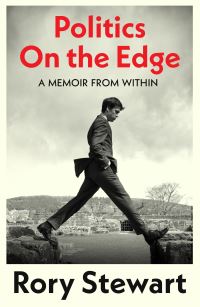
Over the course of a decade from 2010, Rory Stewart went from being a political outsider to standing for prime minister – before being sacked from a Conservative Party that he had come to barely recognise. Tackling ministerial briefs on flood response and prison violence, engaging with conflict and poverty abroad as a foreign minister, and Brexit as a Cabinet minister, Stewart learned first-hand how profoundly hollow and inadequate our democracy and government had become. Cronyism, ignorance and sheer incompetence ran rampant. Around him, individual politicians laid the foundations for the political and economic chaos of today. Stewart emerged battered but with a profound affection for his constituency of Penrith and the Border, and a deep direct insight into the era of populism and global conflict. This book invites us into the mind of one of the most interesting actors on the British political stage.
-
£10.99
An acclaimed expert on violence and seasoned peacebuilder explains the five reasons why conflict (rarely) blooms into war, and how to interrupt that deadly process. It’s easy to overlook the underlying strategic forces of war, to see it solely as a series of errors, accidents, and emotions gone awry. It’s also easy to forget that war shouldn’t happen-and most of the time it doesn’t. Around the world there are millions of hostile rivalries, yet only a tiny fraction erupt into violence. Too many accounts of conflict forget this. With a counterintuitive approach, Blattman reminds us that most rivals loathe one another in peace. That’s because war is too costly to fight.
-
£12.99
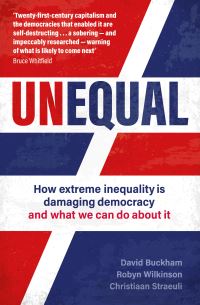
The robber barons of the tech revolution – Gates, Bezos, Zuckerberg, Musk and others – have led the way to wealth inequality nearly as extreme as at the turn of the nineteenth century, with damaging implications for democracy. How has this happened and what can we do about it?
-
£20.00
Drawing on examples from Ancient Greece through Brexit and using his own award-winning research – on how democracy is more likely to thrive under high inequality, for instance – Oxford professor Ben Ansell explains the cul-de-sac of modern politics – and how we can make it better. Understanding these traps helps us escape or avoid them altogether, in ways small to large, ultimately showing how we can all thrive in an imperfect world.