Showing 85–96 of 103 resultsSorted by latest
-
£9.99
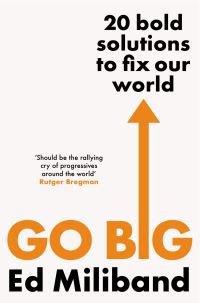
Ed Miliband has captured imaginations with his award-winning hit podcast ‘Reasons to be Cheerful’, which discovers brilliant people all around the world who are successfully fixing problems, transforming communities and pioneering global movements. From a citizens’ assembly in Mongolia to the UK’s largest walking and cycling network in Greater Manchester, from flexible working in Finland to the campaign for the first halal Nando’s in Cardiff, ‘Go Big’ draws on the most imaginative and ambitious of these ideas to provide a vision for how to remake society.
-
£20.00
The ‘duty of care’ which the state owes to its citizens is a phrase much used, but what has it actually meant in Britain historically? And what should it mean in the future, once the immediate Covid crisis has passed? In ‘A Duty of Care’, Peter Hennessy divides post-war British history into BC (before Corona) and AC (after Corona). He looks back to beginnings when, during wartime, Sir William Beveridge identified the ‘five giants’ on the road to recovery: want, disease, ignorance, squalor and idleness and laid the foundations for the modern welfare state. Hennessy examines the attack on the giants after the war and asks what the giants are now, and calls for ‘a new Beveridge’ to build a consensus for post-corona Britain with the ambition and on the scale that was achieved in the decades after the Second World War.
-
£9.99
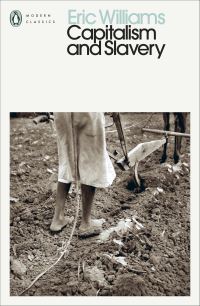
Slavery helped finance the Industrial Revolution in England. Plantation owners, shipbuilders, and merchants connected with the slave trade accumulated vast fortunes that established banks and heavy industry in Europe and expanded the reach of capitalism worldwide. Eric Williams advanced these powerful ideas in this text, originally published in 1944. Years ahead of its time, his profound critique became the foundation for studies of imperialism and economic development. Binding an economic view of history with strong moral argument, Williams’s study of the role of slavery in financing the Industrial Revolution refuted traditional ideas of economic and moral progress and firmly established the centrality of the African slave trade in European economic development. He also showed that mature industrial capitalism in turn helped destroy the slave system.
-
£18.99
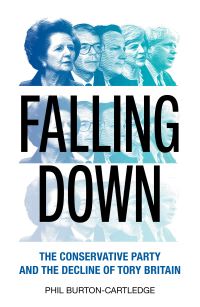
The Fall of the Tory Party
-
£9.99
What would a fair and equal society look like? Imagine it is now 2025 and that years earlier, in the wake of the world financial crisis of 2008, a new post-Capitalist society had been born. In this ingenious book, world-famous economist Yanis Varoufakis draws on the greatest thinkers in European culture from Plato to Marx to offer us a dramatic and tantalising glimpse of this brave new world, where the principles of democracy, equality and justice are truly served. But in setting out what would be needed to forge such a society, he identifies a painful but important truth: that the greatest obstacles to making such a vision a reality lie within each of us. This text offers answers to some of the most pressing questions of today. It also challenges us to consider how we might answer them in our lives.
-
£9.99
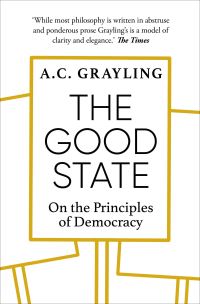
As democracy shows signs of decay, how do we not only arrest its decline but build something better – a state which is democratic in the fullest sense?
-
£20.00
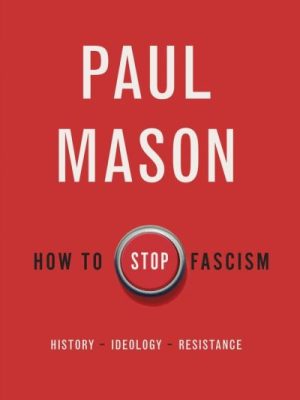
The far right is on the rise across the world. From Modi’s India to Bolsonaro’s Brazil and Erdogan’s Turkey, fascism is not a horror that we have left in the past; it is a recurring nightmare that is happening again – and we need to find a better way to fight it. Paul Mason offers a radical, hopeful blueprint for resisting and defeating the new far right. The book is both a chilling portrait of contemporary fascism, and a compelling history of the fascist phenomenon: its psychological roots, political theories and genocidal logic.
-
£12.99
In the years just before and after the fall of the Berlin Wall, conservative politicians and intellectuals across Europe and America celebrated a great achievement, felt a common purpose and, very often, forged personal friendships. The euphoria quickly evaporated, the common purpose and centre ground gradually disappeared and eventually – as this book compellingly relates – the relationships soured too. Anne Applebaum traces a familiar history in an unfamiliar way, looking at the trajectories of individuals caught up in the public events of the last three decades. When politics become polarized, which side do you back? If you are a journalist, an intellectual, a civic leader, how do you deal with the re-emergence of authoritarian or nationalist ideas in your country?
-
£20.00
The story starts with the initial moments of Covid’s appearance in Wuhan and ends with Joseph Biden’s inauguration in an America ravaged by well over 400,000 deaths – a mortality already some ten times worse than US combat deaths in the entire Vietnam War. This is an anguished, furious memorial to a year in which all of America’s great strengths – its scientific knowledge, its great civic and intellectual institutions, its spirit of voluntarism and community – were brought low not by a terrifying new illness alone, but by political incompetence and cynicism on a scale for which there has been no precedent. With insight, sympathy, clarity and rage, ‘The Plague Year’ follows the unfolding of this great tragedy, talking with individuals on the frontline, bringing together many moving and surprising stories and painting a devastating picture of a country literally and fatally misled.
-
£25.00
Disasters are by their very nature hard to predict. Pandemics, like earthquakes, wildfires, financial crises and wars, are not normally distributed; there is no cycle of history to help us anticipate the next catastrophe. But when disaster strikes, we ought to be better prepared than the Romans were when Vesuvius erupted or medieval Italians when the Black Death struck. We have science on our side, after all. Yet the responses of a number of developed countries to a new pathogen from China were badly bungled. Why? The facile answer is to blame poor leadership. While populist rulers have performed poorly in the face of the pandemic, more profund problems have been exposed by COVID-19. Only when we understand the central challenge posed by disaster in history can we see that this was also a failure of an administrative state and of economic elites that had grown myopic over much longer than just a few years.
-
£30.00
THE SUNDAY TIMES BESTSELLER
‘A radical book that speaks out accessibly’
BONO
‘Indispensable ? This is the essential handbook’
CHRISTINE LAGARDE
‘A remarkably good read’
GILLIAN TETT, Financial Times
‘A landmark achievement’
WILL HUTTON, Observer
-
£10.99
We are often told that the 21st century is bound to become China’s century. Never before has Chinese culture been so physically, digitally, economically or aesthetically present in everyday life in the Western world. But how much do we really know about its origins and key beliefs, especially compared to the many histories of Western philosophy? How did the ancient Chinese think about the world? In this enlightening book, Roel Sterckx, one of the foremost experts in Chinese thought, takes us through centuries of Chinese history, from Confucius to Daoism to the Legalists. With evocative examples from philosophy, literature and everyday life, he shows us how the ancient Chinese have shaped the thinking of a civilisation that is now influencing our own.

 Hitch 22