Showing 73–84 of 97 resultsSorted by latest
-
£25.00
Kissinger’s six leaders are Konrad Adenauer, Charles de Gaulle, Richard Nixon, Anwar Sadat, Lee Kuan Yew, and Margaret Thatcher. All of them were formed in a period when established institutions collapsed all over Europe, colonial structures gave way to independent states in Asia and Africa, and a new international order had to be created from the vestiges of the old. Kissinger penetratingly analyses each of these leaders’ careers through the highly individual strategies of statecraft which he presents them as embodying, to show how it is the combination of character and circumstance which creates history. Kissinger’s public experience, personal knowledge and historical perceptions enrich the book with insights and judgements such as only he could make.
-
£10.99
We thought connecting the world would bring lasting peace. Instead, it is driving us apart. In the three decades since the end of the Cold War, global leaders have been integrating the world’s economy, transport and telecommunications, breaking down borders in the hope of making war impossible. In doing so, they have unwittingly created a formidable arsenal of weapons for new kinds of conflict and the motivation to keep fighting. As a leading authority on international relations, Mark Leonard’s work has taken him into many of the rooms where our futures are being decided at every level of society. In seeking to understand the ways that globalisation has broken its fundamental promise to make our world safer and more prosperous, Leonard explores how we might wrest a more hopeful future from an age of unpeace.
-
£10.99
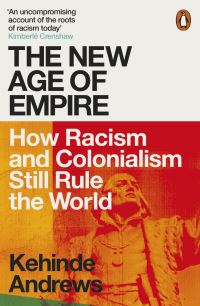
‘The New Age of Empire’ takes us back to the beginning of the European Empires, outlining the deliberate terror and suffering wrought during every stage of the expansion, and destroys the self-congratulatory myth that the West was founded on the three great revolutions of science, industry and politics. Instead, genocide, slavery and colonialism are the key foundation stones upon which the West was built, and we are still living under this system today: America is now at the helm, perpetuating global inequality through business, government, and institutions like the UN, the IMF, the World Bank and the WTO.
-
£10.99
Trans people in Britain today have become a culture war ‘issue’. Despite making up less than one percent of the country’s population, they are the subjects of a toxic and increasingly polarized ‘debate’ which generates reliable controversy for newspapers and talk shows. This media frenzy conceals a simple fact: that we are having the wrong conversation, a conversation in which trans people themselves are reduced to a talking point and denied a meaningful voice. In this powerful book, Shon Faye reclaims the idea of the ‘transgender issue’ to uncover the reality of what it means to be trans in a transphobic society. In doing so, she provides a compelling, wide-ranging analysis of trans lives from youth to old age, exploring work, family, housing, healthcare, the prison system and trans participation in the LGBTQ+ and feminist communities, in contemporary Britain and beyond.
-
£10.99
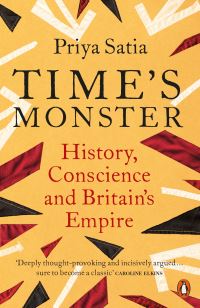
For generations, British thinkers told the history of an empire whose story was still very much in the making. While they wrote of conquest, imperial rule in India, the Middle East, Africa, and the Caribbean was consolidated. While they described the development of imperial governance, rebellions were brutally crushed. As they reimagined empire during the two World Wars, decolonization was compromised. Priya Satia shows how these historians not only interpreted the major political events of their time but also shaped the future that followed.
-
£20.00
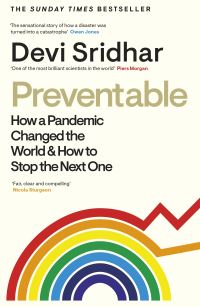
Professor Devi Sridhar has risen to prominence for her vital roles in communicating science to the public and speaking truth to power. In ‘Preventable’ she highlights lessons learned from outbreaks past and present in a narrative that traces the COVID-19 pandemic – including her personal experience as a scientist – and sets out a vision for how we can better protect ourselves from the inevitable health crises to come.
-
£9.99
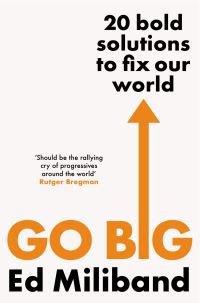
Ed Miliband has captured imaginations with his award-winning hit podcast ‘Reasons to be Cheerful’, which discovers brilliant people all around the world who are successfully fixing problems, transforming communities and pioneering global movements. From a citizens’ assembly in Mongolia to the UK’s largest walking and cycling network in Greater Manchester, from flexible working in Finland to the campaign for the first halal Nando’s in Cardiff, ‘Go Big’ draws on the most imaginative and ambitious of these ideas to provide a vision for how to remake society.
-
£20.00
The ‘duty of care’ which the state owes to its citizens is a phrase much used, but what has it actually meant in Britain historically? And what should it mean in the future, once the immediate Covid crisis has passed? In ‘A Duty of Care’, Peter Hennessy divides post-war British history into BC (before Corona) and AC (after Corona). He looks back to beginnings when, during wartime, Sir William Beveridge identified the ‘five giants’ on the road to recovery: want, disease, ignorance, squalor and idleness and laid the foundations for the modern welfare state. Hennessy examines the attack on the giants after the war and asks what the giants are now, and calls for ‘a new Beveridge’ to build a consensus for post-corona Britain with the ambition and on the scale that was achieved in the decades after the Second World War.
-
£9.99
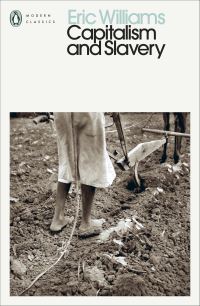
Slavery helped finance the Industrial Revolution in England. Plantation owners, shipbuilders, and merchants connected with the slave trade accumulated vast fortunes that established banks and heavy industry in Europe and expanded the reach of capitalism worldwide. Eric Williams advanced these powerful ideas in this text, originally published in 1944. Years ahead of its time, his profound critique became the foundation for studies of imperialism and economic development. Binding an economic view of history with strong moral argument, Williams’s study of the role of slavery in financing the Industrial Revolution refuted traditional ideas of economic and moral progress and firmly established the centrality of the African slave trade in European economic development. He also showed that mature industrial capitalism in turn helped destroy the slave system.
-
£18.99
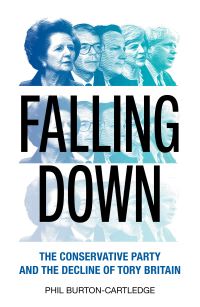
The Fall of the Tory Party
-
£9.99
What would a fair and equal society look like? Imagine it is now 2025 and that years earlier, in the wake of the world financial crisis of 2008, a new post-Capitalist society had been born. In this ingenious book, world-famous economist Yanis Varoufakis draws on the greatest thinkers in European culture from Plato to Marx to offer us a dramatic and tantalising glimpse of this brave new world, where the principles of democracy, equality and justice are truly served. But in setting out what would be needed to forge such a society, he identifies a painful but important truth: that the greatest obstacles to making such a vision a reality lie within each of us. This text offers answers to some of the most pressing questions of today. It also challenges us to consider how we might answer them in our lives.
-
£9.99
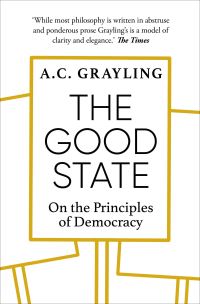
As democracy shows signs of decay, how do we not only arrest its decline but build something better – a state which is democratic in the fullest sense?

 Things I Dont Want To Know