Showing 61–72 of 101 resultsSorted by latest
-
£14.99
The extraordinary turmoil we have seen in British politics in the last few years has set records. We have had the fastest turnover of prime ministers in our history and more MPs suspended from the House than ever. No wonder people are asking whether ‘parliamentary standards’ is a contradiction in terms. As Chair of the Committees on Standards and Privileges, Chris Bryant has been in the thick of the battle over standards in parliament. Cronyism, nepotism, conflicts of interest, misconduct and lying: politicians are engaging in these activities more frequently and more publicly than ever before. ‘Code of Conduct’ looks at every angle of parliamentary conduct, charting the history of how we got here.
-
£10.99
An acclaimed expert on violence and seasoned peacebuilder explains the five reasons why conflict (rarely) blooms into war, and how to interrupt that deadly process. It’s easy to overlook the underlying strategic forces of war, to see it solely as a series of errors, accidents, and emotions gone awry. It’s also easy to forget that war shouldn’t happen-and most of the time it doesn’t. Around the world there are millions of hostile rivalries, yet only a tiny fraction erupt into violence. Too many accounts of conflict forget this. With a counterintuitive approach, Blattman reminds us that most rivals loathe one another in peace. That’s because war is too costly to fight.
-
£25.00
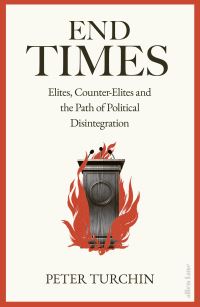
A brilliant new theory of how society works from one of the most iconoclastic thinkers of our time.
-
£25.00
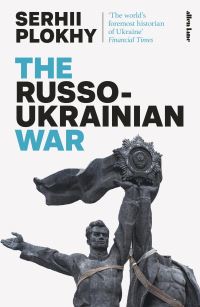
‘The Russo-Ukrainian War’ is the comprehensive history of a conflict that has burned since 2014, and that, with Russia’s attempt to seize Kyiv, exploded a geo-political order that had been cemented since the end of the Cold War. With an eye for the gripping detail on the ground, both in the halls of power and down in the trenches, as well as a keen sense of the grander sweep of history, Serhii Plokhy traces the origins and the evolution of the conflict, from the collapse of the Russian empire to the rise and fall of the USSR and on to the development in Ukraine of a democratic politics. Based on decades of research and his unique insight into the region, he argues that Ukraine’s defiance of Russia, and the West’s demonstration of unity and strength, has presented a profound challenge to Putin’s Great Power ambition, and further polarized the world along a new axis.
-
£14.99
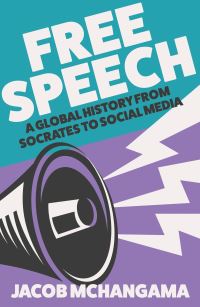
A global history of free speech, from the ancient world to today. Hailed as the ‘first freedom,’ free speech is the bedrock of democracy. But it is a challenging principle, subject to erosion in times of upheaval. Today, in democracies and authoritarian states around the world, it is on the retreat. In ‘Free Speech’, Jacob Mchangama traces the riveting legal, political, and cultural history of this idea. Through captivating stories of free speech’s many defenders – from the ancient Athenian orator Demosthenes and the ninth-century freethinker al-Razi, to Mary Wollstonecraft, Mahatma Gandhi, Nelson Mandela and modern-day digital activists – Mchangama demonstrates how the free exchange of ideas underlies all intellectual achievement and has enabled the advancement of both freedom and equality worldwide.
-
£9.99
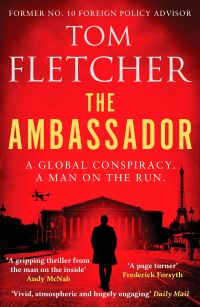
In the aftermath of a global pandemic, a beautiful and charismatic human rights activist is murdered, live on the internet, at the British Embassy in Paris. It is a mystery that no one wants solved. But, when governments refuse to investigate, Ambassador Ed Barnes is determined to find out the truth himself. The quest for answers plunges Barnes into a world of cyber terrorists and warlords, taking him to Oxford, Copenhagen, the mountains of Snowdonia and Lebanon, where he picks up the trail of a shocking conspiracy.
-
£10.99
Through a series of upheavals, Britain’s liberal establishment has been outflanked and a new alliance of voters has emerged, weakening the traditional divide between left and right. In trying to make sense of this, many commentators have turned to short-term explanations: dark money, the recession, the personalities of party leaders. But, as political scientist Matthew Goodwin reveals in this study, the remarkable turbulence of recent years has been a long time in the making – and it is set to continue for many years to come. Embarking on a profound and ranging analysis of postwar British politics, Goodwin shows how the liberalising projects of the Thatcher and Blair years gave rise to new, cultural divides – over ‘values,’ ‘voice,’ and ‘virtue’ – which have now begun to define political debate and determine elections.
-
£20.00
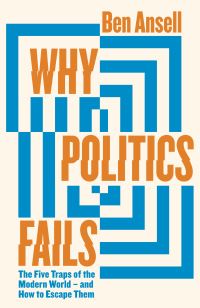
Drawing on examples from Ancient Greece through Brexit and using his own award-winning research – on how democracy is more likely to thrive under high inequality, for instance – Oxford professor Ben Ansell explains the cul-de-sac of modern politics – and how we can make it better. Understanding these traps helps us escape or avoid them altogether, in ways small to large, ultimately showing how we can all thrive in an imperfect world.
-
£11.99
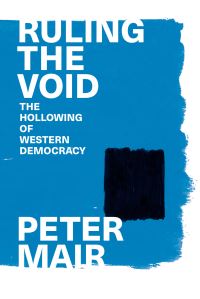
‘Ruling the Void’ analyses democratic trends over the last few decades, in Europe and America, and argues that political disengagement and other forces are contributing to the death of political parties. Without political parties, we lose the characteristic form of Western democracy.
-
£20.00
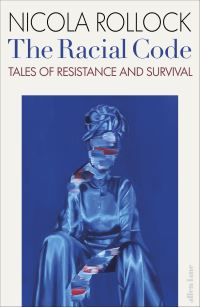
Miles, a successful lawyer, is mistaken for the waiter at a networking event. Femi is on the verge of breakdown having been consistently overlooked for promotion at her university. Nigel’s emails, repeatedly expressing concern about his employer’s forthcoming slavery exhibition, are ignored. Carol knows she can’t let herself relax at the work Christmas party. This is racism. It is not about the overt acts of random people at the fringes of society. It’s about the everyday. It’s the loaded silence, the throwaway remark, the casual comment or a ‘joke’ in the workplace. It’s everything. ‘The Racial Code’ is a examination of the hidden rules of race and racism that govern our lives and how they maintain the status quo.
-
£30.00
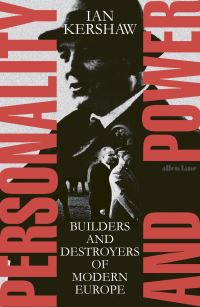
The modern era saw the emergence of individuals who had command over a terrifying array of instruments of control, persuasion and death. Whole societies were re-shaped and wars fought, often with a merciless contempt for the most basic norms. At the summit of these societies were leaders whose personalities had somehow given them the ability to do whatever they wished. Ian Kershaw’s book is a compelling, lucid and challenging attempt to understand these rulers, whether operating on the widest stage (Lenin, Stalin, Hitler, Mussolini) or with a more national impact (Tito, Franco). What was it about these leaders and the times they lived in that allowed them such untrammelled and murderous power? And what brought that era to an end?
-
£30.00
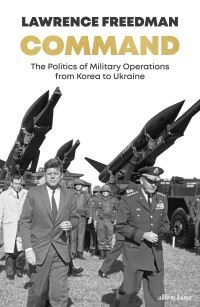
Throughout history, the concept of command – as both a way to achieve objectives and as an assertion of authority – has been essential to military action and leadership. But, as Sir Lawrence Freedman shows, it is also deeply political. Military command has been reconstructed and revolutionized since the Second World War by nuclear warfare, small-scale guerrilla land operations and cyber interference. Freedman takes a global perspective, systematically investigating its practice and politics since 1945 through a wide range of conflicts from the French Colonial Wars, the Cuban Missile Crisis and the Bangladesh Liberation War to North Vietnam’s Easter Offensive of 1972, the Falklands War, the Iraq War and Russia’s wars in Chechnya and Ukraine.