Waste land
£20.00A darkly brilliant, wide-angled vision of our chaotic, globalised world, where present crises resonate with past tyrannies-from a bestselling geopolitical expert.
We recently launched our new website and are facing a few teething issues. If you see any problems please contact us.
We recently launched our new website and are facing a few teething issues. If you see any problems please contact us.

Showing 25–36 of 103 resultsSorted by latest
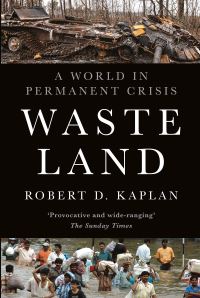
A darkly brilliant, wide-angled vision of our chaotic, globalised world, where present crises resonate with past tyrannies-from a bestselling geopolitical expert.
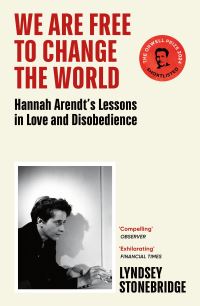
The violent unease of today’s world would have been familiar to Hannah Arendt. Tyranny, occupation, disenchantment, post-truth politics, conspiracy theories, racism, mass migration: She lived through them all. Born in the first decade of the last century, she escaped fascist Europe to make a new life for herself in America, where she became one of its most influential – and controversial – public intellectuals. She wrote about power and terror, exile and love, and above all, about freedom. Questioning – thinking – was her first defense against tyranny. She advocated a politics of action and plurality, courage and, when necessary, disobedience. This book is about the Arendt we need for the 21st century. It tells us how and why Arendt came to think the way she did, and how to think when our own politics goes off the rails.
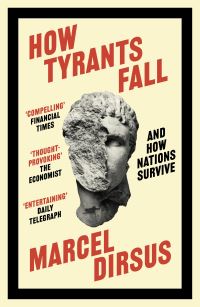
Strongmen are rising. Democracies are faltering. How does tyranny end? Tyrants project invincibility, but all of them fall. This is because they face critical weaknesses that can form a fatal trap. Whether it’s their inner circle turning against them or resentment of elites in the military, the masses alienated by cronyism or revolutionaries plotting in exile, tyrants always have more enemies than friends. And when they fall tyrants don’t quietly retire – they face exile, prison or death. But understanding dictators isn’t enough. ‘How Tyrants Fall’ is the gripping, deeply researched blueprint for how to bring them down.

For millennia land has been a symbol of wealth and privilege. But the true power of land ownership is even greater than we might think. Michael Albertus shows that who owns the land determines whether a society will be equal or unequal, whether it will develop or decline, and whether it will safeguard or sacrifice its environment.

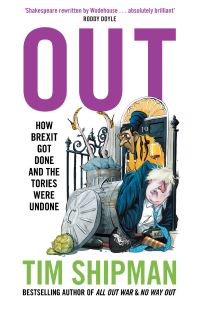
The hotly anticipated final book of bestselling author Tim Shipman’s Brexit quartet. The Johnson Years to Rishi Sunak
‘Magnificent? Pacy and packed with delicious details? Shipman puts you in the room? His analysis is sharp and full of insight? For those seeking a moment-by-moment insider history it will not be topped’ FT
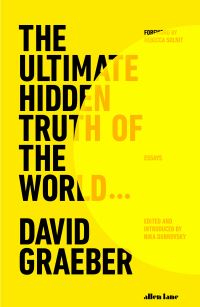
Drawn from more than two decades of pathbreaking writing, this book features the iconic and bestselling David Graeber’s most important essays and interviews.
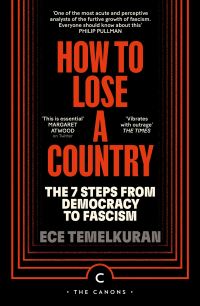
An urgent call to action from one of Europe’s most well-regarded political thinkers. ‘How to Lose a Country’ is a field guide to spotting the insidious patterns and mechanisms of the populist wave sweeping the globe – before it’s too late.
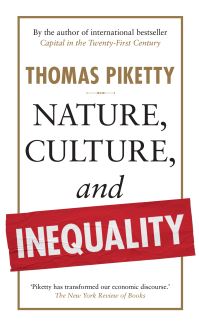
Thomas Piketty explores how social inequality manifests itself very differently depending on the society and epoch in which it arises. History and culture play a central role, inequality being strongly linked to various socio-economic, political, civilisational, and religious developments. So it is culture in the broadest sense that makes it possible to explain the diversity, extent, and structure of the social inequality that we observe every day. Piketty briefly and concisely presents a lively synthesis of his work, taking up such diverse topics as education, inheritance, taxes, and the climate crisis, and provides exciting food for thought for a highly topical debate: Does natural inequality exist?
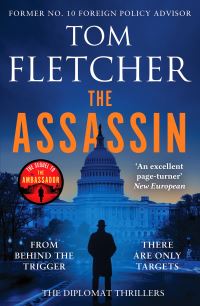
How far will he go to save a future he may never see? Having been made High Commissioner in Nairobi, Ed Barnes is keeping his head down and staying out of trouble. But when his daughter, Sophie, is kidnapped following a security crisis for which he is blamed, his attempts at normality fall apart once again. He finds himself at the heart of a complex negotiation with a dangerous Somali terrorist group, in an effort to avert a regional security crisis and free his daughter. Meanwhile, across the globe a series of political assassinations have been shaking the world of business and government. Tensions boil over when a Chinese envoy is murdered in Jordan, only days before a crucial climate change conference, sparking a diplomatic crisis and the threat of US/China confrontation.
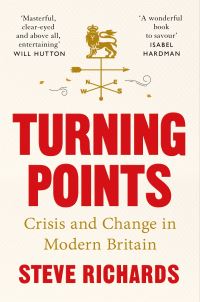
An exploration of the most consequential events in modern British history, from seasoned political commentator and broadcaster Steve Richards.
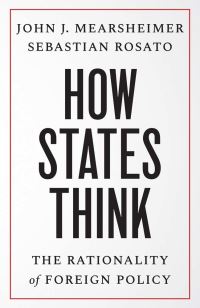
A groundbreaking examination of a central question in international relations: Do states act rationally?
No products in the basket.
Notifications