Showing all 10 resultsSorted by latest
-
£11.99
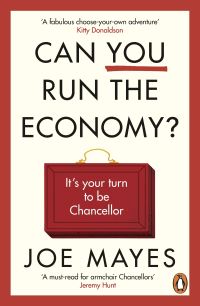
Congratulations! You’ve just become the Chancellor of the Exchequer – master of the Treasury – and one of the most powerful people in Britain. Many historic figures have gone before you. And now the latest name on that noble roll call is yours. You’re one year out from a General Election, and the Budget is approaching. Until then, you must manage the nation’s finances wisely in response to different scenarios such as: bailing out big business, negotiating with trade unions, and dealing with the fallout in the media from your Budget decisions. If you breach certain limits you’ll trigger an economic crisis and be sacked by the PM. The stakes are high and the prosperity of millions lies in your hands. This interactive book will take you into the heart of the Treasury and challenge you to bring your best insight and knowledge to the task.
-
£25.00
Almost everywhere we turn these days, there’s talk of a West in decline. Our jobs, our values, our past are all under attack, in the face of which we have become immersed in self-loathing, gone weak at the knees: the West needs to be Made Great Again. We know where this toxic narrative comes from: the nationalist, nativist Right. And now it’s gone mainstream. The thing is, the West is in decline, self-evidently so. But the truth is that it’s not migrants or Muslims or a woke mob which has brought the West to the edge of catastrophe. It’s good, old-fashioned hubris. In this book, Owen Jones explores how, amid the triumphalist sugar rush that came with the collapse of the Soviet Union, the West came to believe that its rule, its economic order, its moral values, would endure for ever – and how, over a quarter-century, this brittle self-mythologising narrative collapsed in on itself.
-
£25.00
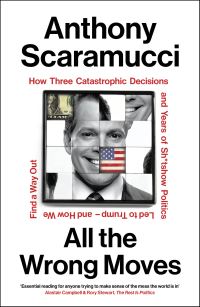
We’re living in an age of deep political anger and frustration. Where did it come from, and how do we get out? Anthony Scaramucci’s electrifying answer – rooted in history, business, and first-hand experience – reveals the true origins of America’s current crisis, charting how both political parties made a series of catastrophic decisions that dismantled a post-war period of unprecedented stability and prosperity. Each decision deepened inequality, corroded trust, and fuelled the anger that empowered Donald Trump’s rise and his assault on democracy. The story Scaramucci tells is ‘money-point-of-view history’: it gallops from Wall St to Main St, from the boardroom to the Situation Room.
-
£22.00
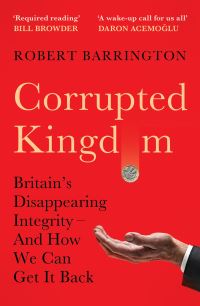
Britain is complacent about corruption. We are used to thinking of ourselves as firm defenders of fairness and the rule of law. But our institutions have never been more corrupt, from scandals in parliament and local government to crises in housing and the NHS. The evidence is impossible to ignore. Political leaders face a clear choice: tackle corruption or continue on the road to decline. Robert Barrington is one of the world’s leading researchers on corruption. ‘Corrupted Kingdom’ is his comprehensive examination of how corruption manifests in Britain, from politicians to prisons, the Monarchy and the Met. He assesses the origins of corruption, from Londongrad to the end of Empire, and shows how we can best reverse the decline and restore trust in politics and the democratic process. Vital and authoritative, this book provides an essential insight into why the abuse of power harms us all – and how we can banish corruption for good.
-
£12.99
A leading economist explores the global rise of the U.S. dollar and shows why its future stability is far from assured.
-
£16.99
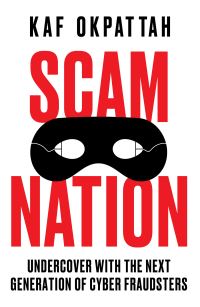
‘A gripping take on how fraud and scamming have become part of our everyday lives’ Laura Whateley
-
£10.99
The explosive debut from political commentator Ash Sarkar, Minority Rule breaks down how the power of ordinary people is under attack by an elite minority – and how we can focus our energy on the real problem at hand.
-
£10.99
The epic story of how America turned the world economy into a weapon, upending decades of globalization to take on a new authoritarian axis-Russia, China, and Iran.
-
£22.00
Economics is sold as pure and apolitical: scientific, neutral, exact. This book exposes its true role: to convince us there’s no alternative to capitalism. We live in a world dominated by the dogma that austerity is necessary, unemployment natural, endless wars inevitable and central banks all-powerful. It doesn’t have to be this way. In her bold manifesto, economist Clara E. Mattei tears the mask off our economic system. She unpacks key concepts like growth, inflation, unemployment and balanced budgets to show how they’re weaponized to enforce market dependence, not freedom, stripping us of the power to shape the democratic decisions that govern our daily lives. Enduring problems such as poverty and inequality are not accidents or bugs in the economy, but core features – justified with pseudoscientific models to support a system that unfairly rewards people with the most resources.
-
£12.99
For decades, a single free market philosophy has dominated global economics. But this is bland and unhealthy – like British food in the 1980s, when bestselling author and economist Ha-Joon Chang first arrived in the UK from South Korea. Just as eating a wide range of cuisines contributes to a more interesting and balanced diet, so too is it essential we listen to a variety of economic perspectives. In ‘Edible Economics’, Chang makes challenging economic ideas more palatable by plating them alongside stories about food from around the world. Structuring the book as a series of menus, Chang uses histories behind familiar food items – where they come from, how they are cooked and consumed, what they mean to different cultures – to explore economic theory.