Showing all 7 resultsSorted by latest
-
£25.00
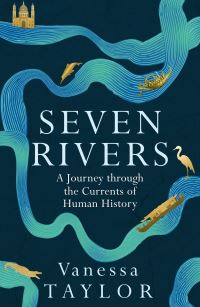
‘Seven Rivers’ is the story of the Nile, Danube, Niger, Mississippi, Ganges, Yangtze and the Thames. It is a story of imperial frontiers, alluvial gold, kidnappings, slavery, de-colonialism, creation myths and the killing of rivers. It is about those who’ve lived and died on these rivers and their endless capacity for invention: their harnessing of oases and aquifers, their lotus pools and hanging gardens, their gigantic canal systems and elaborate fishing rituals, their absolute powers and their sly rebellions. At its heart are the empire-builders of the Chinese dynasties, Romans and Hindus and their river gods, the Habsburgs and Ottomans, Mughal emperors, the people of the Niger from Mali’s golden age to today, struggles of life and death on the Mississippi, and the dethroning of the British on the rivers of their unruly imperial subjects. This is the story of us, in seven rivers.
-
£20.00
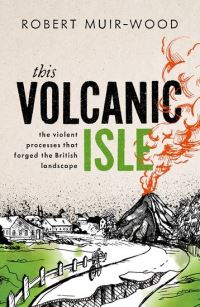
This Volcanic Isle explores the rich geological history of the British Isles over the past 66 million years, since the disappearance of the dinosaurs. From the Isle of Wight needles to the Giant’s causeway to the Sticklepath faultline in Devon, this book recounts how earthquakes and eruptions, plumes and plate boundaries, built the British Isles.
-
£25.00
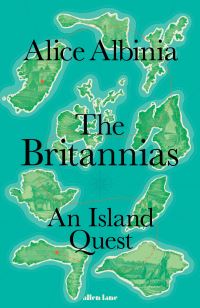
This is the story of Britain’s islands and how they are woven into its culture, history and collective psyche. From Neolithic Orkney and druidical Anglesey to the joys and strangeness of modern Thanet, we explore the furthest reaches of Britain’s island topography, once known by the collective term, Britanniae (the Britains). Alice Albinia takes the reader over borders and through disparate island cultures, past and present, listening to neglected voices and subversive stories. ‘The Britannias’ examines how the smaller islands have wielded disproportionate influence on the mainland, becoming the fertile ground of political, cultural and technological innovations which have gone on to change history throughout the archipelago.
-
£9.99
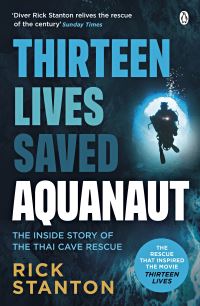
The enthralling autobiography of cave-diver Rick Stanton, who played a key role in the 2018 Tham Luang cave rescue.
-
£12.99
As one of the world’s leading glaciologists, Professor Jemma Wadham has proved that glaciers, previously thought to be freezing, sterile environments, in fact teem with microbial life – a discovery which demonstrates them to be active processors of carbon and nutrients, just like our forests and oceans, influencing crucial systems and services upon which people depend, from lucrative fisheries to fertile croplands. A riveting tale of icy landscapes on the point of irreversible change, and filled with stories of encounters with polar bears and survival in the wilds under the midnight sun, ‘Ice Rivers’ is a memoir like no other – a passionate love letter, no less, to the glaciers that have been one woman’s lifelong obsession.
-
£9.99
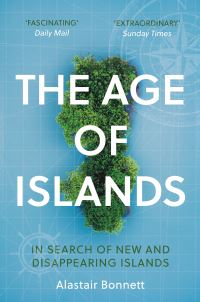
New islands are being built at an unprecedented rate whether for tourism or territorial ambition, while many islands are disappearing or fragmenting because of rising sea levels. It is a strange planetary spectacle, creating an ever-changing map which even Google Earth struggles to keep pace with. In ‘The Age of Islands’, explorer and geographer Alastair Bonnett takes the reader on a compelling and thought-provoking tour of the world’s newest, most fragile and beautiful islands and reveals what, he argues, is one of the great dramas of our time.
-
£10.99
South Asia’s history has been shaped by its waters. In ‘Unruly Waters’, historian Sunil Amrith reimagines this history through the stories of its rains, rivers, coasts, rivers, and seas – and of the weather-watchers and engineers, mapmakers and farmers who have sought to control them. He shows how fears and dreams of water have, throughout South Asia, shaped visions of political independence and economic development, provoked efforts to reshape nature through dams and pumps, and unleashed powerful tensions within and between nations. Every year humans have watched with overwhelming anxiety for the nature of that year’s monsoon to be revealed, with entire populations living or dying on the outcome. From the first small weather-reporting stations to today’s satellites, the modern battle both to understand and manage water has literally been a matter of life or death.