Showing all 5 resultsSorted by latest
-
£7.99
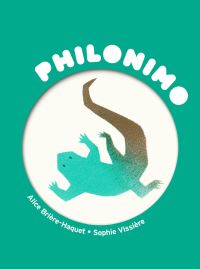
The Pocket Philosophy series introduces readers of all ages to the biggest names in philosophy. In this story, Heidegger is exploring the relationship between ‘beings’ and their environments. How much does each – the rock, the lizard and the human – understand of the world around them?
-
£10.99
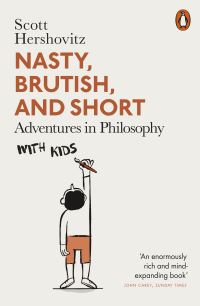
Say ‘philosopher,’ and someone grand, old and bearded might come to mind. But, as philosophy professor Scott Hershovitz shows in this debut, some of the best philosophers in the world are better described as nasty, brutish and short – that is to say, they’re children. Children make wonderful philosophers because they constantly question things that grown-ups take for granted, test theories about the people around them, and try to work out the way the world works. Following the lead of his two young sons, Rex and Hank, Hershovitz takes us on a unique tour through classical and contemporary philosophy, steered by questions like, does Hank have the right to drink Fanta? When is it okay to swear? And, does the number six exist?
-
£20.00
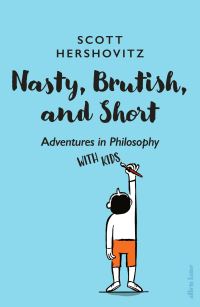
Say ‘philosopher,’ and someone grand, old and bearded might come to mind. But, as philosophy professor Scott Hershovitz shows in this debut, some of the best philosophers in the world are better described as nasty, brutish and short – that is to say, they’re children. Children make wonderful philosophers because they constantly question things that grown-ups take for granted, test theories about the people around them, and try to work out the way the world works. Following the lead of his two young sons, Rex and Hank, Hershovitz takes us on a unique tour through classical and contemporary philosophy, steered by questions like, does Hank have the right to drink Fanta? When is it okay to swear? And, does the number six exist?
-
£10.99
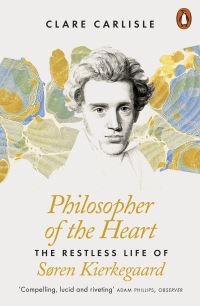
Kierkegaard is one of the most passionate and challenging of all modern philosophers, and is often regarded as the founder of existentialism. Over about a decade in the 1840s and 1850s, writings poured from his pen pursuing the question of existence – how to be a human being in the world? – while exploring the possibilities of Christianity and confronting the failures of its institutional manifestation around him. He deliberately lived in the swim of human life in Copenhagen, but alone, and died exhausted in 1855 at the age of 42, bequeathing his remarkable writings to his erstwhile fiancée. Clare Carlisle’s innovative and moving biography writes Kierkegaard’s life as far as possible from his own perspective, to convey what it was like actually being this Socrates of Christendom – as he put it, living life forwards yet only understanding it backwards.
-
£7.99
Richard Appignanesi and Oscar Zarate collaborate for the first time since ‘Introducing Freud’, first published in 1979. This is a book on existentialism. Can it have meaning in our age of postmodern crisis?