Showing all 4 resultsSorted by latest
-
£40.00
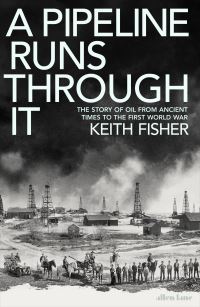
Petroleum has always been used by humans: as an adhesive by Neanderthals, as a waterproofing agent in Noah’s Ark and as a weapon during the Crusades. Its eventual extraction from the Earth in vast quantities transformed light, heat and power. A fresh, comprehensive in-depth look at the social, economic, political and geopolitical forces involved in our transition to the modern oil age, this title tells an extraordinary origin story, from the pre-industrial history of petroleum through to large-scale production in the mid-19th century and the development of a dominant, fully-fledged oil industry by the early 20th century. In an entirely new analysis, the book shows how the British navy’s increasingly desperate dependence on vulnerable foreign sources of oil may have been a catalytic ingredient in the outbreak of WWI. The rise of oil has shaped the modern world, and this is the book to understand it.
-
£10.99
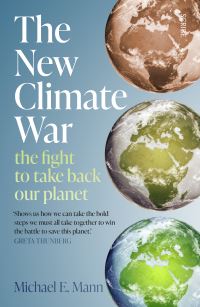
A renowned climate scientist shows how fossil fuel companies have waged a thirty-year campaign to deflect blame and responsibility and delay action on climate change, and offers a battle plan for how we can save the planet.
-
£14.99
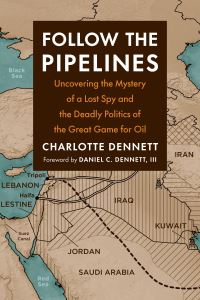
This chronicle unravels the mystery of a master spy’s death by following pipelines and mapping wars in the Middle East. In 1947, Daniel Dennett, America’s sole master spy in the Middle East, was dispatched to Saudi Arabia to study the route of the proposed Trans-Arabian Pipeline. It would be his last assignment. A plane carrying him to Ethiopia went down, killing everyone on board. Today, Dennett is recognized by the CIA as a ‘Fallen Star’ and an important figure in US intelligence history. Yet the true cause of his death remains clouded in secrecy. In this book, investigative journalist Charlotte Dennett digs into her father’s postwar counterintelligence work, which pitted him against America’s wartime allies – the British, French, and Russians – in a covert battle for geopolitical and economic influence in the Middle East.
-
£10.99
The modern world is built on commodities – from the oil that fuels our cars to the metals that power our smartphones. We rarely stop to consider where they come from. But we should. In ‘The World for Sale’, two leading journalists lift the lid on one of the least scrutinised corners of the economy: the workings of the billionaire commodity traders who buy, hoard and sell the earth’s resources. It is the story of how a handful of swashbuckling businessmen became indispensable cogs in global markets: enabling an enormous expansion in international trade, and connecting resource-rich countries – no matter how corrupt or war-torn – with the world’s financial centres.