Convoys
£11.99The first account of Britain’s convoys during the Napoleonic Wars-showing how the protection of trade played a decisive role in victory
We recently launched our new website and are facing a few teething issues. If you see any problems please contact us.
We recently launched our new website and are facing a few teething issues. If you see any problems please contact us.
Showing all 8 resultsSorted by latest

The first account of Britain’s convoys during the Napoleonic Wars-showing how the protection of trade played a decisive role in victory
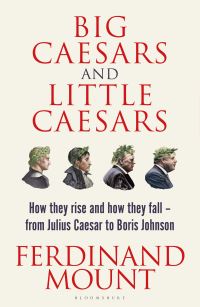
Who said that dictatorship was dead? The world today is full of strong men and their imitators. Caesarism is alive and well. Yet in modern times it’s become a strangely neglected subject. Ferdinand Mount opens up a fascinating exploration of how and why Caesars seize power and why they fall. There is a comforting illusion shared by historians and political commentators from Fukuyama back to Macaulay, Mill and Marx, that history progresses in a nice straight line towards liberal democracy or socialism, despite the odd hiccup. In reality, every democracy, however sophisticated or stable it may look, has been attacked or actually destroyed by a would-be Caesar, from Ancient Greece to the present day. Marx was wrong. This Caesarism is not an absurd throwback, it is an ever-present danger.
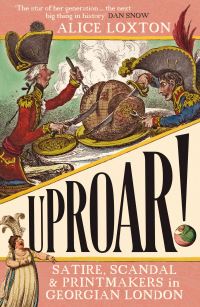
London, 1772: a young artist called Thomas Rowlandson is making his way through the grimy backstreets of the capital, on his way to begin his studies at the Royal Academy Schools. Within a few years, James Gillray and Isaac Cruikshank would join him in Piccadilly, turning satire into an artform, taking on the British establishment, and forever changing the way we view power. Set against a backdrop of royal madness, political intrigue, the birth of modern celebrity, French revolution, American independence and the Napoleonic Wars, ‘Uproar!’ follows the satirists as they lampoon those in power, from the Prince Regent to Georgiana, Duchess of Devonshire. Their prints and illustrations deconstruct the political and social landscape with surreal and razor-sharp wit, as the three men vie with each other to create the most iconic images of the day.
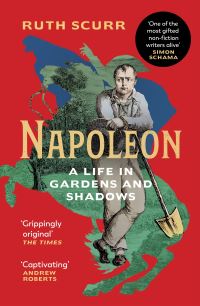
A revelatory portrait of Napoleon to mark the 200th anniversary of his death, written for our own time, not in power politics or epic battles, but through his love of nature and the gardens that gave his revolutionary life its light and shade. Napoleon’s gardens range from his childhood olive groves in Corsica, to Josephine’s gardens and menageries in Paris, to gardens in Cairo, Rome and on Elba, to the walled garden of Hougoumont at the battle of Waterloo, and ultimately to Napoleon’s final garden on St Helena, where Chinese labourers built him a summerhouse where he could sit and scan the sea in his final months. In this lively and perceptive cultural history, Napoleon is placed firmly in this context – he wanted to see himself as a patron of the sciences and progress, bringing an end to the Revolution and binding up its wounds.
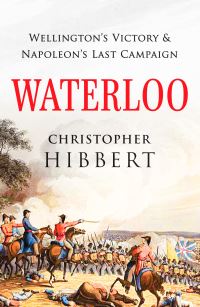
Christopher Hibbert was an English author, historian and biographer. He has been called “probably the most widely-read popular historian of our time” and was the author of over 50 works of history.
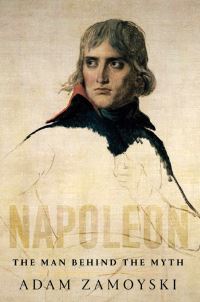
A landmark new biography that presents the man behind the many myths. The first writer in English to go back to the original European sources, Adam Zamoyski’s portrait of Napoleon is historical biography at its finest.
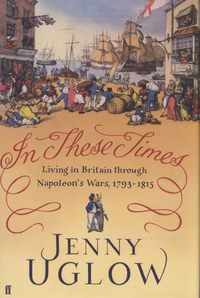
We know the thrilling, terrible stories of the battles of the Napoleonic wars – but what of those left behind? The people on a Norfolk farm, in a Yorkshire mill, a Welsh iron foundry, an Irish village, a London bank or a Scottish mountain? The aristocrats and paupers, old and young, butchers and bakers and candlestick makers – how did the war touch their lives? Jenny Uglow follows the gripping back-and-forth of the first global war, but turns the news upside down, seeing how it reached the people.
It has become all too common for Napoleon Bonaparte’s biographers to approach him as a figure to be reviled, bent on world domination, practically a proto-Hitler. Here, after years of study extending even to visits paid to St Helena and 53 of Napoleon’s 56 battlefields, Andrew Roberts has created a true portrait of the mind, the life, the military, and above all political genius of a fundamentally constructive ruler.
No products in the basket.
Notifications