Showing all 5 resultsSorted by latest
-
£20.00
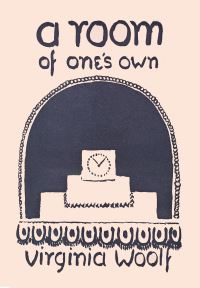
This volume combines two books by Virginia Woolf which are among the greatest contributions to feminist literature this century. They consider the implications of the historical exclusion of women from education and from economic independence.
-
£16.99
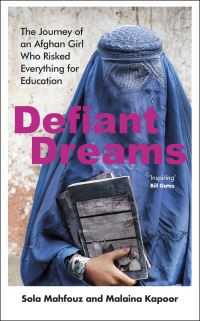
At age eleven, Sola Mahfouz was told she could no longer attend school. The Taliban threatened that any girl who dared to continue their education would have acid thrown in the face, be kidnapped, or worse. Confined to the walls of her home, Sola watched as the few freedoms of childhood were stripped away. She was forbidden to play, to sing, even to laugh. Her early teenage years were consumed by restrictions. Realising that she would have to either succumb to this life or find a way out, she decided on the latter. At age sixteen, without even a basic ability to add or subtract, she began secretly learning maths and English. By reading dictionaries and taking free online courses, she taught herself theoretical physics and philosophy, all from a home she could only leave five times a year.
-
£10.99
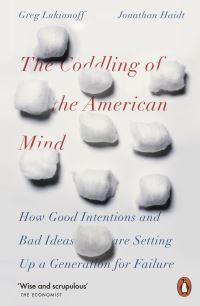
What doesn’t kill you makes you weaker. Always trust your feelings. Life is a battle between good people and evil people. These three Great Untruths contradict basic psychological principles about well-being, as well as ancient wisdom from many cultures. And yet they have become increasingly woven into education, culminating in a stifling culture of ‘safetyism’ that began on American college campuses and is spreading throughout academic institutions in the English-speaking world. In this book, free speech campaigner Greg Lukianoff and social psychologist Jonathan Haidt investigate six trends that caused the spread of these untruths, from the decline of unsupervised play to the corporatisation of universities and the rise of new ideas about identity and justice.
-
£9.99
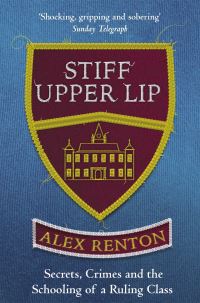
This is the story of generations of parents, Britain’s richest and grandest, who believed that being miserable at school was necessary to make a good and successful citizen. Childish suffering was a price they accepted for the preservation of their class and their entitlement. The children who were moulded by this misery and abuse went on – as they still do – to run Britain’s public institutions and private companies. Confronting the truth of his own schooldays and the crimes he witnessed, Alex Renton has revealed a much bigger story.
-
£9.99
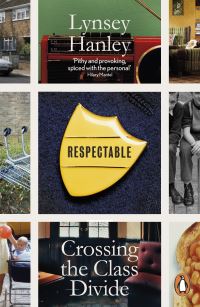
We talk a lot about the role class plays in British society, but how exactly do we move from one ‘class’ to another – and, if we can do so, what effect does it have on us? In this book, part memoir, part social analysis, Lynsey Hanley explains that to be ‘respectable’ is to be neither rough nor posh, neither rich nor especially poor. Drawing on her own experience growing up in Birmingham – living through the Thatcher years, listening to the Pet Shop Boys and Erasure, reading her parents’ ‘Daily Mirror’ and her grandparents’ ‘Sun’ – Hanley shows how social mobility can be double-edged unless we recognise the psychological impact of class and its creation of self-limiting obstacles.