The Mission
£25.00‘No one has opened up the CIA to us like Weiner has, and The Mission deserves to win him a second Pulitzer’ JOHN SIMPSON, GUARDIAN

Showing all 11 resultsSorted by latest
‘No one has opened up the CIA to us like Weiner has, and The Mission deserves to win him a second Pulitzer’ JOHN SIMPSON, GUARDIAN
June 1944: In Operation Bagration, more than two million Red Army soldiers, facing 500,000 German soldiers, finally avenged their defeat in Operation Barbarossa in 1941. The same month saw the Allies triumph on the beaches of Normandy, but, despite the myths that remain, it was the events on the Eastern Front that sealed Hitler’s fate and destroyed Nazism. Bestselling historian Jonathan Dimbleby describes and analyses this momentous year, covering the military, political and diplomatic story in his evocative style. Drawing on previously untranslated German, Russian and Polish sources, we see how sophisticated new forms of deception and ruthless Partisan warfare shifted the Soviets’ fortunes, how their triumphs gave Stalin authority to occupy Eastern Europe and how it was the events of 1944 that enabled Stalin to dictate the terms of the post-war settlement, laying the foundations for the Cold War.
Laurie Lee was still a young man when he decided to fight for the Republican cause in Spain’s civil war. But though he braved icy, storm-swept mountains alone to contact Republican sympathisers, he was immediately suspected of being a Nationalist spy. Imprisoned and almost executed by his own side, he eventually joined the International Brigade. This is the story of his experiences as a Republican soldier, fighting for the losing side in a doomed war.
In the closing months of the Second World War hundreds of thousands of Japanese, mostly civilians, died in a final outburst of violence from the air. American planes were beginning to run low on plausible targets when it was decided to use two atomic weapons in a final, terrible flourish to try to end the war. Richard Overy’s book rethinks how we should regard this last stage of the war and the role of the bombing. He explores the way in which the willingness to kill civilians and destroy cities became normalized in the course of a horrific war as moral concerns were blunted and scientists, airmen, and politicians followed a strategy of mass destruction they would never have endorsed before the war began.
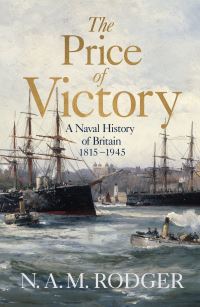
At the end of the French and Napoleonic wars, British sea-power was at its apogee. But by 1840, as one contemporary commentator put it, the Admiralty was full of ‘intellects becalmed in the smoke of Trafalgar’. How the Royal Navy reformed and reinvigorated itself in the course of the 19th century is just one thread in this book which refuses to accept standard assumptions and analyses. All the great actions are here, from Navarino in 1827 (won by a daringly disobedient Admiral Codrington) to Jutland, D-Day, the Battle of the Atlantic and the battles in the Pacific in 1944/45 in concert with the US Navy. The development and strategic significance of submarine and navy air forces is described, as are the rapid evolution of ships (from classic Nelsonic type, to hybrid steam/sail ships, then armour-clad and the fully armoured Dreadnoughts and beyond) and weapons.
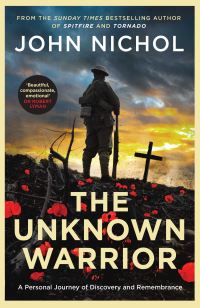
A moving account of how and why the tomb of the Unknown Warrior came about, by best-selling author and ex-serviceman John Nichol.Â
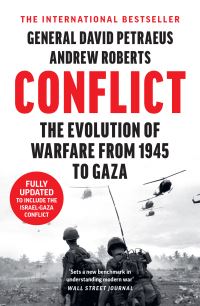
THE INTERNATIONAL BESTSELLER
‘A rigorous and thoughtful study of what has happened on battlefields over the past eight decades’ THE TIMES
‘A hugely important book ? elegantly written and persuasively argued’ DAILY TELEGRAPH
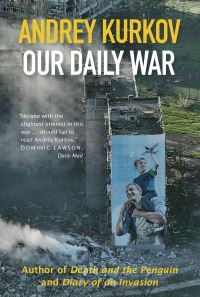
Ten years on from the annexation of Crimea, two years on from Russia’s all-out invasion of Ukraine, the Ukrainian people continue to fight back. In the second volume of his war diaries, Andrey Kurkov gives a fresh perspective on a people for whom resistance and solidarity have become a matter of survival.
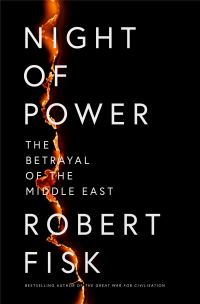
‘INCOMPARABLE DEPTH AND UNDERSTANDING?AND EXTRAORDINARY COURAGE’ NOAM CHOMSKY
The final work from foreign correspondent Robert Fisk, picking up the story in the Middle East where his internationally bestselling The Great War of Civilisation left off, starting with the aftermath of the Iraq invasion in 2005.
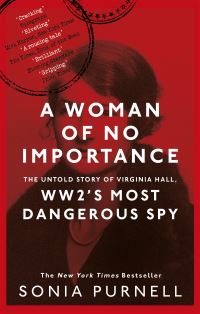
The incredible untold story of Virginia Hall, an American woman with a wooden leg who infiltrated Occupied France for the SOE and became the Gestapo’s most wanted Allied spy, written by acclaimed biographer Sonia Purnell.
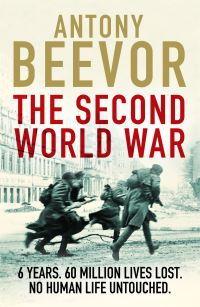
The Second World War began in August 1939 on the edge of Manchuria and ended there exactly six years later with the Soviet invasion of northern China. The war in Europe appeared completely divorced from the war in the Pacific and China, and yet events on opposite sides of the world had profound effects. Using the most up-to-date scholarship and research, Beevor assembles the whole picture in a gripping narrative that extends from the North Atlantic to the South Pacific, from the snowbound steppe to the North African Desert, to the Burmese jungle, Gulag prisoners drafted into punishment battalions and to the unspeakable cruelties of the Sino-Japanese War.
No products in the basket.
Notifications