Showing 97–108 of 190 resultsSorted by latest
-
£30.00
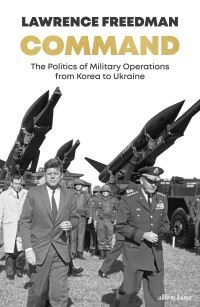
Throughout history, the concept of command – as both a way to achieve objectives and as an assertion of authority – has been essential to military action and leadership. But, as Sir Lawrence Freedman shows, it is also deeply political. Military command has been reconstructed and revolutionized since the Second World War by nuclear warfare, small-scale guerrilla land operations and cyber interference. Freedman takes a global perspective, systematically investigating its practice and politics since 1945 through a wide range of conflicts from the French Colonial Wars, the Cuban Missile Crisis and the Bangladesh Liberation War to North Vietnam’s Easter Offensive of 1972, the Falklands War, the Iraq War and Russia’s wars in Chechnya and Ukraine.
-
£20.00
The untold tale of the Brits who infiltrated the Nazi hierarchy
-
£12.99
In less than six hours in August 1942, nearly 1000 British, Canadian and American commandos died in the French port of Dieppe in an operation that for decades seemed to have no real purpose. Was it a dry-run for D-Day, or perhaps a gesture by the Allies to placate Stalin’s impatience for a second front in the west? Historian David O’Keefe uses hitherto classified intelligence archives to prove that this catastrophic and apparently futile raid was in fact a mission, set up by Ian Fleming of British Naval Intelligence as part of a ‘pinch’ policy designed to capture material relating to the four-rotor Enigma Machine that would permit codebreakers like Alan Turing at Bletchley Park to turn the tide of the Second World War.
-
£9.99
The Pathfinders were the crack team that transformed the hit rate in the RAF’s Bomber Command from 24% in August 1942 to an incredible 96% hit rate by 1945. They transformed Bomber Command – the only part of the Allied war effort capable of attacking the heart of Nazi Germany – from an impotent division on the cusp of disintegration in 1942 to a force capable of razing whole German cities to the ground, inspiring fear in Hitler’s senior command and helping the Allies deliver decisive victory in World War II. With interviews with remaining survivors, personal diaries, previously classified records and never-before seen photographs, this book brings to life the characters of the airmen and women who took to the skies in iconic British aircraft such as the Lancaster and the Mosquito, facing almost unimaginable levels of violence from enemy fighter planes to strike the heart of the Nazi war machine.
-
£12.99
If Hitler had failed in his invasion of Western Europe in 1940 he could well have been assassinated by a group of his senior officers. But he decisively defeated the combined efforts of the British, French, Dutch and Belgian armies in a matter of days. The technique employed was known as Blitzkrieg or Lightning War. Nothing would be the same again. Although strands were clearly apparent by 1918, it was perfected through the interwar years before being deployed with terrifying effect by the Nazis at the outbreak of the Second World War. Eventually, other combatants would employ similar methods and the tide would turn. As well as discussing the developing nature of tactics, fighting vehicles and aircraft from 1918 onwards, the author examines the potent workings of Blitzkrieg in-depth, describing not only its obvious triumphs but also its fatal flaws.
-
£10.99
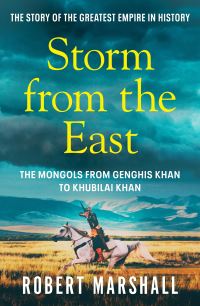
Genghis Khan left an empire more than twice the size of Alexander’s: his successors went on to conquer and govern an area stretching from Korea to the River Danube. How did a band of nomadic herdsmen achieve so much, so fast? Despite these stunning achievements, many writers dismiss the Mongols as just ferocious barbarians. This book sets the record straight. The epic starts in 1206 – when Genghis became master of ‘all the people with felt tents’ and an unknown tribe took the first steps towards world domination – and ends with the empire’s decline and fall, after Khubilai Khan’s triumphant unification with China. Robert Marshall describes their devastating invasions, including that of feudal Europe and Christendom’s clumsy attempts to understand and fend off these legendary warriors.
-
£9.99
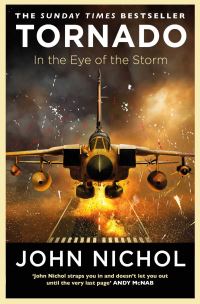
The epic story of the Tornado during Operation Desert Storm, by the bestselling author of Spitfire and Lancaster, who was himself shot down during that conflict
-
£20.00
It’s now over 50 years since the Red Arrows first took to the skies, transfixing the British public with their astonishing displays of daredevil precision and aerial aerobatics. Manned by some of the best pilots in the world, their jaw-dropping displays are world-famous, and their incredible aerial feats have cemented their status as national treasures. The Red Arrows represent the very best speed, agility and precision of the Royal Air Force, and the pilots behind the planes are rigorously selected for their nerves of steel, lightning reflexes, and millisecond-perfect timing. Each one has years of distinguished service in the Royal Air Force under their belts, and plenty of stores to tell.
-
£10.99
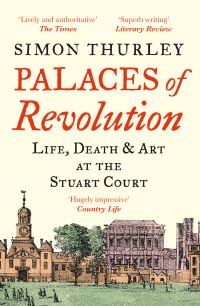
The story of the Stuart dynasty is a breathless soap opera played out in just a hundred years in an array of buildings that span Europe from Scotland, via Denmark, Holland and Spain to England.
-
£9.99
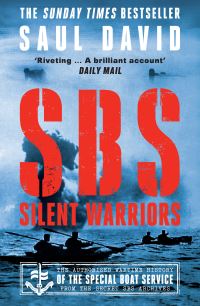
THE SUNDAY TIMES BESTSELLER
‘A terrific book ? It really is one of the most enjoyable histories I’ve read in many a year’ JAMES HOLLAND
‘Riveting ? A brilliant account’ DAILY MAIL
-
£8.99
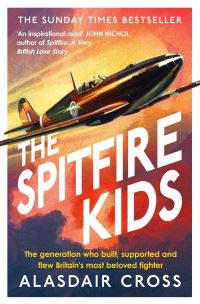
Despite the many films and television programmes over the decades since the end of the Second World War that portrays our allied heroes as grown-up men and women, the Battle of Britain was in the main actually fought and won by teenagers. The average age of an RAF fighter pilot was just twenty years old. Many of the men and women who designed and built their planes were even younger. Based on the hit BBC Radio podcast ‘Spitfire: The People’s Story’, we use contemporary diaries and memoirs, many of them previously unpublished, to tell the story of the Spitfire through the voices of the teenagers who risked everything to design, build and fly her. This isn’t a story of stiff-upper lips, stoical moustaches and aerial heroics; it’s a story of love and loss, a story of young people tested to the very limits of their endurance.
-
£25.00
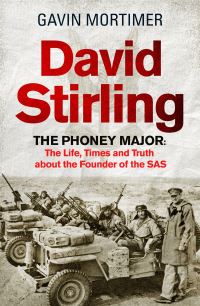
Aristocrat, gambler, innovator and special forces legend, the life of David Stirling should need no retelling. His formation of the Special Air Service in the summer of 1941 led to a new form of warfare and Stirling is remembered as the father of special forces soldiering. But was he really a military genius or in fact a shameless self-publicist who manipulated people, and the truth, for this own ends? In this gripping and controversial biography Gavin Mortimer analyses Stirling’s complex character: the childhood speech impediment that shaped his formative years, the pressure from his overbearing mother, his fraught relationship with his brother, Bill, and the jealousy and inferiority he felt in the presence of his SAS second-in-command, the cold-blooded killer Paddy Mayne.

 Pilgrimage