The Rise of Modern Despotism in Iran
£35.00The Shah’s gradual transition to dictatorship after the 1953 coup in Iran, and its far-reaching consequences

Showing 49–60 of 66 resultsSorted by latest
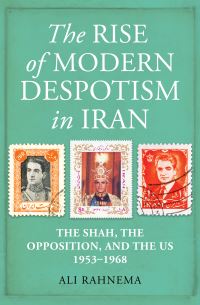
The Shah’s gradual transition to dictatorship after the 1953 coup in Iran, and its far-reaching consequences
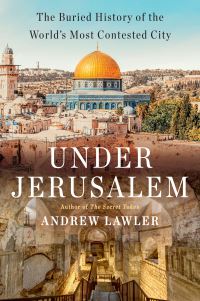
A sweeping history of the hidden world below the Holy City-a saga of biblical treasures, intrepid explorers, and political upheaval.
The Ottoman Empire has long been depicted as the Islamic-Asian antithesis of the Christian-European West. But the reality was starkly different: the Ottomans’ multiethnic, multilingual, and multireligious domain reached deep into Europe’s heart. In their breadth and versatility, the Ottoman rulers saw themselves as the new Romans. Recounting the Ottomans’ remarkable rise from a frontier principality to a world empire, Marc David Baer traces their debts to their Turkish, Mongolian, Islamic, and Byzantine heritage; how they used both religious toleration and conversion to integrate conquered peoples; and how, in the nineteenth century, they embraced exclusivity, leading to ethnic cleansing, genocide, and the dynasty’s demise after the First World War.
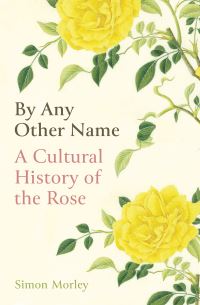
A beautifully illustrated history of the Queen of Flowers and her enduring power in our gardens, art, religion and imagination.


Nahr has been confined to the Cube: nine square metres of glossy grey cinderblock, devoid of time, its patterns of light and dark nothing to do with day and night. Journalists visit her, but get nowhere; because Nahr is not going to share her story with them. The world outside calls Nahr a terrorist, and a whore; some might call her a revolutionary, or a hero. But the truth is, Nahr has always been many things, and had many names. She was a girl who went to Palestine in the wrong shoes, and without looking for it found what she had always lacked in the basement of a battered beauty parlour: purpose, politics, friends. She found a dark-eyed man called Bilal, who taught her to resist; who tried to save her when it was already too late. Nahr sits in the Cube, and tells her story to Bilal. Bilal, who isn’t there; Bilal, who may not even be alive, but who is her only reason to get out.
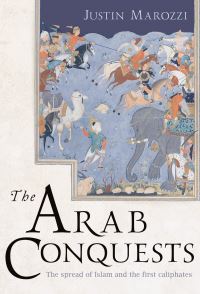
The story of the Muslim conquests of the 7th and 8th centuries AD, when armies inspired by the new religion of Islam burst out of Arabia to subjugate the Levant, southwest Asia, North Africa and the Iberian peninsula, destroying two great empires in the process.

Rami Elhanan’s license plate is yellow. Bassam Aramin’s license plate is green. It takes Rami fifteen minutes to drive to the West Bank. The same journey for Bassam, down the same streets, takes an hour and a half. Both men are fathers of daughters. Both daughters were there, before they were gone. Rami and Bassam’s lives are completely symmetrical. Rami and Bassam’s lives are completely asymmetrical.
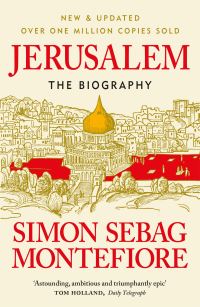
The story of Jerusalem is the story of the world. Jerusalem is the universal city, the capital of two peoples, the shrine of three faiths; it is the site of Judgement Day and the battlefield of today’s clash of civilisations. How did this small, remote town become the Holy City, the ‘centre of the world’ and now the key to peace in the Middle East? Drawing on new archives and a lifetime’s study, Simon Sebag Montefiore reveals this ever-changing city through the wars, love affairs and revelations of the men and women – kings, empresses, prophets, poets, saints, conquerors and whores – who created, destroyed, chronicled and believed in Jerusalem. From King David to the 21st century, from the birth of Judaism, Christianity and Islam to the Israel-Palestine conflict, this is the epic history of 3,000 years of faith, slaughter, fanaticism and coexistence.
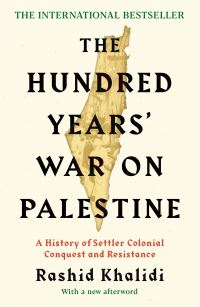
The Balfour Declaration of 1917 promised the Jews a homeland where the Palestinians already lived. Despite constant bloodshed and uprisings, that impossible arrangement continued until 1948 when it was ended by what Israelis call the War of Independence and the Palestinians the Nakba, or Tragedy. Worse was to follow with conclusion of the Six Day War in 1967 and Israeli occupation of the West Bank and Gaza, previously respectively under Jordanian and Egyptian rule. Since then, the Palestinian story has been one of occupation and resistance. In this book, Professor Khalidi provides a thorough overview of this enduring and controversial conflict.

A visual history of how mankind has studied the sky throughout history, featuring some of the most stunning images ever created.Â

An extremely moving account of life in Yarmouk, Damascus, from a man determined to hold onto hope in the face of war. This tender and poetic account of Aeham’s experiences, from losing his city, friends and family to leaving his country and finding safety, will move readers with raw and candid emotion. His heart-wrenching story has been transcribed from Syrian into English and it is the understated use of the English language that gives a stark and poignant voice to Aeham’s traumatic experiences. This is a gripping portrait of a man’s search for solace, and of a country that has been fiercely torn apart.
No products in the basket.
Notifications