1291
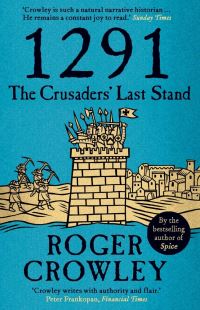
£11.99A thrilling history of the bloody climax to two centuries of crusading in the Holy Land

Showing 1–16 of 22 resultsSorted by latest
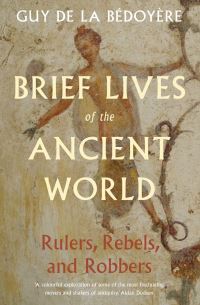
A fascinating window into the history of the ancient world, told through thirty-five fascinating figures
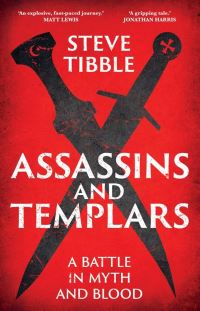
The story of the medieval world’s most extraordinary organisations, the Assassins and the Templars. In this engaging account, Steve Tibble traces the history of these two groups from their origins to their ultimate destruction. He shows how, outnumbered and surrounded, they survived only by perfecting ‘the promise of death’, either in the form of a Templar charge or an Assassin’s dagger. Death, for themselves or their enemies, was at the core of these extraordinary organisations. Their fanaticism changed the medieval world – and, even up to the present day, in video games and countless conspiracy theories, they have become endlessly conjoined in myth and memory.
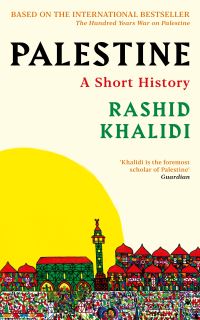
‘Come for a walk with me, if you would, along the streets of Jerusalem. My family has walked these streets for more than a thousand years.’ With this invitation, this book offers a powerful introduction to Palestinian history through a century of conflict and resistance. Blending incisive research with his own family memories, celebrated scholar Rashid Khalidi traces Palestine’s story from the British occupation to Israel’s ongoing colonial war. Powerfully explaining the history behind the world’s most urgent – and misunderstood – conflict, Khalidi explores why Israel has long fought against Palestine.
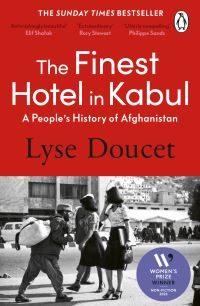
In 1969, the luxury Hotel Inter-Continental Kabul opened its doors: a glistening white box, high on a hill, that reflected Afghanistan’s hopes of becoming a modern country, connected to the world. Lyse Doucet first checked into the Inter-Continental on Christmas Eve 1988. In the decades since, she has witnessed a Soviet evacuation, a devastating civil war, the US invasion, and the rise, fall and rise of the Taliban, all from within its increasingly battered walls. The Inter-Con has never closed its doors. Now, she weaves together the experiences of the Afghans who have kept the hotel running to craft a richly immersive history of their country. It is the story of Hazrat, the septuagenarian housekeeper who still holds fast to his Inter-Continental training from the hotel’s 1970s glory days – an era of haute cuisine and high fashion, when Afghanistan was a kingdom and Kabul was the ‘Paris of Central Asia’.
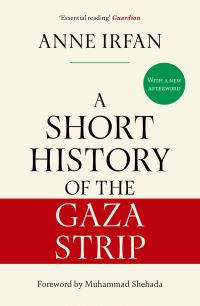
From a leading scholar of Palestine-Israel, a brief, essential history of the besieged strip of land, revealing the roots of the current crisis.

The Middle East has forever been the source of religions, prize of empires, spark-wheel of conflicts, well of radicalism and epicentre of our tumultuous world. No other region has such a hold on our imagination nor such a propensity to unleash mayhem. Yet few know its real history; fewer still understand its variety and cosmopolitanism, its complexity and interconnectedness. In ‘The Cauldron’, Simon Sebag Montefiore delivers a fresh and unique history of the entire region in all its diversity, from 1900 up to the present day. Taking the reader on a spectacular journey from the Ottoman sultanate to the Trump presidency, from Morocco to Iran, this is a dazzling panorama of faith and fanaticism, creativity and tolerance, dictatorship and democracy brought to life by an extraordinary cast of kings, warriors, poets, terrorists and peacemakers.
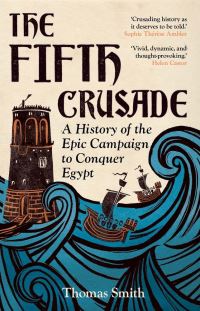
In 1217, the crusader states were in a highly fragile condition. The Fourth Crusade had failed, and Jerusalem had not been recovered. The crusaders now set their sights on Egypt. If the breadbasket of the Mediterranean could be conquered, long-term Christian control of the Holy Land could be ensured. Led by the rulers of Hungary and Austria, and backed by the Knights Templar and Hospitaller, the Fifth Crusade was launched. Thomas Smith tells the gripping story of the crusade for Egypt. Looking at a wide range of Christian and Muslim sources, Smith sheds new light on the brutal reality of medieval combat on land and water.
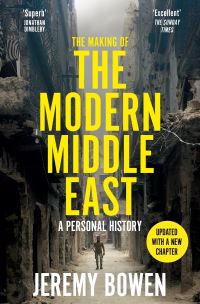
A vivid and authoritative account of the Middle East's recent history to the present day, from the BBC’s long-serving correspondent in the region.
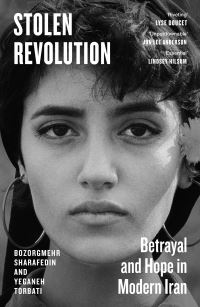
Fuelled by Iranians’ dreams of social justice and political freedom, the 1979 revolution swept aside the shah’s ailing, repressive monarchy. But the revolution’s leader – Ayatollah Khomeini and his acolytes – built a system in its place that served his narrow Islamic fundamentalist faction, and worsened every failing and brutality that had existed under the shah. In ‘Stolen Revolution’, award-winning journalists Bozorgmehr Sharafedin and Yeganeh Torbati tell the entwined stories of six Iranians, providing a powerful new lens on Iran’s recent history in all its bitter twists and stubborn hope.

Written while the organisation he directs, Forensic Architecture, works to produce evidence for the International Court of Justice’s genocide case against Israel, Weizman explores the larger geographical and historical context, from the displacement of the Nakba in 1948 to the present day. He shows how architectural and territorial analysis is key to understanding the relationship between the coloniser and the colonised. The book is an extraordinary and eye-opening journey through the ‘deep cartography’ of the area extending from Gaza’s subterranean tunnels through to its militarised topography, settlements and barriers. Territory is never a neutral backdrop nor the location within which a colonisation takes place. Instead, it is a mechanism by which colonisation is undertaken and key to understanding how Israel’s attack on Gaza in the wake of 7 October has escalated into violence so extreme as to, Weizman argues, meet the definition of
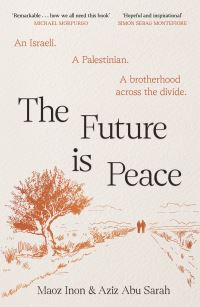
Palestinian Aziz Abu Sarah and Israeli Maoz Inon are unlikely peacemakers, dedicated to finding a solution to the bitter war that has decimated historical, ancient land and ended family lines. Despite the losses they have suffered, the resolve of their friendship has taught them that strength and unity are more powerful than the violence of separation. Throughout their travels, they have been constantly asked: In the face of so much pain and suffering on both sides, when there have been so many lives lost and families shattered, how can they ever find hope? Their answer is always the same. One cannot find hope. We must create it. In this book, Sarah and Inon take readers on their unforgettable weeklong journey across the holy land. They explore each other’s personal and national histories in a land of competing narratives, amid the turbulent push and pull of near constant war, and the recent devastation that has rocked the world.
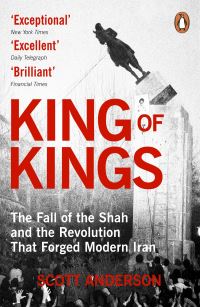
Before the revolution, the Shah of Iran seemed invincible. The world watched in awe as he commanded a huge army and oversaw an economy awash with billions of dollars of oil revenues. The regime’s secret police had crushed communist opposition and the Shah appeared to have bought off the conservative Muslim clergy inside the country. On the international stage, Iran had become an invaluable ally to the West during the Cold War. But village streets spoke of a different country – people derided the Shah as an American lackey and blamed him for economic inequality, for spending recklessly on lavish parties and for ignoring the Muslim majority. When a volcanic religious revolution erupted, led by Ayatollah Khomeini, the Shah was forced into exile. How did it all go so wrong? This book reveals how the Iranian Revolution was as world-shattering an event as the French and Russian revolutions, and how its repercussions are still felt today.
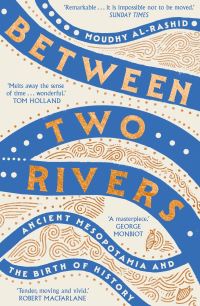
In ancient times, the vast area that stretches across what is now modern-day Iraq and Syria saw the rise and fall of epic civilizations who built the foundations of our world today. It was in this region, which we call Mesopotamia, that history was written down for the very first time. With startling modernity, the people of Mesopotamia left behind hundreds of thousands of fragments of their everyday lives. Immortalised in clay and stone are intimate details from 4000 years ago. We find accounts of an enslaved person negotiating their freedom, a dog’s paw prints as it accidentally stepped into fresh clay, a parent desperately trying to soothe a baby with a lullaby, and countless receipts for beer. Historian Dr Moudhy Al-Rashid examines what these people chose to preserve in their own words about their lives, creating the first historical records and allowing us to brush hands with them thousands of years later.
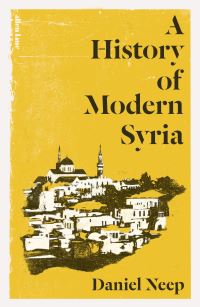
Few countries have had as vexed a political history as Syria. Carved out of the Ottoman empire at the end of the First World War, Syria was brutally ruled as a French colony, cut off by a series of new borders with equally newly created neighbours that pulled apart families, trade networks and political assumptions that had already been ravaged by the war. Syria’s subsequent history has been a series of attempts to make sense of its borders, including a failed attempt in the late 1950s to unite with Egypt and several humiliations at the hands of Israel’s armed forces. It has been a satellite of France, an ally of the USSR and, most recently, torn apart by a civil war that has now been in turn subverted by the rise of the Islamic State, an entity that refuse to acknowledge any of Syria’s existing borders.
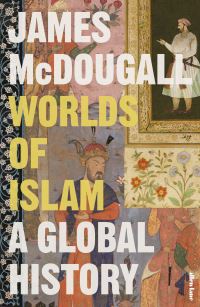
From its emergence in seventh century Arabia, Islam has been a faith on the move.Over the span of a thousand years, armies, missionaries, and merchants carried it to the edges of Europe, the coasts of Southeast Asia and the remote interior of China. From the Arab caliphate to the Mongol empire, from West Africa to the Philippines, Islam was a world-shaping force. By the nineteenth century, Muslims lived everywhere from South Africa to North America. In the age of European empires, through two World Wars and a Cold War, and into the globalised and fractured 21st century, Muslims lived through global conflicts and everyday struggles for adaptation and survival. Historian James McDougall charts the epic global story of Islam’s origins and transformations, as Muslims adapted to their changing times from late antiquity to the digital age, constantly remaking their own worlds as the wider world around them changed.
No products in the basket.