Knowing what we know
£10.99‘A delightful compendium of the kind of facts you immediately want to share with anyone you encounter’ New York Times
‘An ebullient, irrepressible spirit invests this book. It is erudite and sprightly’Sunday Times

Showing 1–12 of 15 resultsSorted by latest
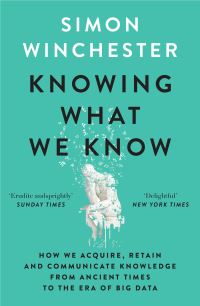
‘A delightful compendium of the kind of facts you immediately want to share with anyone you encounter’ New York Times
‘An ebullient, irrepressible spirit invests this book. It is erudite and sprightly’Sunday Times
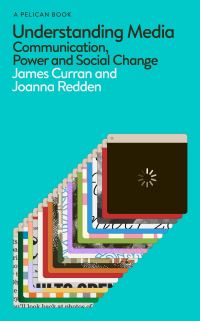
Our lives are more mediated than ever before. Adults in economically advanced countries spend, on average, over eight hours per day interacting with the media. The news and entertainment industries are being transformed by the shift to digital platforms. But how much is really changing in terms of what shapes media content? What are the impacts on our public and imaginative life? And is the Internet a democratising tool of social protest, or of state and commercial manipulation? Drawing on decades of research to examine these and other questions, this book interrogates claims about the Internet, explores how representations in TV and film may influence perceptions of self, and traces overarching trends while attending to crucial local context, from the United States to China, Norway to Malaysia, and Brazil to Britain.
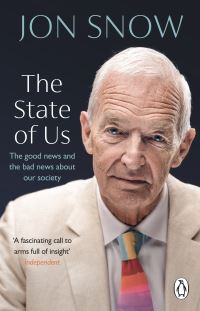
We are living through a time of tremendous upheaval. Society is growing ever more unequal, and elites increasingly detached, with the Honourable Members ensconced in their Upper and Lower Houses. Jon Snow’s own wake up call was the Grenfell Tower fire when, gazing up at the smoke still pouring from the building in the early hours, he felt the weight of the obligation as a journalist to understand what had happened. Tracing key moments in his incredible career, from getting thrown out of university for protesting apartheid to his reporting on major global developments everywhere from America to Iran, Snow argues that the greatest problems at home and abroad so often come down to inequality and an unwillingness to confront it.
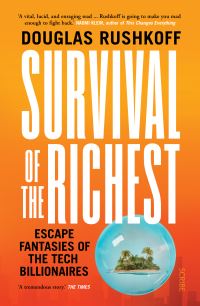
The tech elite have a plan to survive the apocalypse: they want to leave us all behind. Five mysterious billionaires summoned Douglas Rushkoff to a desert resort for a private talk. The topic? How to survive ‘The Event’: the societal catastrophe they know is coming. Rushkoff came to understand that these men were under the influence of ‘The Mindset’, a Silicon Valley-style certainty that they can break the laws of physics, economics, and morality to escape a disaster of their own making – as long as they have enough money and the right technology. In this book, Rushkoff traces the origins of The Mindset in science and technology through its current expression in missions to Mars, island bunkers, and the Metaverse.
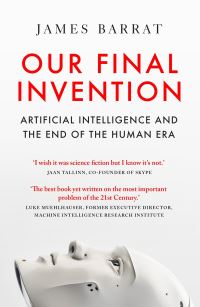
Corporations and government agencies around the world have for years been pouring billions into achieving AI’s Holy Grail – human-level intelligence. But once AI has attained it, scientists argue, it will have survival drives much like our own. We may be forced to compete with a rival more cunning, more powerful, and more alien than we can imagine. First published ten years ago, ‘Our Final Invention’ predicted much of the artificial ‘intelligence explosion’ that is now ripping through our culture, and was named by Elon Musk as one of five books everyone should read about the future. Now with an urgent new preface, James Barrat’s landmark work explores the ethics, history and future perils of the heedless pursuit of advanced AI. Until now, human intelligence has had no rival. Can we coexist with beings whose intelligence dwarfs our own? And will they allow us to?
‘A delightful compendium of the kind of facts you immediately want to share with anyone you encounter’ New York Times
‘An ebullient, irrepressible spirit invests this book. It is erudite and sprightly’Sunday Times
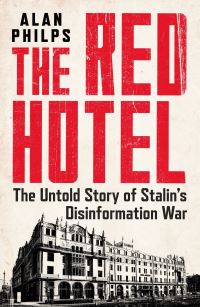
In ‘The Red Hotel’, former Daily Telegraph Foreign Editor and Russian expert Alan Philps sets out the way Stalin created his own reality by constraining and muzzling the British and American reporters covering the Eastern front during the war and forcing them to reproduce Kremlin propaganda. War correspondents were both bullied and pampered in a gilded cage of the Metropol Hotel. They enjoyed lavish supplies of caviar and had their choice of young women to employ as translators and to share their beds. While some of these translators turned journalists into robotic conveyors of Kremlin propaganda, others were brave secret dissenters who whispered to reporters the reality of Soviet life and were punished with sentences in the Gulag. Here, the story of the role of the women of the Metropol Hotel and the foreign reporters they worked with is told.

Heiress. Party girl. Problem child. Selfie taker. Model. Reality star. Self-created.
The labels attached to Paris Hilton.
Founder. Entrepreneur. Pop Culture Maker. Innovator. Survivor. Activist. Daughter. Sister. Wife. Mother.
The roles Paris embraces as a fully realized woman.
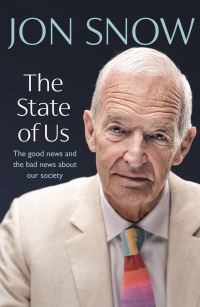
We are living through a time of tremendous upheaval. Society is growing ever more unequal, and elites increasingly detached, with the Honourable Members ensconced in their Upper and Lower Houses. Jon Snow’s own wake up call was the Grenfell Tower fire when, gazing up at the smoke still pouring from the building in the early hours, he felt the weight of the obligation as a journalist to understand what had happened. Tracing key moments in his incredible career, from getting thrown out of university for protesting apartheid to his reporting on major global developments everywhere from America to Iran, Snow argues that the greatest problems at home and abroad so often come down to inequality and an unwillingness to confront it.
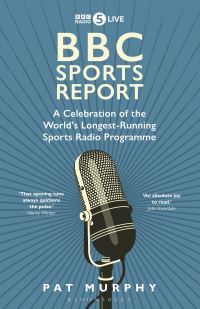
Patrick Murphy has been a reporter on Sports Report since 1981 and here he sifts comprehensively through the experiences of his contemporaries and those who made their mark on Sports Report in earlier decades. He hears from commentators, reporters, producers, presenters, and the production teams who regularly achieved the broadcasting miracle of getting a live programme on air, without a script, adapting as the hour of news, reaction and comment unfolded. Drawing on unique access from the BBC Archives Unit, he highlights memorable moments from Sports Report, details the challenges faced in getting live interviews on air from draughty, noisy dressing-room areas and celebrates the feat of just a small production team in the studio who, somehow, get the show up and running every Saturday, with the clock ticking implacably on.
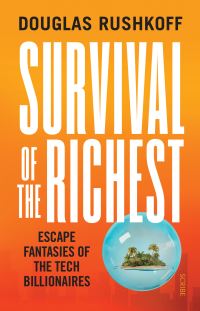
The tech elite have a plan to survive the apocalypse: they want to leave us all behind. Five mysterious billionaires summoned Douglas Rushkoff to a desert resort for a private talk. The topic? How to survive ‘The Event’: the societal catastrophe they know is coming. Rushkoff came to understand that these men were under the influence of ‘The Mindset’, a Silicon Valley-style certainty that they can break the laws of physics, economics, and morality to escape a disaster of their own making – as long as they have enough money and the right technology. In this book, Rushkoff traces the origins of The Mindset in science and technology through its current expression in missions to Mars, island bunkers, and the Metaverse.
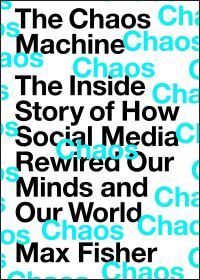
‘The Chaos Machine’ is the story of how the world was driven mad by social media. The election of populists like Trump and Bolsonaro; strife and genocide in countries like Myanmar; the rampant spread of COVID-19 conspiracy theories as deadly as the pandemic itself; all of these are products of a breakdown in our social and political lives, a breakdown driven by the apps, companies and algorithms that compete constantly for our attention.
No products in the basket.
Notifications