Showing 13–24 of 28 resultsSorted by latest
-
£20.00
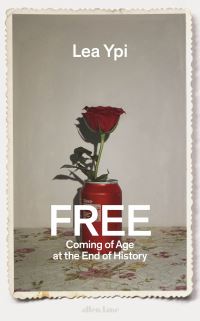
Lea Ypi grew up in one of the most isolated countries on earth. Albania, the last Stalinist outpost in Europe, was almost impossible to visit, almost impossible to leave. It was a place of queuing and scarcity, of political executions and secret police. People were equal, neighbours helped each other, and children were expected to build a better world. Then, in December 1990, a year after the fall of the Berlin Wall, everything changed. The statues of Stalin and Hoxha were toppled. Almost overnight, people could vote freely, wear what they liked and worship as they wished. But factories shut, jobs disappeared and thousands fled to Italy on crowded ships, only to be sent back. Predatory pyramid schemes eventually bankrupted the country, leading to violent conflict. As her own family’s secrets were revealed, Lea found herself questioning what freedom really meant.
-
£10.99
This compelling book on Hitler and Stalin – the culmination of 30 years’ work – examines the two tyrants during WWII, when Germany and the Soviet Union fought the biggest and bloodiest war in history. Yet despite the fact they were bitter opponents, Laurence Rees shows that Hitler and Stalin were, to a large extent, different sides of the same coin. Hitler’s charismatic leadership may contrast with Stalin’s regimented rule by fear; and his intransigence later in the war may contrast with Stalin’s change in behaviour in response to events. But at a macro level, both were prepared to create undreamt-of suffering, destroy individual liberty and twist facts in order to build the utopias they wanted, and while Hitler’s creation of the Holocaust remains a singular crime, Rees shows why we must not forget that Stalin committed a series of atrocities at the same time.
-
£16.99
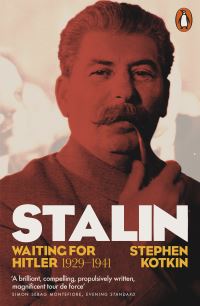
Like its predecessor, this title offers nothing less than a history of the world from Stalin’s desk. It is also, like the previous volume, a landmark achievement in the annals of the biographer’s art. Kotkin’s portrait captures the vast structures moving global events, and the intimate details of decision-making.
-
£10.99
Victor Sebestyen’s intimate biography is the first major work in English for nearly two decades on one of the most significant figures of the twentieth century. In Russia to this day Lenin inspires adulation. Everywhere, he continues to fascinate as a man who made history, and who created a new kind of state that would later be imitated by nearly half the countries in the world. Told through the prism of Lenin’s key relationships, Sebestyen’s lively biography casts a new light the Russian Revolution, one of the great turning points of modern history.
-
£14.99
Anne Applebaum’s books have explained the history of Russia and Eastern Europe as compellingly as any other historian. Based on a mass of previous untranslated documents and hundreds of testimonies, Anne Applebaum’s ‘Red Famine’ tells the story of the Bolshevik war on Ukraine, from the brief moment of Ukrainian independence in 1917 to Stalin’s deliberately engineered famine in 1932-33. That genocide killed nearly five million people, destroyed the national aspirations of Ukraine for two generations and has real echoes in the politics of the present.
-
£35.00
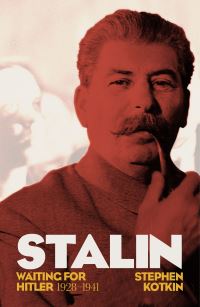
Like its predecessor, this title offers nothing less than a history of the world from Stalin’s desk. It is also, like the previous volume, a landmark achievement in the annals of the biographer’s art. Kotkin’s portrait captures the vast structures moving global events, and the intimate details of decision-making.
-
£16.99
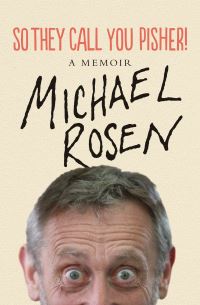
In this humourous and moving memoir, Michael Rosen recalls the first 23 years of his life. Born in the North London suburbs, his parents, Harold and Connie, both teachers, first met as teenage Communists in the 1930s Jewish East End. The family home was filled with stories of relatives in London, the United States and France and of those who had disappeared in Europe.
-
£14.99
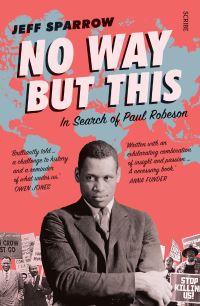
Paul Robeson was a brilliant student and champion athlete who abandoned a career in law to find worldwide fame as a performer and activist. He was undoubtedly the most famous African American of his time – before losing everything for the sake of his principles.
-
£18.99
As the 19th century unfolded, its inhabitants had to come to terms with an unparalleled range of political, economic, religious and intellectual challenges. Distances shrank, new towns sprang up, and ingenious inventions transformed the industrial landscape. It was an era dominated by new ideas about God, human capacities, industry, revolution, empires and political systems – and above all, the shape of the future. One of the most distinctive and arresting contributions to this debate was made by Karl Marx, the son of a Jewish convert in the Rhineland and a man whose entire life was devoted to making sense of the hopes and fears of the 19th century world. Gareth Stedman Jones’s impressive biography explores how Marx came to his revolutionary ideas in an age of intellectual ferment, and the impact they had on his times.
-
£9.99
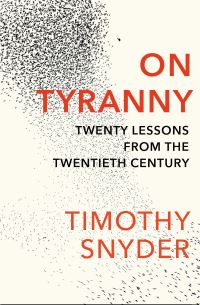
History does not repeat, but it does instruct. In the 20th century, European democracies collapsed into fascism, Nazism and communism. These were movements in which a leader or a party claimed to give voice to the people, promised to protect them from global existential threats, and established rule by an elite with a monopoly on truth. European history shows us that societies can break, democracies can fall, ethics can collapse, and ordinary people can find themselves in unimaginable circumstances. History can familiarise, and it can warn. Today, we are no wiser than the Europeans who saw democracy yield to totalitarianism in the 20th century. But when the political order seems imperilled, our advantage is that we can learn from their experience to resist the advance of tyranny. Now is a good time to do so.
-
£9.99
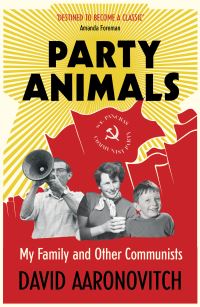
In July 1961, Yuri Gagarin came to London. The Russian cosmonaut was everything the Aaronovitch family wished for – a popular and handsome embodiment of modern communism. But who were they, these ever hopeful, defiant and historically doomed people? They lived secretly with and parallel to the non-communist majority, sometimes persecuted, sometimes ignored, but carrying on their own ways and traditions. A memoir of early life among communists, ‘Party Animals’ first took David Aaronovitch back through his own memories of belief and action. But he found himself studying the old secret service files, uncovering the unspoken shame and fears that provided the unconscious background to his own existence as a party animal. Only then did he begin to understand what had come before – both the obstinate heroism and the monstrous cowardice.
-
£17.99
In July 1961, Yuri Gagarin came to London. The Russian cosmonaut was everything the Aaronovitch family wished for – a popular and handsome embodiment of modern communism. But who were they, these ever hopeful, defiant and historically doomed people? They lived secretly with and parallel to the non-communist majority, sometimes persecuted, sometimes ignored, but carrying on their own ways and traditions. A memoir of early life among communists, ‘Party Animals’ first took David Aaronovitch back through his own memories of belief and action. But he found himself studying the old secret service files, uncovering the unspoken shame and fears that provided the unconscious background to his own existence as a party animal. Only then did he begin to understand what had come before – both the obstinate heroism and the monstrous cowardice.