Showing 1–12 of 54 resultsSorted by latest
-
£11.99
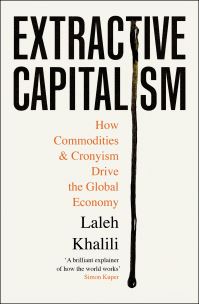
Whether it’s pumping oil, mining resources or shipping commodities across oceans, the global economy runs on extraction. Promises of frictionless trade and lucrative speculation are the hallmarks of our era, but the backbone of globalisation is still low-cost labour and rapacious corporate control. Extractive capitalism is what made – and is still making – our unequal world. Professor Laleh Khalili reflects on the hidden stories behind late capitalism, from seafarers abandoned on debt-ridden container ships to the nefarious reach of consultancy firms and the cronyism that drives record-breaking profits.
-
£12.99
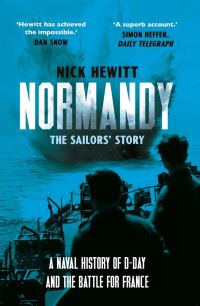
The Allied liberation of Nazi-occupied Europe is one of the most widely recognised events of modern history. The assault phase, Operation Neptune, began with the D-Day landings in Normandy – one of the most complex amphibious operations in history, involving 7000 ships and nearly 200,000 men. But despite this immense effort, the wider naval campaign has been broadly forgotten. Nick Hewitt draws on fascinating new material to describe the violent sea battle which mirrored the fighting on land, and the complex campaign at sea which enabled the Allied assault. Aboard ships ranging from frail plywood landing craft to sleek destroyers, sailors were active combatants in the operation of June 1944, and had worked tirelessly to secure the Seine Bay in the months preceding it. Hewitt recounts these sailors’ stories and shows how, without their efforts, D-Day would have failed.
-
£14.99
The incredible story of the “Robin Hood of the Seas,” who absconded with millions during the Golden Age of Piracy and who harbored an even greater secret.
-
£10.99
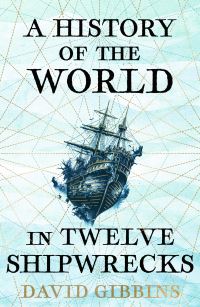
Drawing on decades of experience excavating shipwrecks around the world, renowned maritime archeologist David Gibbins reveals the riches beneath the waves and shows us how the treasures found there can be a porthole to the past to tell a new story about the world and its underwater secrets.
-
£12.99
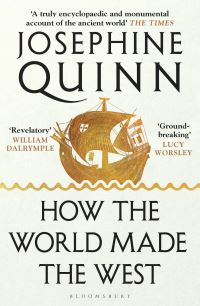
‘One of the most fascinating and important works of global history to appear for many years’ (William Dalrymple), this epic debut from Josephine Quinn rewrites the story of the Western world.
-
£45.00
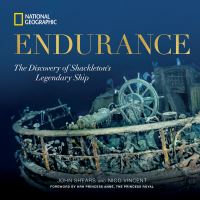
In March 2022, an international polar expedition team made an astonishing find: the wreck of Ernest Shackleton’s legendary Endurance, lost in 1915 after being crushed by ice and then swallowed by the Weddell Sea. The harrowing story of Shackleton’s survival and rescue of all 27 men aboard is well known, but the ship has lain unseen for a century, 10,000 feet underwater – until now. The vessel remains incredibly intact, as crystal-clear photography and digital scans from the expedition reveal.
-
£40.00
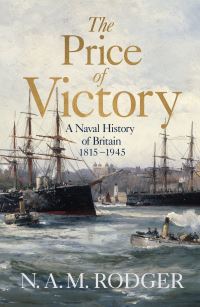
At the end of the French and Napoleonic wars, British sea-power was at its apogee. But by 1840, as one contemporary commentator put it, the Admiralty was full of ‘intellects becalmed in the smoke of Trafalgar’. How the Royal Navy reformed and reinvigorated itself in the course of the 19th century is just one thread in this book which refuses to accept standard assumptions and analyses. All the great actions are here, from Navarino in 1827 (won by a daringly disobedient Admiral Codrington) to Jutland, D-Day, the Battle of the Atlantic and the battles in the Pacific in 1944/45 in concert with the US Navy. The development and strategic significance of submarine and navy air forces is described, as are the rapid evolution of ships (from classic Nelsonic type, to hybrid steam/sail ships, then armour-clad and the fully armoured Dreadnoughts and beyond) and weapons.
-
£16.99
The Shipping Forecast on Radio 4 has been keeping people up to date with the latest changes to British weather for a century, and capturing our hearts and imaginations along the way. Celebrating 100 years since the first broadcast, this book takes you to the heart of what the Shipping Forecast means to us as a nation. Each of the ten chapters brings you on a fascinating exploration of a different area of our British maritime history, from stormy weather up above to the seabed far below, and from fishing boats to the art, songs and poems inspired by the forecast. With illustrations and fascinating facts about each sea area, this joyous book invites you to sail away into the enchanting world of the forecast, and is the perfect companion for anyone curious about our great British skies and seas.
-
£30.00
An awe-inspiring deep-dive into the treasures found on the sea floor and what they reveal about our past.
-
£30.00
Informed by the author’s extensive travels in and around the Atlantic Ocean, crossing Newfoundland’s Grand Banks, the Sea of Darkness and the weed-covered Sargasso Sea to make landfall at locations as diverse as Vinland, Greenland, the Faroes and the Cape Verde Islands, and populated by a heterogeneous and multi-ethnic cast of seafarers, fishermen, monks, merchants and dreamers, ‘Ocean’ is an in-depth history of a neglected subject, fusing geology, geography, mythology, cosmology, developing maritime technologies and the early history of exploration to narrate an enthralling and intriguing story – one which lies at the very heart of Europe’s modern history and its relationship with the rest of the world. A history on a grand scale, ‘Ocean’ offers the reader a feast of historical storytelling.
-
£12.99
Sailing on a boat by yourself out at sea and out of sight of land can be exhilarating or terrifying, compelling or tedious – sometimes it can be all of these things just in one morning. It is an adventure at odds with our normal, sociable lives, carried out floating on a medium wholly inimical to our existence. But the deep ocean is also a remarkable place on which to think. Richard King’s engaging and curious book is about the debt we owe to solo sailors: women and men, young and old, who have set out alone. Spending weeks and months alone, slowly, quietly, and close to the ocean surface is to create the world’s largest laboratory: an endlessly changing, capricious and startling place in which to observe oneself, the weather, the stars and myriad sea creatures, from the tiniest to the most massive and threatening.
-
£20.00
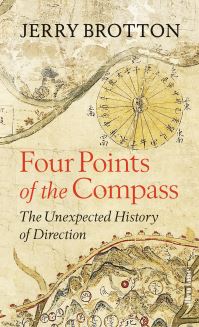
‘The Four Points of the Compass’ takes the reader on a journey of directional discovery. Jerry Brotton reveals why Hebrew culture privileges east; why the Renaissance Europeans began drawing north at the top of their maps; why the imperial Chinese revered the south; why the Aztecs used five colour-coded cardinal directions; and why no societies, primitive or modern, have ever orientated themselves westwards, the direction of darkness. He ends by reflecting on our digital age in which we, the little blue dot on the screen, have become the most important compass point. Throughout, Brotton shows that the directions reflect a human desire to create order and that they only have meaning, literally and metaphorically, depending on where you stand.