 I Want My Hat Back
 The White Album
£9.99Joan Didion’s hugely influential collection of essays which defines, for many, the America which rose from the ashes of the Sixties.
We recently launched our new website and are facing a few teething issues. If you see any problems please contact us.
We recently launched our new website and are facing a few teething issues. If you see any problems please contact us.

Showing 61–72 of 88 resultsSorted by latest
Joan Didion’s hugely influential collection of essays which defines, for many, the America which rose from the ashes of the Sixties.
Joan Didion’s savage masterpiece, which, since first publication in 1968, has been acknowledged as an unparalleled report on the state of America during the upheaval of the Sixties Revolution.
Jonathan Swift was a man of contradictions: a man who satirised the powerful but aspired to political greatness, who mocked men’s vanity but held himself in high esteem, a religious moraliser famed for his malice – a man sharply aware of humanity’s flaws, but no less susceptible to them. As with his acclaimed biography of John Donne, John Stubbs paints a vivid portrait of an extraordinary man and a turbulent period of English and Irish history.
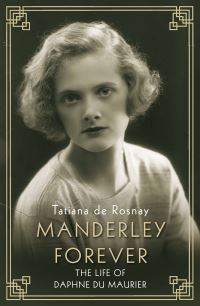
As a bilingual bestselling novelist with a mixed Franco-British bloodline and a host of eminent forebears, Tatiana de Rosnay is the perfect candidate to write a biography of Daphne du Maurier. As an eleven-year-old de Rosnay read and reread Rebecca, becoming a lifelong devotee of Du Maurier’s fiction. Now de Rosnay pays homage to the writer who influenced her so deeply, following Du Maurier from a shy 7-year-old, a rebellious 16-year-old, a 20-something newlywed, and finally a cantankerous old lady.
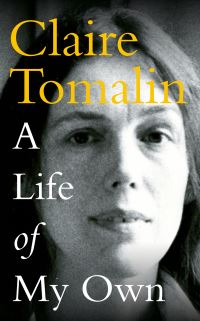
As one of the best biographers of her generation, Claire Tomalin has written about great novelists and poets to huge success: now, she turns to look at her own life. This enthralling memoir follows her through triumph and tragedy in about equal measure, from the disastrous marriage of her parents and the often difficult wartime childhood that followed, to her own marriage to the brilliant young journalist Nicholas Tomalin.
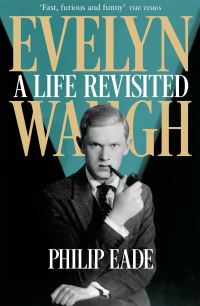
10th April 2016 is the 50th anniversary of the death of Evelyn Waugh – hailed by Graham Greene as ‘the greatest novelist of my generation’, yet reckoned by Hilaire Belloc to have been possessed by the devil. Waugh’s literary reputation has risen steadily ever since Greene’s assessment in 1966. Philip Eade’s biography is a biography for a new generation. His book spans the whole of Waugh’s life, presenting the most revealing and in some cases unknown events of his 63 years (1903-1966) in a stimulating and highly readable narrative.
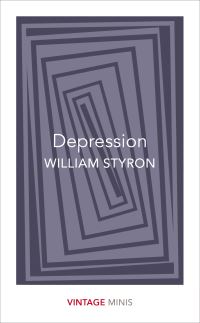
How does a writer compose a suicide note? This was not a question that the prize-winning novelist William Styron had ever contemplated before. In this true account of his depression, Styron describes an illness that reduced him from a successful writer to a man arranging his own destruction. He lived to give us this gripping description of his descent into mental anguish, and his eventual success in overcoming a little-understood yet very common condition.
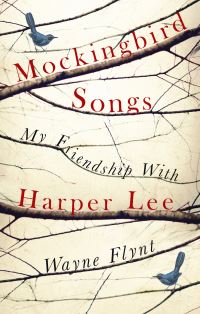
The violent racism of the American South drove Wayne Flynt away from his home state of Alabama, but the publication of ‘To Kill a Mockingbird’, Harper Lee’s classic novel about courage, community and equality, inspired him to return in the early 1960s and craft a career documenting and teaching Alabama history. His writing resonated with many Alabamians, in particular three sisters: Louise, Alice and Nelle Harper Lee. Beginning with their first meeting in 1983, a mutual respect and affection for the state’s history and literature matured into a deep friendship between two families who can trace their roots there back more than 5 generations. Flynt and Nelle Harper Lee began writing to one other while she was living in New York. This is a collection of their correspondence and a compelling look into the mind, heart and work of one of the most admired authors in modern literary history.
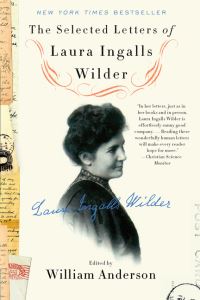
Available for the first time and collected in one volume, the letters of one of America’s most beloved authors, Laura Ingalls Wilder?a treasure trove that offers new and unexpected understanding of her life and work.The Selected Letters of Laura Ingalls Wilder is a vibrant, deeply personal portrait of this revered American author, illuminating her thoughts, travels, philosophies, writing career, and dealings with family, friends, and fans as never before.This is a fresh look at the adult life of the author in her own words. Gathered from museums and archives and personal collections, the letters span over sixty years of Wilder’s life, from 1894-1956 and shed new light on Wilder’s day-to-day life. Here we see her as a businesswoman and author?including her beloved Little House books, her legendary editor, Ursula Nordstrom, and her readers?as a wife, and as a friend. In her letters, Wilder shares her philosophies, pol
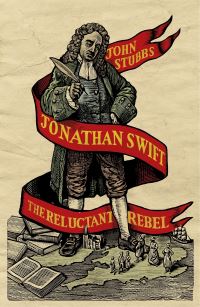
John Stubbs’ biography sets out to capture the dirt and beauty of a world that Jonathan Swift both scorned and sought to amend. It follows Jonathan Swift through his many battles, for and against authority, and in his many contradictions, as a priest who sought to uphold the dogma of his church; as a man who was quite prepared to defy convention, not least in his unshakeable attachment to an unmarried woman, his ‘Stella’; and as a writer whose vision showed that no single creed holds all of the answers.
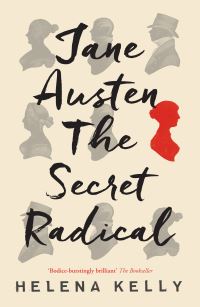
Almost everything we think we know about Jane Austen is wrong. Her novels don’t confine themselves to grand houses and they were not written just for readers’ enjoyment. She writes about serious subjects and her books are deeply subversive. We just don’t read her properly – we haven’t been reading her properly for 200 years. ‘Jane Austen, The Secret Radical’ puts that right. Austen expert Helena Kelly introduces the reader to a passionate woman living in an age of revolution; to a writer who used what was regarded as the lightest of literary genres, the novel, to grapple with the weightiest of subjects – feminism, slavery, abuse, the treatment of the poor, the power of the Church, even evolution – at a time, and in a place, when to write about such things directly was seen as akin to treason.
Notifications