Showing 1–16 of 27 resultsSorted by latest
-
£22.00
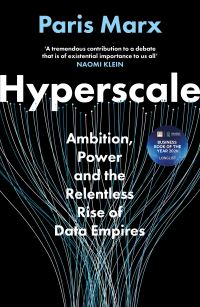
The cloud is an ethereal world of convenience and freedom. A place where memories and messages live nowhere and everywhere. But on the ground, sprawling server farms power our online world – while plundering our physical one. Delving into the labyrinthine industry of data centres that are now multiplying at an alarming rate, ‘Hyperscale’ is an urgent exposé of the ruinous physical infrastructure of the digital age. In the race to meet the AI revolution, tech overlords are waging a resource war as they trade our future for their profit. Marx unmasks a civilisational time bomb in the making with razor-sharp reporting and analysis to show that the greatest threat is not the spectre of AI, but a global disaster that has already begun.
-
£12.99
A searing insight into the radicalization of Silicon Valley, from Elon Musk to Peter Thiel, David Sacks and Donald Trump, and how it will affect the future of all our lives.
-
£12.99
AI is the greatest threat to our existence that we have ever faced. The founder of the field of AI risk, Eliezer Yudkowsy, and his successor at the Machine Intelligence Research Institute, Nate Soares, explain why superintelligent AI is a global suicide bomb and call for an immediate halt to its development.
-
£20.00
What should the next generation learn – and what should they stop worrying about – in a world transformed by artificial intelligence? AI is rewriting the rules in the classroom, the job market and the workplace, leaving parents, teachers, students and all types of workers unsure about how best to prepare for what lies ahead. In this work, globally renowned economist Daniel Susskind cuts through the outdated advice to show us what young people actually need to succeed now.
-
£12.99
Novelist, poet, and essayist Paul Kingsnorth presents a wholly original – and terrifying – account of the technological-cultural matrix enveloping all of us. With insight into the spiritual and economic roots of techno-capitalism, Kingsnorth reveals how the Machine, in the name of progress, has choked Western civilization, is destroying the Earth itself, and is reshaping us in its image. From the First Industrial Revolution to the rise of artificial intelligence, he shows how the hollowing out of humanity has been a long game – and how your very soul is at stake. It takes effort to remain truly human in the age of the Machine. Here Kingsnorth reminds us what humanity requires: a healthy suspicion of entrenched power; connection to land, nature and heritage; and a deep attention to matters of the spirit.
-
£16.99
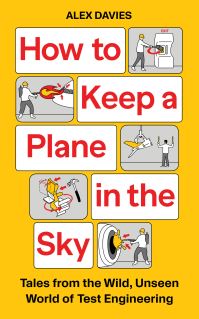
A rollicking exploration of why the stuff we use (mostly) works – and a celebration of the mad genius of the engineers who ensure that it does.
-
£11.99
The groundbreaking memoir and call to action from the inventor of the World Wide Web.
-
£22.00
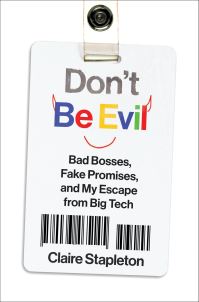
When Claire Stapleton joined Google in 2007, it felt like stepping into a worldview as much as a job. The company offered not just a career, but a moral project. In the heady early years of Big Tech and when Google’s in-house slogan was ‘Don’t be evil,’ it was easy to believe that technology wasn’t just changing the world – it was going to fix it. As Stapleton rose through increasingly rarefied roles, from the storied Creative Lab to YouTube marketing, she helped shape the myth from the inside. But as the gap between Google’s ideals and its reality widened, the dissonance became impossible to ignore. In 2018, amid outrage over the company’s handling of sexual harassment, Stapleton helped organize the Google Walkout – a defining rupture in Silicon Valley’s self-image. Sharp, witty and unsparing, ‘Don’t Be Evil’ is an insider’s account of how power actually works – and a deeper reckoning with the stories we tell about work, purpose and ou
-
£10.99
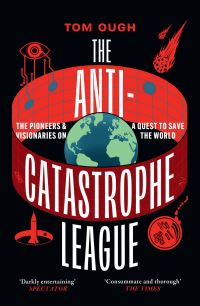
'Consummate and thorough' – The Times
'Darkly entertaining' – The Spectator
A superbly written work of narrative non-fiction by an exciting new talent, The Anti-Catastrophe League is a brilliant study of the people and their teams who are trying to save the world.
-
£12.99
For the first time in history, we have the ability to create sustainable prosperity for all, but currently that wealth is concentrated in a tiny number of hands. It isn’t abundance that’s the problem; it is distribution. In this engaging, frequently surprising account, Tim Wu, one of the world’s foremost experts on anti-monopoly law, draws on fascinating case studies in the history of technology’s explosive rise to demonstrate emphatically that breaking monopolies will ultimately unleash creativity and growth – and reduce the vast inequality that inevitably leads to social upheaval and political chaos. Wu also sets out an alternative blueprint that preserves the economic flourishing that platforms catalyse, allowing tech platforms to play a major role in creating and sustaining an economic model of prosperity not just for the few but for the many.
-
£16.99
A provocative guide to what's good, bad, and (profoundly) stupid about AI, by the bestselling author of Enshittification.
-
£20.00
In this thrilling and utterly unique work of narrative non-fiction, Katherine Dunn explores the acute vulnerability of the GPS satellite system – in a book that lifts the lid on the invisible connections of the globe, from the space race to the phone in our pockets
-
£12.99
Newfoundland, 1919. Buffeted by winds, an unwieldy aircraft – made mainly from wood and stiff linen – struggled to take off from the North American island’s rocky slopes. Cramped side by side in its open cockpit were two men, freezing cold and barely able to move but resolute. They had a dream: to be the first in human history to fly, non-stop, across the Atlantic Ocean. But there were three other teams competing against them, and as the waves raged a few miles below, memories of wartime crashes resurfaced. Mining letters, diaries and evocative unpublished photographs, David Rooney’s deeply researched account of the audacious contest shows how it was the airmen’s thrilling wartime experiences that ultimately led them to the ‘Big Hop’, and brought old friends together for one more daring adventure.
-
£12.99
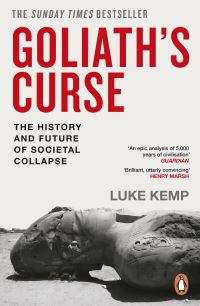
A new history of humanity told through the lens of collapse from Neanderthals to AI, and what it means for our uncertain future.
-
£10.99
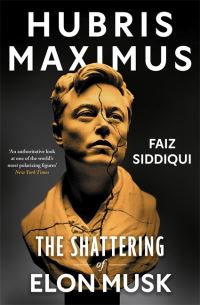
Once heralded as a modern-day Edison, Elon Musk has taken up a new role in public consciousness, with his growing desire to both transform global politics and engage in online arguments. What happened? In six short years, Musk turned Tesla into the world’s most valuable automaker and cast himself as a saviour of humanity, an altruist whose fortune would stop climate change and colonize Mars. Now he is the most polarizing and perpetually distracted CEO on the planet. ‘Hubris Maximus’ provides a gripping, detailed portrait of the billionaire’s rapid ascent and his spectacular public implosion.
-
£12.99
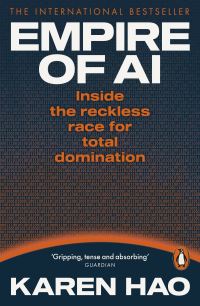
When long-time AI expert and journalist Karen Hao first began covering OpenAI in 2019, she thought they were the good guys. Founded as a non-profit with safety enshrined as its core mission, it was meant, its leader Sam Altman told us, to act as a check against more purely market forces. But the core truth of this massively disruptive sector is that it requires an unprecedented amount of proprietary resources: the ‘compute’ power of scarce high-end chips, the sheer volume of data that needs to be amassed at scale, the humans on the ground ‘cleaning it up’ for sweatshop wages throughout the Global South, and a truly alarming spike in the need for energy and water underlying everything. In this book, Hao recounts the meteoric rise of OpenAI and shows us the sinister impact that this industry is having on society.