Motherdom
£22.00Blaming, shaming and flimsy evidence: welcome to the ugly world of Good Mother myths
Showing all 12 resultsSorted by latest
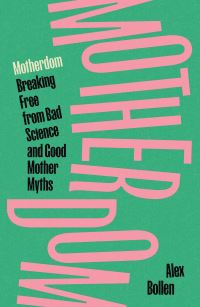
Blaming, shaming and flimsy evidence: welcome to the ugly world of Good Mother myths
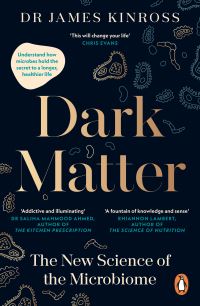
The microbiome is the missing link in modern medicine: a vast genetic universe of bacteria, yeasts, viruses and parasites that live inside us, influencing every aspect of our health, even the way we think and feel. In this mindblowing book, scientist and surgeon James Kinross explains how the organisms that live within us have helped us evolve, shaped our biology and defined the success of our species. But just as we have discovered this delicate and complex ecosystem within us, it is being irrevocably destroyed through the globalisation of our diets and lifestyles, our addiction to antibiotics, and the destruction of our environment.
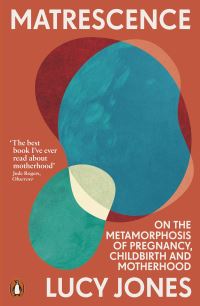
During pregnancy, childbirth, and early motherhood, women undergo a far-reaching physiological and psychological metamorphosis. There is no other time in a human’s life course that entails such dramatic change – other than adolescence. And yet this life-altering transition has been sorely neglected by science, medicine and philosophy. Its seismic effects go largely unrepresented across literature and the arts. Speaking about motherhood as anything other than a pastel-hued dream is virtually taboo. In this investigation, acclaimed science journalist and author Lucy Jones brings to light the emerging concept of ‘matrescence’.
Humans did not make history – we played host. This humbling and revelatory book shows how infectious disease has shaped humanity at every stage, from the first success of Homo sapiens over the equally intelligent Neanderthals to the fall of Rome and the rise of Islam.
Size is the most fundamental structural variable of the universe. Neither bacteria nor empires are immune to its laws. Measuring it is challenging, especially where complex systems like economies are concerned, yet mastering it offers rich rewards: the rise of the West, for example, was a direct result of ever more accurate and standardized measurements. Grounded in history and drawing on the latest science, with much recourse to art and classic literature, ‘Size’ explains the regularities – and peculiarities – of the key processes shaping life (from microbes to whales), the Earth (from asteroids to volcanic eruptions), technical advances (from architecture to transportation), and societies and economies (from cities to wages).
Clare Chambers argues that the unmodified body is a key principle of equality. While defending the right of anyone to change their bodies, she argues that the social pressure to modify sends a powerful message: you are not good enough. The body becomes a site of political importance: a place where inequalities of sex, gender, race, disability, age, and class are reinforced. Through a clear-sighted analysis of the power dynamics that structure our society, and with examples ranging widely from body-building to breast implants, makeup to male circumcision, ‘Intact’ stresses that we must break away from the oppressive forces that demand we alter our bodies. Instead, it offers a vision of the human body that is equal without expectation: an unmodified body that is not an image of perfection or a goal to be attained, but a valued end in itself.
Powerful yet dextrous, instinctive yet thoughtful, we are expert communicators and innovators. Our exceptional abilities have created the civilisation we know today. But we’re also deeply flawed. Our bodies break, choke and fail, whether we’re kings or peasants. Diseases thwart our boldest plans. Our psychological biases have been at the root of terrible decisions in both war and peacetime. This extraordinary contradiction is the essence of what it means to be human – the sum total of our frailties and our faculties. And history has played out in the balance between them. Now, Lewis Dartnell tells our story through the lens of this unique, capricious and fragile nature. He explores how our biology has shaped our relationships, our societies, our economies and our wars, and how it continues to challenge and define our progress.
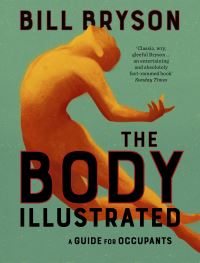
Bill Bryson sets off to explore the human body, how it functions and its remarkable ability to heal itself. Full of extraordinary facts, astonishing stories and now fully illustrated for the first time, ‘The Body: A Guide for Occupants’ is a brilliant, often very funny attempt to understand the miracle of our physical and neurological make up.
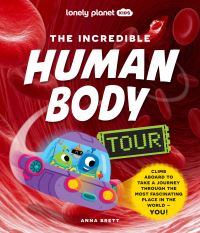
Hop aboard our special mini-bus for an unforgettable tour around the most fascinating destination in the entire Universe – you! Shrink down to a microscopic size to explore all the systems that make up the human body. With fun facts and a mix of illustrations and photos – it’s the human body as you’ve never experienced it before.
Homo sapiens is the most successful, the most widespread and the most influential species ever to walk the Earth. In the blink of an evolutionary eye we have spread around the globe, taken control of Earth’s biological and mineral resources, transformed the environment, discovered the secrets of the universe and travelled into space. Yet just 7 million years ago, we were just another species of great ape making a quiet living in the forests of East Africa. So how did we get from there to here? ‘Human Origins’ recounts the most astonishing evolutionary tale ever told.
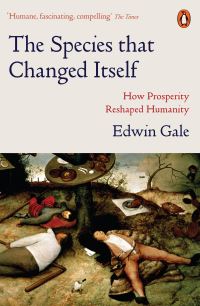
Other species adapt to their environments; we alone create ours. Over generations, we have remade the world to suit ourselves – using improved knowledge and technology to confront the traditional scourges – and for the most part we enjoy prosperity beyond the dreams of our ancestors. What’s more, in changing our world, we have also reshaped the human phenotype – the interaction between genes and environment that moulds our bodies and minds. Our experiences of life have been transformed, and in turn so have our societies. Weaving together biology, social anthropology, epidemiology and history, Edwin Gale examines the shifting physical and mental dimensions of our lives, from ageing to illness, food production to reproduction, designer bodies to IQ tests, and asks: are we a self-domesticated species?

Love drugs and anti-love drugs exist and more powerful versions will be available in the near future: What are the ethics of using them, how will they affect society, and will they take the magic out of love? A cutting-edge book by two prominent ethicists on ‘love drugs’, and the implications they may have for us all.
No products in the basket.
Notifications